Simple Ways to Save Money on Groceries (Without Couponing All Day)

Grocery bills have a sneaky way of growing without you noticing — one impulse item here, a forgotten staple there, and suddenly the weekly shop costs far more than you planned. The good news: you don’t need to clip hundreds of coupons or eat bland food to spend significantly less. These practical strategies cover planning, shopping habits, store selection, and food storage — the full picture of what actually moves the needle on your grocery budget.
Plan Before You Shop (Seriously, It Changes Everything)
The single biggest lever most households have is what happens before they set foot in the store. A few minutes of planning routinely saves more than any in-store tactic.
Build a Weekly Meal Plan Around What’s Already on Sale
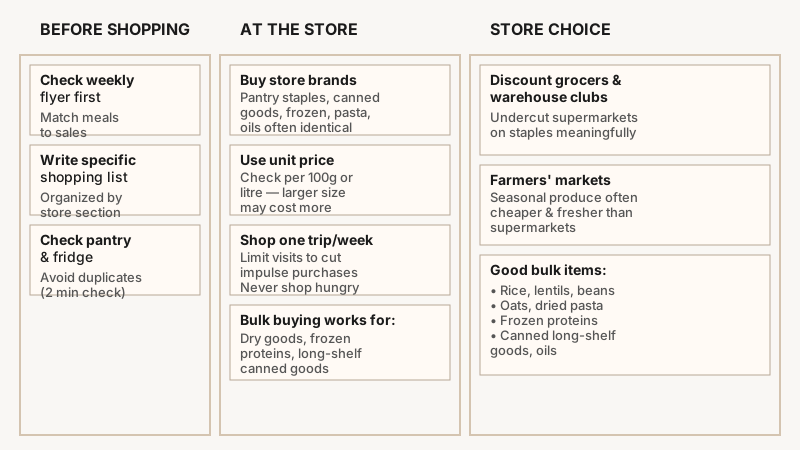
Check your store’s weekly flyer — most supermarkets publish it digitally on their website or app — before you decide what to cook. If chicken thighs are on sale, build two or three meals around them. This reverses the usual habit of picking recipes first and then buying everything at full price.
A practical method: keep a running list of eight to ten meals your household actually enjoys. Each week, match two or three of them against whatever proteins and produce are discounted, then fill in the rest from pantry staples you already have.
Write a Specific Shopping List (and Stick to It)
A vague list like “vegetables” leads to overbuying. A specific list — “1 bag of baby spinach, 3 bell peppers, 1 lb carrots” — keeps you focused and makes it easy to spot when something’s significantly overpriced compared to what you expected.
Organize the list by store section (produce, dairy, protein, pantry) so you move through efficiently without backtracking, which reduces the temptation to throw extras in the cart.
Check Your Pantry and Fridge First
Before writing that list, do a quick inventory. It takes two minutes and prevents the most expensive grocery mistake: buying something you already have. Duplicates of spices, canned goods, and condiments are a quiet budget leak in most kitchens.

Smart Shopping Habits That Cut Costs at the Register
Once you’re in the store — or on a grocery app — how you behave matters as much as what you planned.
Buy Store Brands Without Guilt
For the majority of pantry staples, store-brand (private-label) products are made by the same manufacturers as name brands, just with different packaging. This is well-documented in the food industry: items like canned tomatoes, dried pasta, oats, frozen vegetables, and cooking oils are almost universally equivalent in quality.
Where store brands can fall short: some specific snacks, beverages, or products where a proprietary formula genuinely differs. Test them yourself category by category rather than assuming either way.
Buy in Bulk — But Only the Right Things
Bulk buying saves money per unit, but only when you actually use the product before it expires or goes stale. Good candidates for bulk buying:
- Dry goods: rice, lentils, oats, dried beans, pasta
- Frozen proteins: chicken, ground meat, fish fillets (freeze immediately)
- Cleaning and personal-care products used at the store (not strictly groceries, but often sold there)
- Canned goods with long shelf lives
Poor candidates: fresh herbs you won’t use, large bags of specialty flour for occasional baking, or any product you’ve never tried before.
Don’t Shop Hungry
This one sounds obvious because it is — and it’s still ignored constantly. Shopping while hungry measurably increases impulse purchases, particularly of processed, ready-to-eat foods with high margins. Eat something beforehand, even a piece of fruit in the car.
Use the Unit Price, Not the Shelf Price
Supermarkets in most countries are required to display a price-per-unit (per 100g, per litre, etc.) on the shelf label. Use it. A “family size” box sometimes costs more per unit than the standard size — the larger package isn’t always the better deal. Get in the habit of glancing at the small print.
Limit Store Visits
Every additional trip to the grocery store is an opportunity for unplanned spending. Research consistently shows that the more often you shop, the more you spend in aggregate. A weekly shop (or even fortnightly for non-perishables) beats daily drop-ins for budget control.

Store Selection and Timing Strategies
Know Which Stores Are Worth Your Time
Not all grocery stores charge the same prices for equivalent products. Discount grocers and warehouse clubs typically undercut conventional supermarkets on staples by a meaningful margin. If you have access to a farmers’ market, seasonal produce is often cheaper there than at a supermarket — and fresher.
A practical approach: do a main shop at a discount grocer for pantry staples, and supplement with a conventional store or market for specific items you prefer elsewhere. Don’t let the fuel and time cost of multi-stop shopping eat the savings, though — calculate whether it’s actually worth the extra trip.
Shop Seasonal Produce
Fruit and vegetables cost less when they’re in season locally, because transportation and storage costs drop. Out-of-season produce is often imported, which adds significant cost. A rough guide:
- Spring: asparagus, peas, spinach, strawberries
- Summer: tomatoes, zucchini, corn, berries, stone fruit
- Autumn: squash, apples, pears, root vegetables
- Winter: citrus, cabbage, kale, cauliflower
This also tends to produce better-tasting food — a double benefit.
Check Markdowns and “Reduced for Quick Sale” Sections
Most supermarkets mark down meat, dairy, and bakery items that are approaching their sell-by date. These are perfectly fine to buy if you’ll use them that day or freeze them immediately. Frequenting the markdown section at the right time (often early morning or late evening, depending on the store’s schedule) can yield significant savings on proteins in particular.
Use Loyalty Programs and Cashback Apps Strategically
Store loyalty programs are worth using — they’re free and can unlock genuine discounts. Cashback apps (which vary by region) can also add up over time on products you already buy.
The trap to avoid: buying something you wouldn’t otherwise purchase just because it offers points or cashback. The discount is only real if the product was already on your list.
Reduce Waste to Stretch What You Already Buy
Saving money on groceries isn’t only about what you spend at the checkout. How much food you actually eat — versus throw away — has an equally large impact on your effective grocery cost.
For more ways to cut waste beyond the kitchen, Easy Ways to Reduce Plastic at Home: 30 Practical Swaps is full of practical swaps worth trying.
Store Food Correctly
Improper storage is a silent budget killer. A few high-impact changes:
- Store fresh herbs in a glass of water in the fridge (like flowers) — they last far longer than left in a plastic bag.
- Keep potatoes, onions, and garlic in a cool, dark spot — not the fridge.
- Wrap cut avocados tightly with plastic wrap directly against the flesh, or squeeze lemon juice on the surface, to slow browning.
- Move older items to the front of the fridge and pantry every time you unpack groceries (the classic “first in, first out” principle from food service).
Embrace the “Use It Up” Meal
Once a week, cook a meal built from whatever is about to expire: odds and ends of vegetables become a stir-fry, frittata, or soup; stale bread becomes croutons or bread pudding; leftover cooked grains become fried rice. This habit alone can cut household food waste dramatically.
The USDA estimates that the average American household wastes a substantial portion of the food it buys — adopting this weekly habit attacks that waste directly.
Freeze Strategically
The freezer is one of the most underused money-saving tools in most kitchens. Almost everything can be frozen: bread, cooked beans, soups, bananas past their prime (ideal for baking), cheese, and most cooked meals. When something is about to go bad and you don’t have time to use it, freeze it rather than bin it.
Label and date everything in the freezer. An unlabeled container is a container that eventually gets thrown away in a mystery purge.

Small Adjustments With Cumulative Impact
None of these ideas is dramatic on its own. The compounding effect of several of them together is where the real savings appear. A household that meal-plans, shops seasonally, buys store brands, and reduces waste will spend noticeably less than one that does none of those things — without eating worse food or spending hours finding deals.
Start with one or two changes that feel manageable and build from there. The meal plan and the shopping list are almost always the highest-return places to start, because they change the entire structure of how you shop rather than shaving a few cents off individual items.
Grocery budgets respond well to consistency. A routine that works reasonably well, applied week after week, will outperform an elaborate strategy that gets abandoned after a month.
If cutting your grocery bill has you thinking bigger about simplifying your life overall, Minimalism for Beginners: Start Small, Change Everything offers a gentle starting point.
Conclusion
Saving money on groceries is less about sacrifice and more about structure. Knowing what you’ll cook before you shop, choosing the right stores for the right products, understanding how to read a shelf label, and using your freezer properly are all practical, repeatable habits. They don’t require apps, extreme couponing, or a dramatic lifestyle change — just a slightly more intentional approach to something you do every week anyway.
Pick the two or three strategies here that your current grocery routine is missing most, try them for a month, and see how the numbers change.