How to Make a Fluffy Frittata: 7 Secrets That Actually Work

A frittata that comes out flat and rubbery is, honestly, one of the more disappointing things you can pull from an oven. The good news: the difference between a dense egg cake and a properly pillowy frittata comes down to a handful of techniques, not exotic ingredients.
This guide covers the full method — from choosing your pan to knowing exactly when to pull it from the heat — with the kind of detail that most recipes gloss over.
What Makes a Frittata Fluffy (Not Flat)
The short answer is trapped air and gentle heat. Eggs expand when they hit warmth, and if you’ve introduced extra air through whisking and chosen the right dairy, that expansion creates a light, open texture rather than a dense slab.
Three factors matter most:
- Fat-to-egg ratio: Dairy adds moisture and tenderness. Too little and the proteins seize up tight; too much and the frittata won’t set.
- Whisking technique: You’re building a foam, not just mixing. The goal is pale, slightly voluminous eggs.
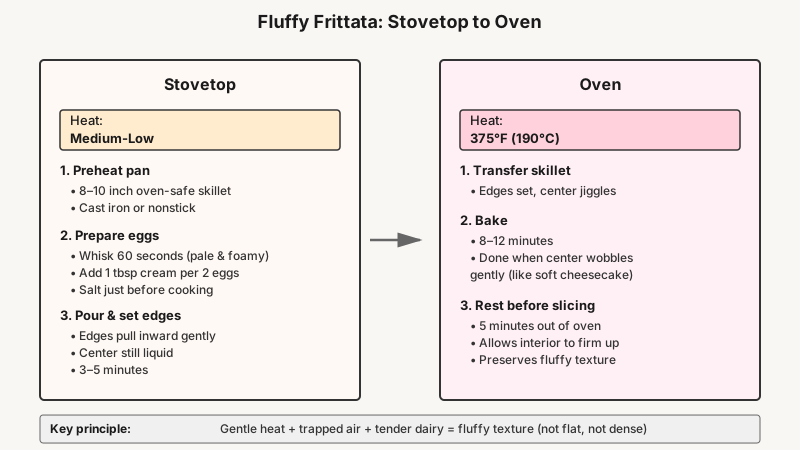
- Heat management: High heat from below sets the bottom too fast and squeezes out the air before the interior can rise. Low and slow on the stovetop, then a brief finish in the oven, solves this.

The 7 Secrets to a Fluffy Frittata
1. Whisk Longer Than You Think
Most people whisk eggs for about ten seconds. Double it, at least. You want the yolks and whites fully combined and the mixture slightly pale — a sign you’ve incorporated air. Use a balloon whisk or a fork with a wide, sweeping motion. A stand mixer on medium for 60 seconds also works well.
Some Italian cooks insist on whisking vigorously in one direction only to build a stronger foam structure. Whether or not the direction matters is debatable, but the vigor definitely does.
The same whisking principle applies to other egg-based dishes, as explained in Fluffy Pancakes from Scratch: Why Batter Falls Flat.
2. Use a Splash of Cream or Whole Milk (Not Water)
Milk proteins and fat interrupt the tight egg-protein network that forms during cooking, keeping the texture softer. The standard ratio is about 1 tablespoon of heavy cream (or 2 tablespoons of whole milk) per 2 eggs. Avoid skimmed milk — the lack of fat defeats the purpose.
Water is sometimes recommended as a substitute, and it does create steam that puffs the eggs briefly, but the result deflates faster and misses that creamy interior. Dairy is better here.
3. Season the Eggs Before Cooking
Salt draws out moisture from ingredients after mixing — so salt your filling vegetables before they go in, and salt the egg mixture just before it hits the pan. This keeps the texture light rather than weepy.
4. Choose the Right Pan Size
A frittata that’s too thin won’t have enough depth to puff. A frittata too thick won’t cook through evenly. For 6 eggs, an 8-inch oven-safe skillet is ideal. For 8–10 eggs, go up to 10 inches. Cast iron holds heat beautifully and gives a great crust; a nonstick skillet with an oven-safe handle works just as well and releases more easily.
Avoid stainless steel unless it’s very well seasoned — eggs cling to it and you’ll fight the pan instead of the recipe.
5. Start Low on the Stovetop
Preheat your pan over medium-low heat, not medium-high. Add your fat (butter, olive oil, or a combination), let it shimmer without browning, then pour in the eggs. You want the edges to just begin to set — pulling gently inward with a spatula to let liquid egg flow underneath — before the interior is anywhere near cooked.
This gentle start gives the egg proteins time to expand before they fully coagulate. Rushing with high heat traps bubbles at the bottom while the surface stays liquid — the opposite of what you want.
6. Finish in the Oven at Moderate Temperature
Once the edges are set and the center still jiggles like loose custard, transfer the skillet to an oven preheated to 375°F (190°C). Bake for 8–12 minutes depending on thickness. The frittata is done when the center no longer sloshes but retains a gentle wobble — like a just-set cheesecake.
Avoid broiling as the only finishing method. It can puff the top dramatically but leaves the interior undercooked and causes rapid deflation.

7. Let It Rest Before Slicing
Resting is not optional. Give the frittata 5 minutes out of the oven before cutting into it. The interior continues to set from residual heat, and the structure firms up enough to hold its shape when sliced. Cut too early and you’ll push trapped steam out of the eggs, collapsing the texture you worked to create.
Filling Ideas That Don’t Weigh It Down
Heavy, watery fillings are one of the most common reasons a frittata ends up dense. A cup of raw mushrooms that haven’t been sautéed first will release significant liquid into your eggs, disrupting the set.
Rule of thumb: Cook all vegetables first. Roast, sauté, or grill them until any excess moisture has evaporated. Let them cool slightly before adding to the egg mixture — hot filling starts cooking the eggs prematurely.
Some filling combinations that work well:
- Classic: caramelized onion, gruyère, fresh thyme
- Mediterranean: roasted red pepper, feta, olives, oregano
- Spring: asparagus, peas, goat cheese, lemon zest
- Smoky: pancetta (cooked and drained), smoked paprika, pecorino
- Simple: fresh herbs (chives, parsley, basil), sea salt, a good olive oil drizzle after baking
Keep filling volume to roughly half the volume of the eggs, not more. It’s tempting to load it up, but restraint here is the difference between a frittata and a vegetable casserole that happens to have eggs in it.
If you’re looking for more ways to pair simple ingredients elegantly, How to Make a Simple Cheese Board That Actually Impresses offers plenty of inspiration.
Common Mistakes and How to Fix Them
The frittata is rubbery: Overcooked. Pull it earlier — the center should wobble when you move the pan. Eggs continue to cook off heat.
It deflated right out of the oven: Either the heat was too high, or it wasn’t rested. Next time, lower your oven temperature by 25°F and rest it fully before slicing.
The bottom burned before the top set: Your stovetop heat was too high before the oven transfer. Start lower, and make sure your oven is fully preheated so the ambient heat finishes the job quickly.
It stuck to the pan: Not enough fat, or the pan wasn’t fully preheated before adding fat and eggs. A cold pan with cold butter is a guaranteed sticking problem.
It tastes watery or flat: Filling vegetables weren’t cooked dry enough, or the eggs were under-seasoned. Salt matters more in egg dishes than most people realize.

The Basic Fluffy Frittata Recipe
Here’s a no-frills baseline to build from:
Ingredients (serves 4):
- 8 large eggs
- 4 tablespoons whole milk or 2 tablespoons heavy cream
- ½ teaspoon fine sea salt
- Freshly cracked black pepper
- 2 tablespoons olive oil or unsalted butter
- 1–1½ cups cooked filling of your choice
- 2 oz (55g) grated cheese (optional but recommended)
Method:
- Preheat oven to 375°F (190°C).
- Whisk eggs, dairy, salt, and pepper vigorously for at least 60–90 seconds until pale and slightly foamy.
- Preheat a 10-inch oven-safe skillet over medium-low heat. Add oil or butter and let it coat the pan evenly.
- Pour in the egg mixture. Let it sit undisturbed for 30 seconds, then gently pull the cooked edges toward the center with a spatula, tilting the pan to let raw egg flow to the edges. Repeat two or three times.
- When the edges are set but the center still moves freely, scatter filling and cheese evenly on top.
- Transfer to the oven and bake 8–12 minutes until the center just barely wobbles.
- Remove from oven, run a spatula around the edges, and let rest 5 minutes before slicing and serving.
A Few Final Notes
A fluffy frittata is a fairly forgiving dish once you understand the mechanics. The biggest leap most home cooks make is simply whisking more aggressively and pulling from the oven sooner than feels comfortable. Trust the residual heat to finish the job.
Frittatas also reheat reasonably well — a slice in a covered skillet over low heat for a few minutes brings it back without drying it out. Avoid the microwave if you can; it tends to make the texture rubbery.
For equipment, any oven-safe skillet with a good coating of fat will get you there. You don’t need expensive cookware — consistency in technique matters far more than the brand name on the handle.