Buttermilk Substitute: 6 Easy Methods That Actually Work

If you’re mid-recipe and the fridge holds no buttermilk, you have more options than you might think — and most of them require ingredients you already have. The goal is to replicate buttermilk’s two defining qualities: its mild acidity and its thick, slightly viscous texture. Nail those two things, and your pancakes, cakes, fried chicken, and quick breads will come out just right.
Why Buttermilk Matters in Baking
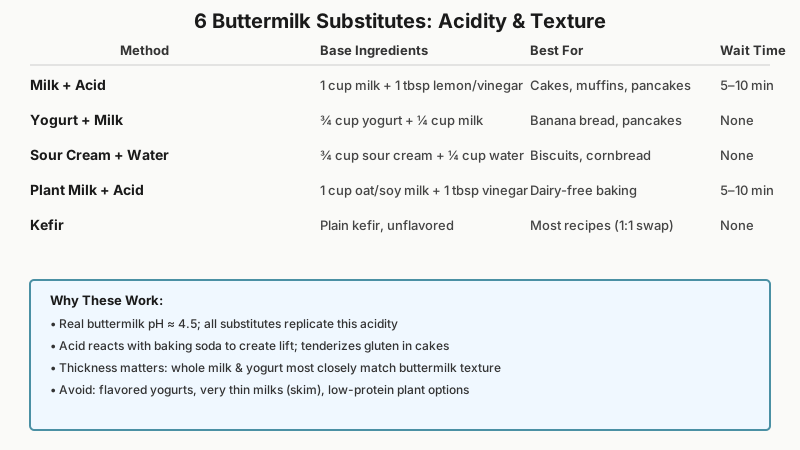
Buttermilk isn’t in recipes just for flavor. Its acidity reacts with baking soda (sodium bicarbonate) to produce carbon dioxide bubbles, which give baked goods their lift. The acid also tenderizes gluten strands, producing a more delicate crumb in cakes and muffins. In savory applications like fried chicken marinades, that same acidity breaks down surface proteins, helping coatings adhere and keeping meat juicy.
Real cultured buttermilk has a pH around 4.5. Any good substitute needs to get close to that range to trigger the same chemical reactions. The methods below do exactly that.

If you love experimenting with dairy in your baking, our guide on How to Make a Fluffy Frittata: 7 Secrets That Actually Work shows another way that careful ingredient choices can transform a simple dish.
The 6 Best Buttermilk Substitutes
1. Milk + Acid (The Classic Swap)
This is the most common substitute, and it works reliably.
How to make it:
- Measure 1 tablespoon of white vinegar or fresh lemon juice into a liquid measuring cup.
- Pour in whole milk to the 1-cup line.
- Stir briefly and let it sit for 5–10 minutes.
The milk will visibly curdle slightly and thicken — that’s the acid denaturing proteins, and it’s exactly what you want. Use it cup-for-cup in any recipe.
Best acid to use: Lemon juice gives a subtle citrus note that suits cakes and muffins. White vinegar is more neutral and works better in savory dishes or anything with bold spices. Apple cider vinegar falls in between and adds a faint warmth.
Milk fat matters: Whole milk produces the closest result to full-fat buttermilk. 2% works fine. Skim milk produces a thinner liquid; results are acceptable but not identical.
2. Plain Yogurt Thinned with Milk
Yogurt is already cultured and acidic, which makes it an excellent base. The trick is adjusting the consistency.
How to make it:
- Whisk together ¾ cup plain yogurt with ¼ cup whole milk.
- Use in place of 1 cup buttermilk.
Full-fat plain yogurt or Greek yogurt (thinned a little more — try a 2:1 ratio of yogurt to milk) produces a rich, tangy result that works beautifully in banana bread, pancakes, and pound cake. The flavor profile is actually very close to cultured buttermilk because the same bacterial cultures are at work.
Avoid flavored yogurts entirely — vanilla or fruit varieties introduce sugars and artificial flavors that will throw off the recipe.
3. Sour Cream + Water or Milk
Sour cream is thick and quite acidic, so it functions similarly to Greek yogurt. It needs more thinning.
How to make it:
- Mix ¾ cup sour cream with ¼ cup water (or milk for extra richness).
- Whisk until smooth and pour it as you would buttermilk.
This substitute shines in savory contexts — biscuit dough, cornbread, or blue cheese dressing — where its slightly richer, more pronounced tang is an asset rather than a distraction.
4. Dairy-Free Milk + Acid
For anyone who avoids dairy, the milk-and-acid method translates directly to plant-based milks.
How to make it:
- Add 1 tablespoon of white vinegar or lemon juice to a measuring cup.
- Fill to 1 cup with unsweetened oat milk, soy milk, or almond milk.
- Let sit 5–10 minutes before using.
Of the plant-based options, oat milk curdles most convincingly and has a neutral flavor that won’t compete with the recipe. Soy milk has the highest protein content of the common alternatives, so it thickens noticeably and performs very close to dairy buttermilk in baked goods. Almond milk is thinner and lower in protein; it acidifies well but produces a slightly less robust result.
Coconut milk (the full-fat canned variety) is a special case — thinned with a little water and a tablespoon of vinegar, it makes a rich, tropical-tasting substitute that works well in spice-forward cakes or tropical-flavored quick breads.

5. Kefir
Liquid kefir — the drinkable, fermented milk product — is nearly a drop-in replacement for buttermilk. Its pH sits close to that of buttermilk, and its texture is similar. If anything, kefir is slightly thinner.
How to use it:
- Substitute kefir for buttermilk at a 1:1 ratio.
- No modification needed.
Plain, unflavored kefir works best. The only reason kefir isn’t listed first is that it’s less universally available than milk or yogurt — but if you keep it on hand, it’s the easiest swap on this list.
6. Cream of Tartar + Milk
Cream of tartar (potassium bitartrate) is an acidic powder derived from winemaking, and it acidifies milk without curdling it visibly — which some bakers prefer.
How to make it:
- Whisk 1¾ teaspoons of cream of tartar into 1 cup of whole milk.
- Use immediately, as the mixture can become lumpy if it sits.
This substitute is particularly useful in white cakes or pale-colored batters where you’d rather not see any curdling. The reaction is gentler, the liquid stays smooth and white, and the acid is still sufficient to activate baking soda. One caveat: cream of tartar can be harder to find in smaller grocery stores than vinegar or lemon juice.
How to Scale the Substitutes
Most recipes call for anywhere from ¼ cup to 2 cups of buttermilk. Scaling is straightforward:
| Buttermilk Needed | Acid (vinegar or lemon juice) | Milk to Fill |
|---|---|---|
| ¼ cup | ¾ teaspoon | to ¼ cup line |
| ½ cup | 1½ teaspoons | to ½ cup line |
| 1 cup | 1 tablespoon | to 1 cup line |
| 2 cups | 2 tablespoons | to 2 cup line |
For yogurt or sour cream-based substitutes, maintain the roughly 3:1 ratio (three parts dairy to one part liquid) and scale accordingly.

Which Substitute Should You Use?
The honest answer: it depends on what you’re making.
- Pancakes and waffles: Milk + lemon juice or thinned yogurt. Both produce fluffy, tender results.
- Layer cakes and cupcakes: Milk + white vinegar (neutral flavor) or kefir for the cleanest crumb.
- Quick breads (banana, zucchini, pumpkin): Thinned yogurt or sour cream — the extra fat and tang complement these recipes well.
- Fried chicken marinade: Milk + acid works, but thinned yogurt or kefir adds protein that helps the coating adhere even better.
- Biscuits: Sour cream thinned with milk produces the richest, flakiest result.
- Dairy-free needs: Oat milk or soy milk + acid is your best bet.
Tips for the Best Results
Temperature matters. Whether you’re using milk, yogurt, or a plant-based alternative, room-temperature substitutes blend more smoothly into batters than cold ones straight from the fridge. Pull them out 20–30 minutes before mixing if possible.
Don’t skip the resting time. With the milk-and-acid method, that 5–10 minute wait is when curdling actually occurs. Using it immediately after combining gives you acidified milk, not thickened buttermilk — it still works, but the texture is off.
Check your baking soda. Buttermilk and its substitutes need active baking soda to deliver lift. If your baking soda is old (more than six months open), the reaction may be sluggish. Test it by dropping a pinch into hot water; it should bubble vigorously.
Taste as you go. Each substitute brings a slightly different flavor profile. Lemon juice adds brightness; vinegar adds sharpness; yogurt adds depth. In a simple, pale cake, these differences are noticeable. In a chocolate cake with strong spices, they’re irrelevant.
For more ideas on pairing dairy products thoughtfully, check out How to Make a Simple Cheese Board That Actually Impresses for tips on presentation and flavor combinations.
Conclusion
A missing carton of buttermilk is a minor inconvenience, not a reason to scrap a recipe. The milk-and-acid method covers the vast majority of situations in under 10 minutes. Thinned yogurt gets you closest to the real thing in terms of texture and flavor. Plant-based options work better than most people expect, especially with oat or soy milk as the base. Know which swap suits which dish, give the substitute a moment to develop, and your recipe will turn out exactly as intended.