How to Make a Simple Cheese Board That Actually Impresses

A cheese board doesn’t need to be a towering monument of fifty ingredients to work. In fact, the best ones tend to be restrained — a handful of thoughtful choices arranged with care, eaten with good company. This guide covers the smallest board that still impresses: three cheeses, four supporting items, one grocery run, and about fifteen minutes of assembly.
If you’re feeding a crowd and want the full production — multiple cured meats, a wider cheese range, a composed layout — Cheese & Charcuterie Boards That Wow Every Guest covers that version instead. What follows is deliberately the opposite: the shortest shopping list that still earns compliments.
Three Cheeses, Chosen for Contrast
Three is the floor that still feels generous. Two reads as a snack; three reads as a decision. The trick is that the three shouldn’t be variations on a theme — they should disagree with each other.
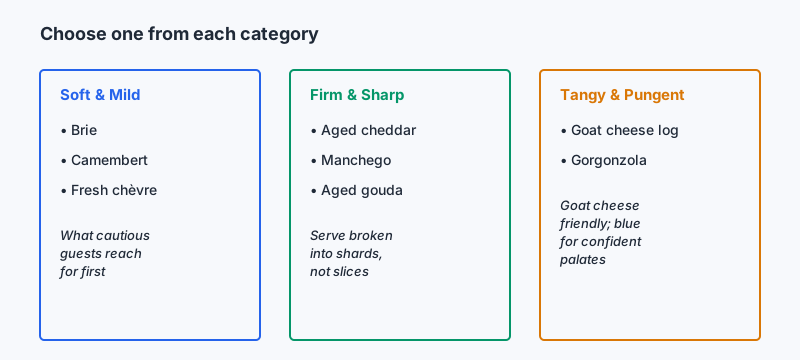
Pick one from each row:
- Soft and mild: brie, camembert, or a fresh chèvre. This is the one cautious guests reach for first.
- Firm and sharp: aged cheddar, manchego, or a well-aged gouda. Serve it in broken shards rather than neat slices; the crystalline crunch is half the appeal.
- Tangy or pungent: a goat cheese log for a friendly version, or a gorgonzola if the room can handle it.
A practical starter lineup: a wedge of brie, some aged sharp cheddar, and a small log of goat cheese. That’s three completely different textures and flavor profiles for under $20 at most grocery stores — no specialty shop, no cheesemonger conversation, no ordering ahead.
If you’re feeding more than six people, add a fourth cheese rather than buying larger pieces of the same three. Variety is what makes a board feel abundant; volume just makes it heavy.

The Four-Item Accompaniment Rule
Cheese alone is just cheese. The things around it create contrast and keep people grazing — but four items is genuinely enough. One from each category:
- Something crunchy and neutral. A plain water cracker or sliced baguette. Skip the heavily seasoned crackers; the cheese should lead.
- Something sweet. Fig jam, honey, a small cluster of grapes, or dried apricots. Sweetness is the bridge that makes an aged cheese taste less like a dare.
- Something briny. Olives, cornichons, or a spoonful of whole-grain mustard in a ramekin. This resets the palate between rich bites, and its absence is the single most common reason a board feels cloying halfway through.
- Something with crunch and salt. Roasted almonds or candied walnuts. If they taste flat, toast them in a dry pan for three minutes — it makes a real difference.
Cured meat is optional here, not required. If you want it, one variety is enough: thin-sliced prosciutto or salami folded into loose ribbons, never stacked flat. Keep the volume modest — this is still a cheese board, not a deli tray.

What You Can Safely Skip
Most of what makes cheese boards feel like a production is optional. Leaving these out costs you nothing:
- A dedicated board. Any flat surface larger than a dinner plate works — a cutting board, a ceramic platter, a rimless baking sheet lined with parchment. Nobody has ever noticed the board underneath a good spread.
- Specialty cheese knives. One small knife per cheese, from the drawer you already have, is enough. What matters is that guests don’t have to use the same blade on the blue cheese and the brie.
- A fourth and fifth accompaniment. Extra jars crowd the surface and slow people down. Two olives and one jam beat six half-eaten condiments.
- Cheese labels. Useful at a party with twenty guests, pointless at a table of four where someone will simply ask.
- Garnish for its own sake. A sprig of rosemary tucked into a gap looks intentional. A scattering of edible flowers on a $20 board looks like you’re compensating.
Assemble It in Five Minutes
Arrangement matters more than people give it credit for — a poorly arranged board with excellent ingredients still reads as an afterthought. But it’s a five-minute job, not an art project.
Cheese first. Set the three pieces down before anything else, spaced roughly at three points across the surface so people can gather from any edge. Pre-cut two or three slices from the firm cheese to invite people in; leave the soft one whole with a knife beside it.
Bowls second. Put anything wet — olives, jam, honey — into small ramekins and set them on the board near the cheese they pair with. This is the step that keeps the whole thing from turning into a smear.
Everything else fills gaps. Fan the crackers alongside the cheeses, then tuck fruit and nuts into whatever space remains. Work across the whole surface rather than filling one quadrant, and let a few things overlap — a completely flat, evenly spaced board looks like a supermarket display.
You can build the whole thing up to two hours ahead, cover it loosely, and refrigerate. Add crackers and any fresh herbs right before serving so nothing goes soft. Since freshness matters for any garnishes or herbs you add to the board, it helps to know Best Ways to Store Fresh Herbs (So They Actually Last).

Two Numbers That Matter More Than the Shopping List
Thirty to forty-five minutes. That’s how long the cheese should sit out of the refrigerator before serving. Cold cheese is firmer and noticeably more muted; at room temperature the fats soften and the aromas open up. This single step changes the result more than which brand you bought — and it’s free.
One and a half to two ounces per person. That’s the quantity for a board served as an appetizer or alongside drinks. If the board is the whole meal with nothing following it, double that to three or four ounces. For crackers, figure eight to ten per person. Buying past these numbers is the most common way a simple board turns into an expensive one.
Pairings That Reliably Work
Once you’re comfortable with the basics, these combinations are worth building around:
- Aged cheddar + apple slices + whole-grain mustard — sharp, sweet, and tangy; hard to go wrong
- Brie + honeycomb + walnut — rich, floral, earthy; tastes more expensive than it is
- Goat cheese + dried cranberries + fig jam — bright and acidic against the tang of the chèvre
- Manchego + membrillo (quince paste) + marcona almonds — a classic Spanish combination; the sweetness of the quince pulls out the nuttiness in the sheep’s milk cheese
- Blue cheese + pear slices + honey — pungent balanced by sweetness; converts skeptics more often than you’d expect
These pairings aren’t rules — they’re suggestions based on flavor contrast and regional tradition. If you love something unexpected together, that’s worth serving.
Conclusion
The formula for a small board that works is shorter than it looks: three cheeses that genuinely disagree with each other, one crunchy thing, one sweet thing, one briny thing, one salty thing, and five minutes of arranging. Get the temperature right and give people a knife per cheese.
Everything beyond that is scale, not quality. A board with four well-chosen items beats one drowning in twenty — and the boards people remember aren’t the most expensive ones, they’re the ones where nothing was left at the end of the evening.