Fluffy Pancakes from Scratch: Why Batter Falls Flat

Making fluffy pancakes at home is less about finding a secret ingredient and more about understanding why each step matters. Once you get the logic, you can riff on ratios, swap a few things around, and still land a stack that rises properly and stays tender inside.
This guide walks through everything — the batter science, the right pan temperature, common mistakes, and a few variations worth trying.
The Base Recipe
Here’s a reliable starting point before we get into the why:
Ingredients (serves 2–3, about 8 pancakes):
- 1 cup (120 g) all-purpose flour
- 2 teaspoons baking powder
- 1 tablespoon granulated sugar
- ½ teaspoon fine salt
- 1 cup (240 ml) whole milk
- 1 large egg
- 2 tablespoons melted unsalted butter
- 1 teaspoon vanilla extract (optional, but good)
Method:
- Whisk the dry ingredients together in a large bowl.
- In a separate jug, whisk the milk, egg, and melted butter.
- Pour the wet ingredients into the dry. Stir with a fork until just combined — lumps are fine, even expected.
- Rest the batter for 5 minutes while the pan heats up.
- Heat a non-stick or cast iron pan over medium-low. Add a small knob of butter or a neutral oil.
- Pour about ¼ cup of batter per pancake. Cook until bubbles form across the surface and the edges look set, about 2–3 minutes.
- Flip once, cook another 90 seconds.
That’s it. But the details inside each step are where the real work happens.

Why Pancakes Go Flat (and How to Stop It)
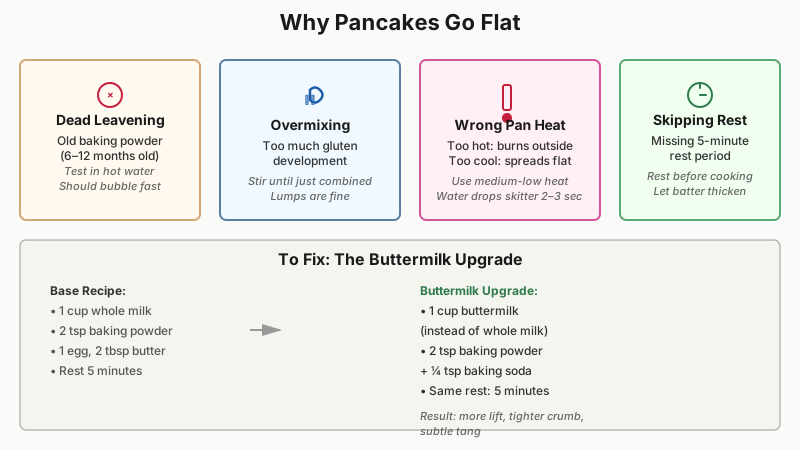
Most flat, rubbery pancakes come down to one of four problems:
1. Dead Leavening
Baking powder is the engine of rise. It reacts in two stages: once when it hits liquid, and again when it hits heat. If your baking powder is old, the first reaction fizzles before the batter even reaches the pan, and the second reaction has nothing left to give.
Test it: drop a teaspoon into hot water. It should bubble vigorously within a second or two. If it barely reacts, buy a new tin. Baking powder typically loses meaningful potency after 6–12 months once opened.
2. Overmixing the Batter
Gluten forms when flour proteins hydrate and get agitated. A little gluten gives structure; a lot makes pancakes tough and chewy rather than tender and airy. The moment everything is moistened, stop stirring. A few dry streaks will cook out fine. Those small lumps you see in the bowl? They disappear in the pan and actually help keep the texture light.
3. The Wrong Pan Temperature
Too hot: the outside browns before the interior can set, so the pancake can’t puff properly and may burn. Too cool: the batter spreads thin and steams rather than rises, turning rubbery.
Aim for medium-low heat. A reliable test — flick a few drops of water on the surface. They should skitter and evaporate within 2–3 seconds, not flash-evaporate instantly or sit there pooling. Cast iron holds heat more evenly than thin non-stick, so once it’s warm, it stays consistent between batches.
4. Skipping the Rest
Five minutes of rest lets the baking powder start its first CO₂ reaction, allows the flour to hydrate fully, and relaxes whatever gluten did develop during mixing. The batter thickens slightly during this time, which helps it hold its shape in the pan rather than spreading into a thin disc.
The Buttermilk Upgrade
Swapping whole milk for buttermilk is the single most effective way to improve flavor and texture simultaneously.
Buttermilk is acidic (pH around 4.5–5). When it meets baking powder — or baking soda if you add a small amount — it triggers a stronger, faster CO₂ release than neutral milk alone. The result: more lift, a tighter crumb, and a subtle tang that balances the sweetness of maple syrup.
To adapt the base recipe:
- Replace the 1 cup whole milk with 1 cup buttermilk
- Add ¼ teaspoon baking soda alongside the baking powder (the soda needs the acid to activate)
- Everything else stays the same
If you don’t have buttermilk, make a quick substitute: add 1 tablespoon of white wine vinegar or fresh lemon juice to a measuring cup, then fill to the 1-cup line with milk. Stir and let sit for 5 minutes. It won’t be identical — real buttermilk is fermented and has a more complex flavor — but it works well enough for most cooks.

For another from-scratch project that lives or dies on a fermented ingredient, check out How to Bake Sourdough Bread from Scratch: One Living Starter, No Yeast.
Technique Details That Actually Matter
Separating the Egg
For an extra-fluffy result, separate the egg. Whisk the yolk with the milk and butter as normal. Then beat the white separately until soft peaks form and fold it into the batter at the very end. This mechanical aeration adds lift independent of the baking powder — so you’re not relying on leavening alone.
It’s an extra step and extra washing up, but when you want genuinely pillowy pancakes — the kind that have a slight soufflé quality — it makes a clear difference.
If you enjoy the lift that separated eggs give a batter, you’ll find the same trick taken even further in How to Make a Fluffy Frittata: 7 Secrets That Actually Work.
Butter vs. Oil in the Pan
Butter browns and adds flavor but burns faster because of its milk solids. For the first pancake or two, butter is fine; for a longer session, switch to a neutral oil (sunflower, canola) or clarified butter, which has the solids removed and tolerates higher heat. Alternatively, wipe out excess butter between batches — a thin slick is enough.
The First Pancake Rule
Almost universally, the first pancake from any batch is worse than the rest. The pan hasn’t fully equalized in temperature, the butter hasn’t been distributed evenly, and you haven’t yet calibrated your pour. Treat the first one as a test — it’s the cook’s snack, not the centrepiece of the plate.
Flipping Once
Only flip once. Multiple flips compress the structure you’ve been building. When you see bubbles forming on the surface and the outer edges lose their shiny wet look, that’s your cue — the underside is ready. Slide the spatula flat under the pancake and flip in one smooth motion. Don’t press down afterward; pressing forces out the air you’ve worked to create.
Common Variations
Blueberry pancakes: Fold fresh or frozen blueberries into the batter just before cooking. Frozen ones bleed more color but work fine. About ½ cup per batch is a good ratio without making the batter too wet.
Whole wheat: Replace up to half the all-purpose flour with whole wheat flour. More than that and the pancakes turn dense and slightly bitter. The nutty flavor is pleasant and the extra fiber makes them more filling.
Dairy-free: Use oat milk or almond milk in place of whole milk, and a neutral oil instead of butter. Oat milk performs best here — its mild sweetness and body are close to whole milk. The result is slightly less rich but still very good.
Lemon ricotta pancakes: Stir in ⅓ cup of whole-milk ricotta and the zest of one lemon. Ricotta adds moisture and a creamy tang; these are thicker and a little denser but extremely satisfying.

Storing and Reheating
Leftover pancakes keep well. Let them cool completely on a wire rack (stacking them while hot traps steam and makes them soggy), then refrigerate in an airtight container for up to 3 days or freeze for up to 2 months.
To reheat from the fridge: a toaster works surprisingly well — 1–2 cycles on medium heat gives a slightly crisp exterior with a warm center. From frozen, let them thaw overnight in the fridge first, or use a low oven (150°C / 300°F) for about 10 minutes wrapped loosely in foil.
Avoid the microwave if you can; it makes them rubbery within about 30 seconds of steaming.
Troubleshooting at a Glance
| Problem | Likely Cause | Fix |
|---|---|---|
| Flat, dense pancakes | Old baking powder or overmixing | Test leavening, stir less |
| Burnt outside, raw inside | Pan too hot | Lower heat, test with water drops |
| Rubbery texture | Overmixed or microwaved | Stir just until combined |
| Batter too thick to pour | Over-measured flour | Thin with a splash of milk |
| Batter spreading too thin | Under-measured flour or pan too hot | Rest batter, check temperature |
A Practical Conclusion
Fluffy pancakes aren’t complicated, but they do reward attention to a few specific things: fresh leavening, minimal mixing, correct pan temperature, and at least a short rest for the batter. Get those four right and most other decisions — buttermilk vs. milk, butter vs. oil, added vanilla or not — are about preference rather than success or failure.
Start with the base recipe, make a batch, and notice what could be better. Too dense? Mix less next time. Spreading thin? Rest the batter longer or check the pan temp. Pancakes are forgiving enough to iterate on quickly — it only takes 20 minutes from bowl to plate.