How to Keep Pets Calm During Fireworks: Start Days Before, Not Hours

Fireworks send about 45% of dogs into visible distress, according to research from the University of Bristol — and cats, rabbits, and small animals often fare no better. The sudden cracks and booms trigger a genuine fear response, not just mild annoyance. That means a blanket, some soothing words, and crossing your fingers usually aren’t enough.
This guide pulls together what actually works: behavioral strategies, environmental fixes, and medical options your vet can discuss with you. Use it before, during, and after any fireworks event — seasonal holidays, local celebrations, or the random neighbor who buys a crate of rockets.
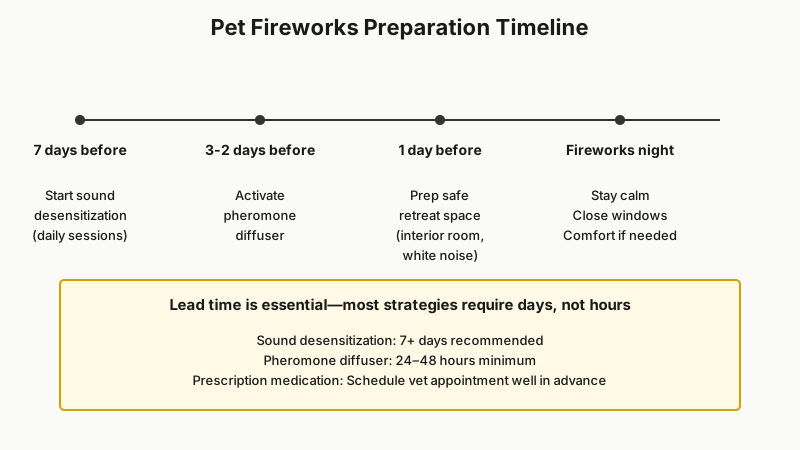
1. Start Preparation Days — Not Hours — Before
The single biggest mistake pet owners make is waiting until the night of. Many effective strategies require lead time.
Sound desensitization is one of the best-studied approaches for noise phobia in dogs. It involves playing recorded firework sounds at very low volume while your pet does something pleasant (eating, playing), then gradually increasing the volume across multiple sessions over days or weeks. Apps like Sounds Scary from Dogs Trust are built specifically for this purpose.
For cats, the advice is similar in spirit: make the home feel more secure before stress arrives. Plug in a pheromone diffuser — products like Feliway for cats and Adaptil for dogs release synthetic calming pheromones. They need 24–48 hours to reach effective concentration in the room. Starting them the morning of a fireworks display is too late.
What to do right now:
- Check when local fireworks events are scheduled.
- Order or pick up a pheromone diffuser and get it running 2–3 days early.
- Begin short daily sound desensitization sessions if you have a week or more of lead time.
- Book a vet appointment if your pet has had a severe reaction in the past — prescription medication takes planning.
2. Create a Safe, Soundproofed Retreat

Animals under acute stress instinctively look for a den — a dark, enclosed space where they feel less exposed. You can provide that deliberately.
For dogs: Set up a covered crate or a space under a bed in an interior room (interior walls absorb more sound than exterior ones). Put familiar-smelling bedding inside. Don’t force your dog in; let them choose it. If the dog is already crate-trained and comfortable, this step is nearly automatic.
For cats: Give access to elevated spots and enclosed hiding places — cardboard boxes on their side work perfectly. Cats that feel they can choose where to hide are measurably less stressed than cats that are confined somewhere they didn’t choose.
For rabbits and small animals: Move hutches or cages indoors if at all possible. Outdoor animals are far more exposed to the noise levels and flash of light. Cover the enclosure partially with a blanket to muffle sound while leaving ventilation.
Soundproofing tips that actually help:
- Close windows, curtains, and blinds to reduce both sound and light.
- Run a white noise machine or a fan near the retreat area — low-frequency background noise reduces the perceived intensity of sudden booms.
- Keep a TV or radio on at moderate volume in an adjacent room (classical music and audiobook-style spoken word both test well in shelter studies).
3. Manage Your Own Behavior Carefully
There’s a persistent myth that comforting a frightened pet will “reinforce the fear.” The science doesn’t support that. Comfort doesn’t create new fears — it can genuinely reduce the physiological stress response. So if your dog climbs into your lap during fireworks, staying calm and offering steady physical contact is fine.
What you should avoid:
- Overly anxious or high-pitched reassurance (“Oh no, are you okay?? It’s okay, baby!”) — your tone carries more information to your pet than your words, and a panicked voice signals that there is something to panic about.
- Forcing interaction when the animal wants to hide — let them retreat.
- Punishing fearful behaviors like trembling, hiding, or whining — these are involuntary stress responses, not defiance.
Stay calm, keep movements slow, and treat the evening as unremarkable as possible.
Staying calm and patient with a stressed pet is a skill that also pays off in other transitions, like the slow, trust-building process described in How to Introduce a New Cat to Your Home: Why Slow Wins Trust.
4. Try Pressure, Distraction, and Natural Supports

Several drug-free interventions have enough real-world evidence — if not always rigorous clinical trial data — to be worth trying.
Pressure Wraps
Products like the Thundershirt apply constant, gentle pressure around the torso, similar in concept to swaddling an infant. Published research on their effectiveness is mixed, but owner-reported satisfaction rates are high and the products are harmless to try. Put them on before the fireworks start — a wrap put on a dog that’s already panicking is much harder to fit and much less effective.
Food and Chews
High-value treats and food puzzles (like a Kong stuffed with peanut butter and frozen overnight) give a dog’s nervous system something else to engage with. The act of licking is specifically calming — it triggers a mild parasympathetic response. Reserve these special treats only for fireworks nights so they retain their novelty and value.
Calming Supplements
Supplements like L-theanine (found in products such as Zylkene and Anxitane), melatonin, and certain calming chews containing chamomile or valerian are available over the counter. Evidence is variable, but anecdotal support is strong and side-effect profiles are low. Always check with your vet on appropriate dosing, especially if your pet is on other medications.
5. Know When to Ask Your Vet for Medication
For pets with severe noise phobia — we’re talking about dogs that injure themselves trying to escape, animals that stop eating for days, or cats that lose bladder control from fear — over-the-counter options are not enough. This is a medical problem that deserves medical treatment.
Vets have several options:
Sileo (dexmedetomidine oromucosal gel): Licensed specifically for noise aversion in dogs in many countries. It’s applied to the gum and works within 30–60 minutes. Unlike sedatives, it reduces anxiety without heavy sedation — the dog stays aware and functional.
Trazodone: An anxiolytic that can be given ahead of a stressful event. It’s frequently prescribed for situational anxiety in dogs.
Alprazolam (Xanax): Used in some cases for acute noise phobia. Requires a prescription and needs to be given before the event starts — it works poorly once panic has set in.
Gabapentin: Often used in cats, and increasingly in dogs, for situational anxiety. Works particularly well when combined with environmental management.
Don’t wait until the day before a major holiday to call your vet. These appointments, especially around peak fireworks seasons, fill up fast. Schedule several weeks in advance if your pet has a known history of distress.
6. Keep Pets Physically Safe

Fear-induced escape is a real danger. More pets go missing after major fireworks events than at almost any other time of year — a fact well-documented by animal shelters that see intake spikes in the days following large celebrations.
Before fireworks night:
- Make sure all ID tags are current with a working phone number.
- Check that your pet’s microchip registration is up to date — the chip is useless if the registry has an old address.
- Secure fences and check for gaps. A dog that has never tried to escape may bolt under extreme stress.
On the night itself:
- Walk dogs earlier in the day, well before fireworks are likely to begin.
- Keep cats indoors starting in the late afternoon — don’t rely on them coming home on cue once darkness and noise arrive.
- Never leave pets outside unattended during a fireworks event.
Since frightened pets sometimes bolt or scramble, it’s worth keeping their nails in good shape beforehand, and our guide How to Trim a Dog’s Nails Safely: Avoiding The Quick While Clipping covers how to do that without stress.
7. Debrief and Plan for Next Time
Once the night is over, take a few minutes to note what worked and what didn’t. Did your dog ignore the food puzzle? Did the pheromone diffuser seem to help? Did one room feel calmer than another?
This information is genuinely useful for the next event. Noise phobia in dogs and cats tends to worsen over time if left unaddressed — each stressful event can sensitize the animal further. A management plan that worked acceptably this year may need to be escalated next time.
If your pet had a severe reaction, follow up with your vet. A referral to a veterinary behaviorist is worth considering for animals with serious phobias — behavior modification programs carried out over months can produce lasting improvement, not just temporary relief.
Conclusion
Keeping pets calm during fireworks is genuinely manageable with the right preparation. The most effective approach combines environmental controls (a safe retreat, white noise, closed windows), behavioral tools (pheromone diffusers, pressure wraps, food distraction), and veterinary support when the fear is severe. The earlier you start before an event, the more options you have.
Your pet isn’t being dramatic. Fireworks are legitimately terrifying to animals whose hearing is far more sensitive than ours. A little advance planning on your part makes an enormous difference to theirs.