How to Make Moving to a New Home Less Stressful: Start Early, Stay Calm

Moving consistently ranks among the most stressful life events a person can go through — right alongside job changes and relationship upheaval. The combination of physical labor, financial pressure, logistical complexity, and emotional weight of leaving a familiar place can feel genuinely overwhelming. But with the right approach, you can strip a lot of that chaos out of the process.
This guide covers practical, tested strategies that work whether you’re moving across the street or across the country.
Start Earlier Than You Think You Need To
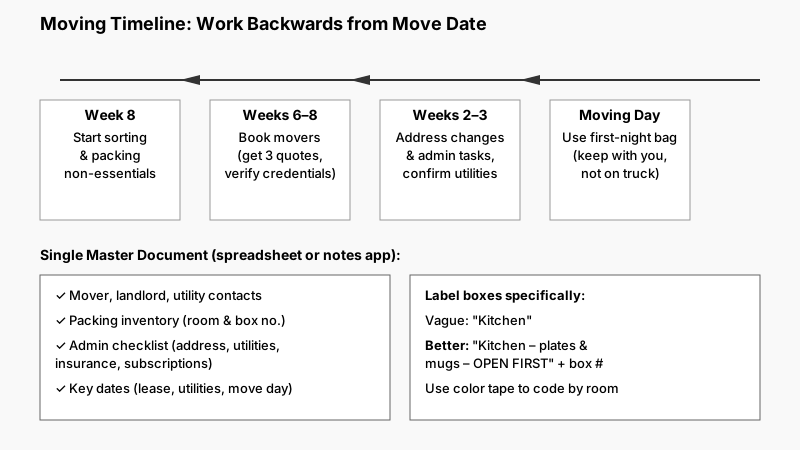
Most people underestimate how long moving takes. A good rule of thumb: whatever timeline you think is reasonable, double it. If you’re moving in eight weeks, start sorting and packing non-essentials in week one — not week seven.
Early action pays off in several specific ways:
- Decluttering becomes deliberate, not frantic. When you’re not under time pressure, you can sell items on Facebook Marketplace or donate to local charity shops rather than throwing everything in a bin bag.
- You catch expensive surprises early. Booking movers six to eight weeks out gives you access to better rates and more choices. Leave it to two weeks before and you’ll either pay a premium or settle for whoever is available.
- Packing stays manageable. Doing a few boxes per day over several weeks is far less exhausting than a 14-hour packing marathon the night before the truck arrives.
Set a moving date, then work backwards to build a week-by-week checklist. Put it somewhere visible — a whiteboard or a shared notes app works well for households.

Build a Move-Management System
One of the biggest stress drivers during a move is the feeling that something important is about to slip through the cracks. A simple management system fixes that.
Use a Single Master Document
Create one document (a spreadsheet or a notes app like Notion or Google Docs) that holds:
- Contact details for your movers, landlord, utility companies, and letting/estate agents
- A packing inventory by room and box number
- A checklist of admin tasks: address changes, utility transfers, school notifications, insurance updates
- Key dates: lease end, moving day, utility cutoff and reconnection dates
This sounds simple because it is. But not having it means you’ll be hunting through text messages and email chains at 11 pm the night before the move.
Label Boxes Specifically, Not Vaguely
“Kitchen” is a useless label when you have 14 kitchen boxes. “Kitchen – everyday plates & mugs – OPEN FIRST” is useful. Number each box and log it in your inventory so if something goes missing, you can identify exactly what was in it.
Use colored tape or markers to code boxes by room so movers can sort them without asking you every thirty seconds.
Prepare a First-Night Bag
Pack a bag or clearly labeled box with everything you’ll need for the first 24 hours: phone charger, a change of clothes, toiletries, medications, a basic set of bedding, a few kitchen essentials (kettle, mugs, coffee or tea), and any important documents. Keep this with you rather than on the truck. This one habit prevents an enormous amount of first-night misery.
Handle the Logistics Methodically
Choosing and Managing Movers
If you’re hiring professional movers, get at least three quotes. Check that each company is registered and insured — in the UK, look for members of the British Association of Removers; in the US, verify registration with the Federal Motor Carrier Safety Administration (FMCSA). Read recent reviews on independent platforms rather than testimonials on the company’s own website.
Be specific when describing your inventory to get an accurate quote. Hidden charges — for stairs, long carries, or bulky items — are common sources of disputes. Ask upfront.
If you’re doing a DIY move with a rental van, book early, practice driving the vehicle if it’s larger than you’re used to, and rope in helpers with clear role assignments rather than vague promises of “I’ll help.”
Address Changes and Admin
Address changes are easy to procrastinate on and genuinely disruptive if you leave them too late. Work through the list systematically:
- Government agencies (HMRC, DVLA, or IRS, DMV equivalents in your country)
- Bank accounts and credit cards
- Employer HR and payroll
- GP, dentist, and any specialist medical providers
- Insurance policies (home, car, health, life)
- Subscriptions and online shopping accounts
- Electoral roll registration
Start this process about two to three weeks before your move date, not on moving day itself.
Utility Transfers
Arrange for utilities at your old place to be active until the day after you leave — not the day of — to avoid complications. At the new property, confirm the connection date for electricity, gas, broadband, and water, and take meter readings on both ends of the move on the day.
Broadband is the one service that routinely has long lead times. In many areas, getting a new line set up can take two to four weeks, so book it the moment you know your moving date.

Manage the Emotional Weight of Moving
The practical side of moving gets a lot of attention. The emotional side gets considerably less, which is a mistake — because unaddressed stress leaks into every part of the process.
Acknowledge That It’s Hard
Leaving a home involves real grief, even when the move is exciting or clearly the right decision. You’re leaving behind a version of your daily life, proximity to people you care about, and a place that held memories. Naming that honestly — to yourself and to others in your household — reduces the pressure to feel purely positive about it.
For children especially, involve them in the process rather than managing it for them. Let them pack their own belongings, choose where things go in the new room, and say proper goodbyes to friends and neighbors. Children who feel agency over the move adapt faster.
Protect Your Physical State
Stress and physical exhaustion compound each other. During a move, sleep tends to slip, eating becomes erratic, and exercise disappears. None of that is catastrophic for a few weeks, but being intentional about the basics — eating proper meals, keeping some kind of movement in your day, getting to bed at a reasonable hour even when the to-do list feels endless — makes a measurable difference to your mood and decision-making.
If you live with other people, split the work fairly rather than letting one person carry the bulk of the planning. Moving stress is one of the more reliable relationship stressors, and communicating clearly about workload prevents a lot of resentment.
Set a ’Good Enough’ Standard
Perfectionism during a move is expensive. Not every box has to be perfectly packed. The new house doesn’t need to be completely organized before you allow yourself to relax. Setting a “good enough for now” standard for the first few weeks — unpacked bedrooms, a functional kitchen, the basics in the bathroom — lets you actually inhabit the new space rather than treating it as a project to complete.
Settling Into the New Home
The move itself is just the midpoint. Settling in is its own process, and it takes longer than most people expect.
Once the boxes are unpacked, How to Declutter Your Home Step by Step (That Actually Works) can help you avoid just shifting your old clutter into the new space.
Prioritize These Rooms First
Unpack and set up the bedroom, bathroom, and kitchen before anything else. These are the rooms that determine your daily quality of life. The spare room can wait a week. The study can wait longer. Getting these three functional within 48 hours of arrival resets the stress level substantially.
When you get to the bedroom, How to Make Your Bedroom More Relaxing: 12 Practical Changes offers some practical ideas for turning it into a calm retreat after all the moving chaos.
Get Oriented in the Neighborhood
One of the underrated sources of early discomfort in a new home is unfamiliarity with the surrounding area. Spend an hour walking or cycling within a mile radius in the first few days. Find the nearest supermarket, pharmacy, and coffee shop you like the look of. Introduce yourself to immediate neighbors — not because it’s socially obligatory, but because knowing a neighbor’s name reduces the psychological distance of a new environment.
Give It Time
Research on residential mobility suggests that people consistently underestimate how long it takes to feel settled after a move. A study published in the journal Environment and Behavior found that a sense of home attachment typically develops over months, not days or weeks. Allow for that. The initial alienation — the light switches in the wrong place, the unfamiliar sounds at night, the routes that don’t yet feel automatic — is temporary and normal.

A Few Things Worth Spending Money On
Most advice about moving focuses on saving money. But there are a handful of places where spending a little more genuinely reduces stress:
- Professional packing for fragile or valuable items. If you have artwork, instruments, or irreplaceable objects, the cost of professional packing materials and help is worth it.
- Cleaning services. Booking a professional end-of-tenancy clean at your old place and a clean at the new one before you move in removes a significant source of anxiety — and in rental situations, helps protect your deposit.
- A night or two in temporary accommodation. If the logistics are complex, staying somewhere nearby the night before can reduce the chaos significantly by giving you a calm base of operations.
- Storage for the overlap period. If you’re between leases, short-term storage for non-essentials is far less stressful than having everything crammed into a single space.
Conclusion
Moving will never be entirely stress-free — the variables involved are too many and too unpredictable for that. But the difference between a chaotic move and a manageable one almost always comes down to starting earlier than feels necessary, building simple systems to track the details, protecting your physical and emotional wellbeing through the process, and giving yourself permission to settle in gradually rather than demanding instant comfort.
Take it room by room, week by week. The new home will start to feel like yours sooner than you expect.