How to Cook Couscous Properly: Fix The Water Ratio Mistake

Couscous gets a bad reputation it doesn’t deserve. Most people either end up with a soggy, clumped mass or a dry, gritty pile that tastes like cardboard. The fix is almost always the same: too much water, too much heat, or skipping the steaming step entirely. Get those three things right and couscous becomes one of the most reliable, versatile staples in your kitchen.
This guide covers the correct technique for all three common types — instant, medium-grain, and pearl (also called Lebanese or Israeli couscous) — plus a few upgrades that make the difference between a side dish you tolerate and one you actually want to eat.

What Exactly Is Couscous?
Couscous is not a grain in the botanical sense. It’s a pasta — specifically, tiny granules of semolina wheat that have been rolled, dampened, and dried. Traditional North African couscous is hand-rolled and steamed over a fragrant broth in a couscoussier (a two-part steamer). The couscous sold in most supermarkets outside North Africa has been pre-steamed and dried, so it needs far less cooking time — but that convenience comes with a tendency for home cooks to overdo the water.
The three forms you’ll commonly find:
- Fine or instant couscous (the small kind in most supermarkets): pre-steamed, ready in under 10 minutes
- Medium-grain couscous: slightly larger, same pre-steamed process, slightly more texture
- Pearl couscous (Israeli/Lebanese): much larger, toasted, cooked more like pasta or risotto
This article focuses mainly on instant/medium-grain couscous, which is what the majority of people are cooking at home, with a dedicated section for pearl couscous at the end.
The Correct Water Ratio
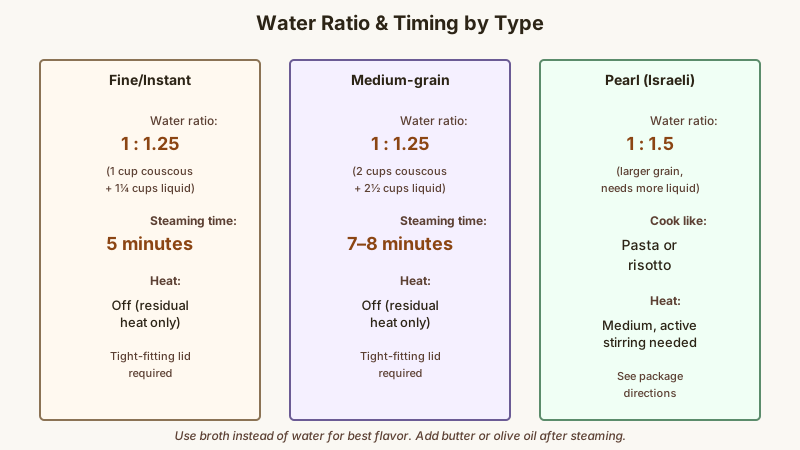
This is where most recipes go wrong. A common instruction is 1:1.5 (one part couscous to one-and-a-half parts water). For fine or medium couscous, 1:1.25 is usually better — especially if you’re adding a lid and letting it steam. The couscous will absorb every drop, and excess water turns it paste-like.
A rough guide:
- 1 cup (180 g) dry couscous → 1¼ cups (300 ml) liquid
- 2 cups (360 g) dry couscous → 2½ cups (600 ml) liquid
If you’re cooking it in broth (which you should — more on that below), the principle is the same. Don’t let the package instructions override this; many call for too much liquid to account for variations in stove temperature and pot type.
How to Cook Couscous Properly: Step by Step
Step 1: Choose Your Liquid
Plain water produces plain couscous. Swap it for:
- Chicken or vegetable stock — the single biggest flavor upgrade
- Stock + a pinch of saffron dissolved in a tablespoon of warm water — for a Moroccan-style dish
- Stock + a squeeze of lemon juice added after cooking
Avoid strongly acidic liquids (like undiluted tomato juice) — they can interfere with absorption.
Step 2: Bring Liquid to a Full Boil
Don’t just heat until steaming. Bring the liquid to a rolling boil before adding the couscous. Add a generous pinch of salt and, if you like, a tablespoon of olive oil or unsalted butter at this stage.
Step 3: Add the Couscous Off the Heat
Turn the burner completely off. Pour the couscous into the hot liquid, stir once to distribute evenly, and immediately cover the pot with a tight-fitting lid or a plate. This is not optional — the steam is what cooks the couscous, not direct heat. Leaving the lid ajar lets steam escape and the result will be uneven and dry in patches.
Step 4: Wait the Full Time (And No Peeking)
Set a timer for 5 minutes for fine couscous, 7–8 minutes for medium-grain. Resist lifting the lid. The residual heat in the liquid is doing the work; every time you check, you lose steam.

Step 5: Fluff With a Fork, Not a Spoon
This step matters more than it sounds. Use a fork — a dinner fork works fine — and work through the couscous with light, raking strokes rather than stirring. A spoon crushes the granules back together. Fluffing breaks up the clumps and aerates the texture. Take about 30 seconds on this.
Step 6: Add Fat Last
If you didn’t add butter or olive oil in Step 2, add it now. About a tablespoon per cup of dry couscous. Work it through with the fork. Fat coats each granule, prevents clumping, and rounds out the flavor. This is the step that separates restaurant-quality couscous from home canteen couscous.
Step 7: Taste and Adjust
Taste before serving. Couscous is very easy to under-salt because the granules look seasoned when they’re not. Add salt and a small squeeze of lemon to brighten everything up. A pinch of ground cumin or coriander folded in here also works well if you’re serving it alongside spiced dishes.
Common Mistakes and How to Fix Them
Clumpy couscous — Almost always caused by too much water or not fluffing immediately after the rest. If it’s already clumped, drizzle a teaspoon of olive oil over it and work through vigorously with a fork while it’s still warm.
Gummy or wet couscous — The liquid ratio was too high or the lid was left on too long after the absorption period. Spread it on a baking sheet and put it in a low oven (about 100°C / 210°F) for 5–6 minutes to drive off excess moisture.
Bland couscous — Cooked in plain water without salt. Not easily fixed after the fact, but toasting the dry couscous in a dry pan for 2–3 minutes before adding the liquid adds a nutty depth that helps a lot going forward.
Gritty or undercooked texture — The liquid wasn’t hot enough when the couscous was added, or the lid wasn’t tight. Cover again, pour a splash of boiling water around the edges, replace the lid, and wait another 3 minutes.

If you’ve battled a similar gluey texture with other grains, How to Cook Quinoa Properly: Why Your Pot Turns Gluey tackles the same water-ratio problem in more detail.
How to Cook Pearl Couscous
Pearl couscous (the larger, toasted variety) needs a completely different approach. Because the granules are substantially larger and denser, the off-heat steaming method doesn’t work.
The best method is pasta-style:
- Heat a drizzle of olive oil in a saucepan over medium heat.
- Add the dry pearl couscous and toast for 2–3 minutes, stirring often, until lightly golden and fragrant. This step is already partially done for you since it’s sold toasted, but a second toast deepens the flavor.
- Add boiling stock at a ratio of 1:1.75 (couscous to liquid), stir, reduce heat to low, cover, and simmer for about 10–12 minutes.
- Check for tenderness — it should have a slight chew, like al dente pasta. If liquid remains, remove the lid and cook for another minute or two.
- Fluff and finish with olive oil, lemon zest, and fresh herbs.
Pearl couscous absorbs flavors particularly well, making it excellent in warm salads with roasted vegetables, feta, and fresh mint.
Flavoring and Serving Ideas
Once you have good technique, couscous is a blank canvas. A few directions worth trying:
- Moroccan-style: cooked in saffron broth, topped with a lamb or chickpea tagine, finished with preserved lemon and fresh cilantro
- Simple weeknight side: stock-cooked couscous, toasted pine nuts, raisins, and a drizzle of olive oil — ready in 10 minutes
- Warm salad: pearl couscous with roasted cherry tomatoes, kalamata olives, cucumber, and a red wine vinegar dressing
- Herb-forward: fine couscous with masses of flat-leaf parsley, mint, diced tomato, and lemon — essentially a couscous tabbouleh
- Spiced breakfast bowl: couscous cooked in warm milk with cinnamon, honey, and dried apricots
Couscous also holds well at room temperature, which makes it practical for packed lunches and picnics in a way that rice doesn’t quite manage.
Storing and Reheating Couscous
Cooked couscous keeps in the refrigerator for up to 4 days in an airtight container. It tends to clump together when cold. To reheat, add a tablespoon of water or stock per cup of couscous, cover loosely with a damp paper towel, and microwave on medium power for 60–90 seconds. Fluff with a fork before serving. Alternatively, warm it in a pan over low heat with a splash of stock, stirring gently.
Freezing works but changes the texture slightly — it becomes a touch softer. It’s fine in dishes like stuffed peppers or couscous-based soups where texture matters less.
For another side dish that suffers when reheated wrong, How to Cook Brown Rice Without It Getting Mushy offers tips that apply just as well here.
A Note on Traditional Couscous
If you want to go further, the traditional Maghrebi method involves steaming raw (not pre-cooked) couscous over a broth in a couscoussier — twice, sometimes three times — working fat through by hand between each steam. The result is dramatically lighter and more aromatic than anything you’ll get from the instant variety. It’s a Sunday project, not a Tuesday night side dish, but worth doing once to understand what couscous can actually be. Paula Wolfert’s writing on the subject in Couscous and Other Good Food from Morocco remains one of the clearest explanations available in English.
Conclusion
Getting couscous right comes down to a few disciplined habits: use slightly less liquid than the package says, bring it to a full boil before you add the couscous, pull it off the heat immediately, keep the lid on, and fluff thoroughly with a fork. From that foundation, the flavor possibilities are wide open. It’s genuinely one of the fastest, most adaptable things you can cook — it just needs to be cooked properly.