How to Remove Water Stains from Wood Furniture: Erase Those Pesky Rings

Water stains on wood furniture are one of those problems that look worse than they usually are. A wet glass left on a coffee table, a spilled vase, a sweating bottle of wine — any of these can leave behind a white ring or a dark blotch that seems to have permanently marked your furniture. The good news: most water stains respond well to simple household remedies, and even stubborn cases can be fixed without stripping the finish entirely.
This guide walks through seven methods, from the gentlest to the most aggressive, so you can match the fix to your specific stain.
Understanding What You’re Actually Dealing With
Not all water stains are the same, and the color tells you a lot.
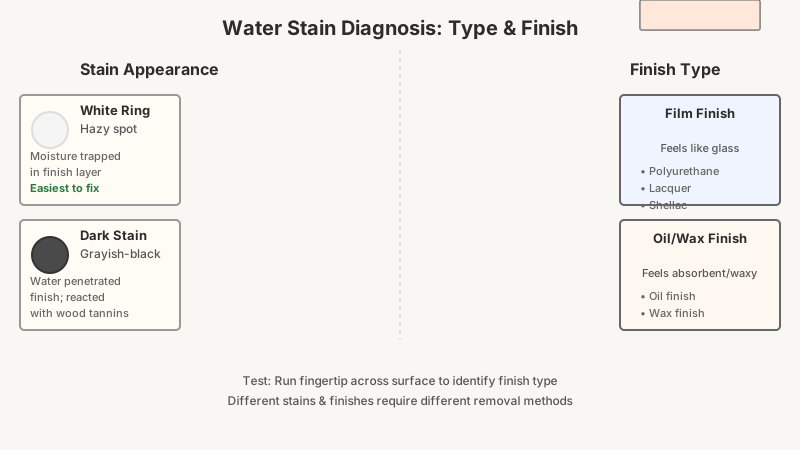
White rings and hazy spots are trapped moisture inside the finish itself — the topcoat of lacquer, polyurethane, or wax has turned milky because water vapor got underneath it. The wood below is fine. These are the easiest stains to fix.
Dark stains are a different story. That grayish-black discoloration means water actually penetrated the finish and reacted with the tannins in the wood (or, in some cases, with iron from a metal object). Dark stains require more work and sometimes light sanding.
Before you grab anything from under the sink, check whether your piece has a hard film finish (polyurethane, lacquer, shellac) or an oil/wax finish. Run a fingertip across the surface: if it feels like glass, it’s a film finish. If it feels slightly absorbent or waxy, it’s an oil or wax finish. Some methods work on one but not the other.

7 Methods to Remove Water Stains from Wood
Method 1: A Dry Iron or Hair Dryer (Best for White Rings on Film Finishes)
Heat drives trapped moisture out of the finish — the same physics that caused the problem in the first place can fix it.
For a hair dryer: Set it to medium heat, hold it 6–8 inches from the stain, and move it in slow circles. Check every 30 seconds. The hazy ring often disappears within a couple of minutes. Don’t hold the dryer in one spot or crank it to maximum — you can blister the finish.
For a dry iron: Lay a clean cotton cloth (a tea towel works perfectly) flat over the stain with no wrinkles. Set the iron to the lowest setting with steam off. Press for 5–10 seconds, lift, and check. Repeat, gradually increasing heat if needed. The cloth protects the finish from direct contact.
This method works surprisingly often on rings that are only a few days old.
Method 2: Petroleum Jelly or Mayonnaise (Overnight Treatment)
This sounds absurd, but it works. The oils in petroleum jelly (Vaseline) or full-fat mayonnaise displace the trapped moisture when left in contact overnight.
Apply a generous dollop directly onto the white ring. Leave it for at least eight hours — overnight is ideal. Wipe it away with a soft cloth and buff the area. The finish often comes back completely clear.
This is one of the most reliable fixes for older white rings that have had time to set. It works on wax and oil finishes particularly well, but also on lacquer and polyurethane in many cases.
Method 3: Toothpaste or Baking Soda Paste (Mild Abrasive)
Plain white toothpaste (not gel, not whitening formulas with bleaching agents) is a mild abrasive that can buff out the cloudiness in a finish.
Apply a small amount to the stain and rub gently with a soft cloth in the direction of the wood grain. Work in short strokes. Check every 30 seconds — you want to remove the cloudiness, not the finish. Wipe clean and apply a small amount of furniture wax or polish.
A paste of baking soda and a few drops of water works the same way. Use slightly more caution: baking soda is a bit more abrasive than toothpaste.
Avoid this method on dark-stained or painted furniture — it can remove color along with the cloudiness.
Method 4: Steel Wool and Oil (For Wax or Oil Finishes)
On furniture with a wax or oil finish, ultra-fine steel wool (0000 grade — that’s four zeros) dipped in mineral oil or lemon oil can buff out white rings without damaging the underlying wood.
Work in the direction of the grain using very light pressure. The oil lubricates the steel wool so it cuts the stain, not the wood. Wipe away the residue and re-wax or re-oil the surface when done.
Do not use this method on lacquer or polyurethane finishes — it will create fine scratches that scatter light and look worse than the original stain.
Method 5: Vinegar and Olive Oil (Combination Polish)
A 1:1 mixture of white vinegar and olive oil, applied with a soft cloth and rubbed in the direction of the grain, is a traditional fix for mild white rings. The vinegar has a very mild acidic cleaning action while the oil conditions the wood.
This won’t work on deep or dark stains, but for a superficial haze on an oiled or waxed surface it can restore clarity. Don’t leave it sitting — apply, rub, and wipe away promptly.

Method 6: Commercial Products (When DIY Isn’t Cutting It)
If none of the above are working, a few commercial products are genuinely effective:
- Howard Restor-A-Finish is a solvent-based product that blends minor surface damage back into the existing finish. It comes in shades matched to common wood tones (walnut, oak, golden oak, etc.) and works well on lacquered and varnished surfaces.
- Minwax Wood Stain Marker can be useful for touching up dark spots after sanding, though it’s a stain, not a finish fixer.
- Guardsman Anew Wood Restorer is specifically formulated for water rings and scratches in polyurethane finishes.
Always test any product in an inconspicuous spot — the underside of a table leaf, for example — before applying it to a visible area.
Note: Some links to products may contain affiliate relationships with retailers. This article has no such arrangements, but always compare prices independently.
Method 7: Sanding and Refinishing (For Dark Stains and Severe Damage)
Dark water stains that have penetrated the wood fibers themselves need a more serious approach. The moisture-tannin reaction (or rust from metal objects) has actually discolored the wood, not just the finish.
Step 1: Sand the affected area with 150-grit sandpaper, working with the grain. You’re removing the finish to get at the stained wood underneath.
Step 2: If the dark stain persists in the bare wood, apply a wood bleach. Oxalic acid (available at hardware stores, sold as wood bleach) is effective for tannin and iron stains. Mix it with water per the package instructions, apply to the stain, let it dry, and neutralize with a baking soda and water rinse. Allow the wood to dry completely — at least 24 hours.
Step 3: Sand lightly with 220-grit to smooth the grain that raised during bleaching.
Step 4: Apply a matching stain if needed, then refinish with your chosen topcoat (polyurethane, lacquer, or oil).
This is the most involved method, but it’s the only reliable fix for deep, dark stains. On antique or valuable furniture, consider consulting a professional furniture restorer before proceeding — you can’t unsand a piece.
Preventing Water Stains in the First Place
Once you’ve done the work to fix a stain, it’s worth making sure it doesn’t happen again.
Use coasters consistently. It sounds obvious, but most people stop using them as soon as the last stain fades. Keep a stack where the glasses live, not where the furniture is.
Maintain your finish. Waxed surfaces need rewaxing every six months to a year. A healthy wax layer is what stops moisture from reaching the finish underneath. For polyurethane-finished furniture, a light coat of paste wax every year adds an extra layer of protection.
Dry spills immediately. A wet ring becomes a white ring after the moisture has had time to work under the finish — usually 20–30 minutes is enough. Blot (don’t wipe) spills as soon as they happen.
Use table pads for extended gatherings. A felt-backed table pad is inexpensive and eliminates the risk from hot dishes and condensation during meals.

If your furniture also has hardened drips from candles alongside those water rings, How to Remove Candle Wax from Any Surface (12 Methods) can help you tackle that mess too.
Matching the Method to the Furniture
A quick reference for choosing your starting point:
| Stain Type | Finish Type | Start With |
|---|---|---|
| White ring, fresh | Film (polyurethane/lacquer) | Iron/hair dryer method |
| White ring, older | Any finish | Petroleum jelly overnight |
| Hazy patch | Film finish | Toothpaste abrasive |
| White ring | Oil/wax finish | Steel wool and mineral oil |
| Dark stain | Any finish | Sanding + oxalic acid bleach |
| Mild discoloration | Oil/wax finish | Vinegar and olive oil |
Work from the least invasive method toward the more aggressive. The iron takes 10 minutes and leaves no trace if it fails. Sanding is irreversible, so it should always be the last resort.
For upholstered pieces sitting nearby that need attention beyond the wood itself, Deep Clean Upholstered Furniture Without Professional Help offers a solid game plan.
Conclusion
Most water stains on wood furniture are cosmetic problems with straightforward solutions. White rings from trapped moisture respond well to heat, oils, or mild abrasives — often in under half an hour. Dark stains take more effort but are fixable with sanding and wood bleach. The main risk with any of these methods is using something too aggressive too early, so start gentle and escalate only if needed.
If you’re ever unsure — particularly with antique furniture, veneer, or pieces with sentimental value — test on an unseen spot first, or get a professional opinion. Wood is more forgiving than it looks, but it pays to know what you’re working with before you start.