How to Build a Sustainable Wardrobe on a Budget

Buying “sustainable” clothing often gets sold as an expensive upgrade — organic cotton at a premium, a $200 pair of ethically made jeans, a capsule brand with a waitlist. But the most sustainable wardrobe is rarely the one you buy new. It’s the one you already own, kept in use longer, filled out slowly and deliberately. That approach happens to be the cheapest one too.
This is a practical walkthrough for building a sustainable wardrobe on a limited budget: what to keep, what to buy secondhand, how to judge quality without a designer price tag, and how to make it all last. I’ll treat clothing as a small, personal investment — money you want to spend once and use for years, rather than repeatedly on garments that fall apart.
Why “buy less, choose well” beats “buy sustainable”
The biggest environmental cost of a garment is often that it gets discarded quickly. According to the Ellen MacArthur Foundation, the equivalent of one garbage truck of textiles is landfilled or burned every second, and clothing utilization — how many times an item is actually worn — has dropped sharply in recent decades. The UN Environment Programme has also flagged the industry’s heavy water use and its share of global carbon emissions.
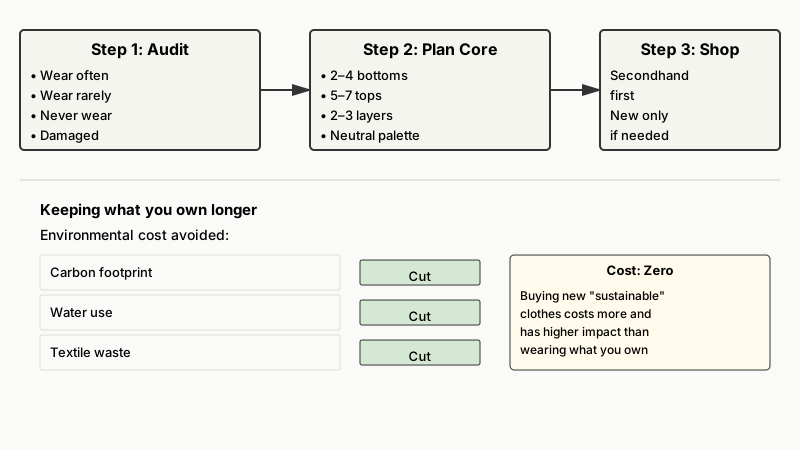
The takeaway for a budget shopper is encouraging: extending the life of what you own is the single highest-impact move, and it costs nothing. WRAP, a UK sustainability nonprofit, has estimated that keeping clothes in active use for longer meaningfully cuts their carbon, water, and waste footprints. You don’t need to spend more to be more sustainable. You need to buy less and wear things longer.

If your sustainability goals extend beyond your closet, Sustainable Living in Small Apartments: 15 Real Tips offers plenty of practical ideas for cutting waste throughout your home.
Step 1: Audit what you already own
Before spending a cent, empty your closet and sort everything into four piles.
- Wear often — the pieces you reach for weekly. Note why they work: fit, color, fabric, versatility.
- Wear rarely but love — occasion pieces worth keeping.
- Never wear — figure out the reason. Wrong fit? Uncomfortable fabric? Needs a repair?
- Damaged — separate the fixable from the truly done.
This audit does two things. It stops you re-buying items you already have (most of us own more than we think), and it teaches you your real preferences. If you never wear stiff button-downs, that’s data — stop buying them.
For the “never wear” pile, resist the urge to bin it. Sell, swap, or donate wearable items. Genuinely worn-out textiles can often go to dedicated textile recycling points rather than household trash.
Step 2: Define a small, honest core wardrobe
A capsule wardrobe isn’t a rigid rule about owning exactly 33 things. It’s a loose target: a modest set of pieces that mix and match, built around your actual life and a color palette that agrees with itself.
Start by listing what you genuinely do in a week — commuting, physical work, exercise, seeing friends, colder or hotter seasons. Build the wardrobe for that, not for an imagined life. A useful budget core often looks like:
- 2–4 bottoms that fit well (jeans, trousers, a skirt)
- 5–7 tops across dressiness levels
- 2–3 layers (a knit, a cardigan, an overshirt)
- 1–2 outerwear pieces suited to your climate
- Shoes for the 2–3 situations you’re actually in
Keeping a neutral base (black, navy, grey, olive, cream, denim) means almost everything pairs with everything, so a small number of items yields many outfits. That multiplication is what makes a limited budget stretch.
Make a short, specific shopping list
Only after the audit and the core plan should you write a list of gaps — and be specific. “A warm mid-layer in a neutral color” beats “some sweaters.” A precise list is your defense against impulse buys, which are where budgets and good intentions both die.
Step 3: Shop secondhand first
Buying used is almost always cheaper and lower-impact than buying new, because it keeps an existing garment in circulation. There are distinct channels, and each suits a different need.
Thrift and charity shops
Best for browsing and low prices. Inventory is random, so go with your list but stay flexible. Check seams, zippers, armpits, and knees before buying. Natural fibers (cotton, wool, linen) from older, well-made garments are often a bargain.
Online resale platforms
Sites and apps for secondhand clothing let you search by exact size, brand, and item — ideal when you need something specific. You pay a bit more than a thrift shop and can’t feel the fabric, so read measurements and condition notes carefully and check the return policy. (Some resale platforms and brand referral links carry affiliate commissions; that doesn’t change the price you pay, but it’s worth knowing.)
Clothing swaps
Essentially free. Organize one with friends or find a local swap event. You offload what you don’t wear and pick up something new-to-you at zero cost.
Vintage and consignment
More curated and pricier than a charity shop, but a good place to find durable, higher-quality pieces that were made to last — sometimes better construction than comparably priced new items.

Step 4: Judge quality without a big price tag
Price is not a reliable signal of durability — expensive fast fashion exists, and so do sturdy budget finds. Learn to read the garment itself.
- Fabric content. Check the label. Natural fibers and quality blends generally age better and breathe better than very cheap synthetics. That said, a well-made poly blend can outlast a flimsy “natural” fabric — construction matters too.
- Seams. Turn the garment inside out. Tight, even stitching and finished (overlocked) seam edges signal care. Loose threads and raw, fraying edges are warning signs.
- The hold test. Hold thin fabric up to light. If it’s near see-through where it shouldn’t be, it will likely thin and pill fast.
- Hardware. Zippers should glide; buttons should be firmly attached with spare thread ideally included. Metal beats brittle plastic.
- Fit at the source. Something that needs major alterations is a hidden cost. A great fit off the rack (or with a cheap hem) is worth more than a “deal” you’ll never wear.
Step 5: Care for clothes so they last
Extending garment life is where the real savings and the real sustainability live. Most damage is self-inflicted through over-washing and heat.
- Wash less, and cooler. Wash only when actually dirty. Cold water is gentler on fibers and dyes, and saves energy.
- Skip the dryer when you can. Tumble-drying heat and agitation wear fabric out faster; air-drying extends life and cuts electricity use.
- Turn things inside out and use a mesh bag for delicates to reduce abrasion and pilling.
- Read care labels, especially for wool and structured items, and spot-clean where possible instead of washing the whole garment.
- Store smart. Fold heavy knits rather than hanging them (they stretch), and let items air out between wears.
When accidents happen despite your best care, How to Remove Common Stains from Clothes: Why Speed Beats Scrubbing can help you rescue a garment instead of retiring it early.
Learn basic repairs
A few small skills pay for themselves many times over: sewing a button, closing a small seam split, patching a knee, using iron-on mending tape. For anything beyond your skill, a local tailor or cobbler is far cheaper than replacement — re-soling good shoes or re-hemming trousers extends their life for years. Repairing is the least glamorous and most effective sustainability habit there is.
The same wash-gently philosophy applies to other well-loved gear, as explained in How to Wash a Backpack Properly: Skip The Machine, Save The Straps.
Step 6: Buy new deliberately — when you do
Sometimes secondhand won’t cover it (underwear, certain shoes, specialized gear). When buying new on a budget:
- Buy off-season and during genuine sales for staples you already know you need.
- Favor repairable, classic designs over trend pieces with a short shelf life.
- Calculate cost-per-wear — a $60 item worn 200 times costs less per wear than a $15 item worn five times.
- Be skeptical of vague “eco” and “conscious” marketing. Broad green claims without specifics are a documented greenwashing pattern; look for concrete details rather than mood words.
Saving up for one well-made staple and delaying the purchase usually beats buying three cheap versions of the same thing over the same period.
A realistic timeline
You don’t build this in a weekend, and trying to will just cost money. Do the audit first. Live with your existing core for a few weeks and note the real gaps. Then fill them one at a time, secondhand-first, over months. A sustainable wardrobe on a limited budget is less a shopping project than a slow shift in habits — buy less, choose carefully, and keep things in use.
Frequently Asked Questions
Is buying secondhand always more sustainable than new?
Generally yes, because it extends the life of an existing garment and avoids the resources needed to make a new one. The main exception is if you buy secondhand items you’ll never wear — that’s still waste. Buy used, but buy only what you’ll actually use.
How many clothes do I really need?
There’s no universal number. The point isn’t hitting a specific count like 30 or 33 pieces; it’s owning items you genuinely wear that mix and match for your real life. A smaller, well-chosen set that you wear often beats a large closet full of neglected pieces.
Are sustainable fabrics worth paying more for?
Not automatically. Construction and how long you keep an item usually matter more than the fiber label. A durable garment you wear for years is more sustainable than a “green” fabric that pills after a month. Judge the whole garment, not just the material claim.
How can I spot greenwashing?
Be wary of vague terms like “eco,” “conscious,” or “natural” with no specifics behind them. Reputable claims tend to be concrete and verifiable. When a brand offers only feel-good language and no detail, treat it as marketing rather than evidence.
What should I do with clothes I no longer want?
Sell or swap wearable items to keep them in use, or donate them. For genuinely worn-out textiles, look for dedicated textile recycling points rather than the general trash, since some materials can be recovered.
The bottom line
A sustainable wardrobe on a limited budget isn’t about buying special products. It’s about wearing what you own longer, shopping secondhand when you need more, judging quality with your own eyes, and caring for garments so they last. Do that, and the sustainable choice and the frugal choice turn out to be the same choice.