How to Create a Capsule Wardrobe: Fewer Clothes, Sharper Style

Most people open their closet every morning and feel like they have nothing to wear — despite owning dozens of clothes. A capsule wardrobe flips that problem on its head. Instead of accumulating pieces that don’t work together, you build a small, intentional collection where almost everything pairs with everything else. The result is faster getting dressed, less decision fatigue, and, usually, lower spending over time.
This guide walks you through the full process: auditing what you own, choosing the right pieces, and maintaining the wardrobe over seasons. No fluff — just actionable steps.
What a Capsule Wardrobe Actually Is (and Isn’t)
The term was coined by London boutique owner Susie Faux in the 1970s to describe a small collection of timeless essentials you supplement with seasonal items. The concept gained wider attention after Donna Karan launched her “Seven Easy Pieces” collection in 1985, built around the idea that seven wardrobe staples could cover a professional woman’s week.
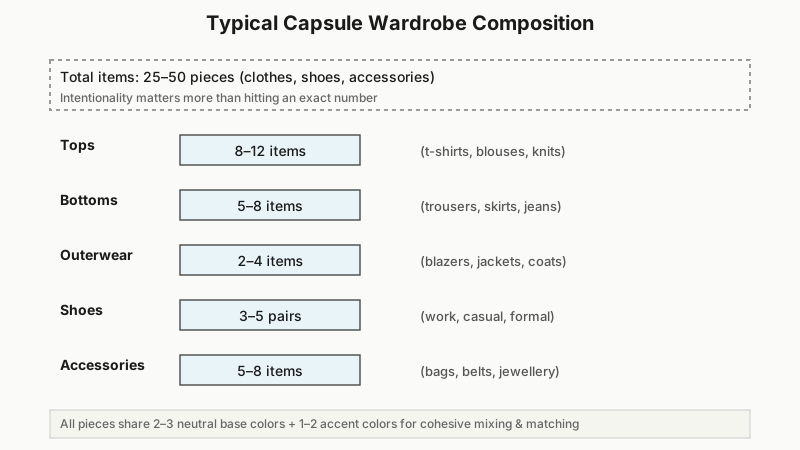
Today, the definition has loosened. A capsule wardrobe typically contains 25–50 items — including clothes, shoes, and sometimes bags — chosen to work together as a cohesive system. That number isn’t a hard rule. Some people thrive with 30 pieces; others need 60. What matters is intentionality, not a specific count.
A capsule wardrobe is not:
- A uniform (you don’t have to wear the same thing every day)
- A minimalist purity test (owning things you love isn’t excess)
- A one-size-fits-all formula (a teacher’s capsule looks nothing like a freelancer’s)

If this philosophy of owning less appeals to you, Minimalism for Beginners: Start Small, Change Everything explores the same mindset applied to your whole home, not just your closet.
Step 1 — Audit Your Current Closet
Before buying anything new, take stock of what you already own. This step trips people up because it requires honesty, but it’s also where most of the value hides.
Empty the closet completely
Pull everything out — including items stored in drawers, under the bed, and in seasonal boxes. Seeing it all in one place is often the first shock: duplicates appear, forgotten pieces surface, and the sheer volume becomes undeniable.
Sort into four piles
- Keep — items you wear regularly and that fit well right now
- Repair or tailor — pieces worth saving with minor fixes
- Donate or sell — clothes in good condition that no longer serve you
- Discard — worn-out items beyond reasonable repair
Be ruthless about the “keep” pile. A good test: has this item been worn in the past 12 months? If not, why not? If the answer is “it doesn’t fit” or “I never know what to pair it with,” it probably doesn’t belong.
Identify your actual lifestyle needs
Write down a rough breakdown of how you spend a typical week. If you work from home four days and go out twice, your wardrobe should reflect that ratio — not the fantasy version where you attend galas regularly.
Category examples:
- Work (office, remote, site visits)
- Casual weekends
- Exercise
- Social / evenings out
- Formal occasions
Once you know your lifestyle split, you can build a wardrobe that actually matches your life.
Step 2 — Define Your Personal Style and Color Palette
A capsule wardrobe lives or dies by internal cohesion. If your pieces don’t share a visual language — a consistent palette, a compatible aesthetic — they won’t mix and match effectively.
Choose a neutral base
Pick two or three neutral colors that you’ll use as the backbone of your wardrobe. Classic options:
- Navy + white + grey
- Black + white + camel
- Olive + tan + cream
- Charcoal + burgundy + ivory
These neutrals become the colors of your core pieces: trousers, blazers, knitwear, and shoes. When almost everything is a neutral, layering and pairing becomes effortless.
Add one or two accent colors
Accent colors show up in accessories, one or two statement tops, or a single bold jacket. They’re easier to update seasonally without rebuilding the whole wardrobe.
Define your aesthetic in plain words
Avoid vague labels like “classic” or “chic.” Instead, describe what you actually feel good wearing. “Tailored but comfortable, mostly solid colors, no logos” is more useful than a mood board concept. This description becomes your buying filter when shopping.

Step 3 — Build Your Core Pieces List
Now you’re ready to identify what your capsule actually needs. There is no universal list, but certain categories apply across most adult lifestyles.
Tops (8–12 items)
- 3–4 plain T-shirts or fitted long-sleeves in your neutrals
- 2–3 button-down shirts (linen or Oxford cloth work across seasons)
- 1–2 lightweight knit jumpers
- 1–2 heavier knitwear pieces for colder months
Bottoms (4–6 items)
- 2 pairs of well-fitted trousers or jeans in different washes or colors
- 1 pair of chinos or tailored trousers
- 1 casual skirt or additional trouser option if relevant to your wardrobe
Outerwear (2–4 items)
- 1 structured blazer or sport coat
- 1 light jacket (trench, denim, or bomber depending on climate)
- 1 warm coat for winter
- 1 rain-resistant option if you live somewhere wet
Shoes (3–5 pairs)
- 1 clean everyday trainer or casual shoe
- 1 smarter leather or suede shoe
- 1 pair of boots (ankle or knee, depending on climate)
- 1 sandal or warm-weather option
Accessories (3–5 items)
- 1–2 versatile bags
- A belt in your core neutral
- 1–2 scarves or lightweight layers that add warmth without bulk
Once you have this list, cross-reference it with what you kept from your audit. You’ll likely find you already own many of these — and that gaps are fewer than expected.
The 30-wears test
Before adding any new piece, ask: will I wear this at least 30 times? That threshold, popularized by fashion writer Erin Clements and sustainability advocates, is a quick gut-check against impulse purchases that don’t integrate into your system.
Step 4 — Shop Strategically to Fill Gaps
Shopping for a capsule wardrobe is slower and more deliberate than regular clothes shopping — and that’s the point.
Quality over quantity, within reason
You don’t need to spend a fortune, but the economics favor spending more on pieces you’ll wear constantly. A well-constructed pair of chinos worn 200 times over three years costs far less per wear than a cheap pair worn 10 times before falling apart.
Brands like Uniqlo, Arket, COS, and Everlane sit in the mid-range and produce basics that hold up well. Higher-end options from Muji (for casual basics) or traditional British and Italian tailors make sense for investment pieces.
Note: brand mentions are informational only and reflect no commercial relationship.
Shop secondhand first
Thrift stores, consignment shops, and platforms like Depop, Vinted, and The RealReal are excellent sources for capsule staples. Classic pieces — trench coats, raw-denim jeans, structured blazers — tend to age well and appear frequently in secondhand markets at a fraction of new prices.
Wait before buying
A practical rule: put a potential purchase on a list and wait one week. If you still want it and can visualize three outfits it works with, buy it. This delay eliminates most impulse purchases.
Step 5 — Maintain and Evolve Your Capsule
A capsule wardrobe isn’t a one-time project. It needs light maintenance to stay functional.
Seasonal reviews
Twice a year — typically at the start of spring and autumn — reassess what’s in rotation. Pack away out-of-season items. Remove anything that’s worn out or no longer fits your life. Add only what genuinely fills a gap.
The one-in, one-out rule
When you bring in a new piece, remove one. This keeps the collection from slowly expanding back to closet chaos. It also raises the bar for new additions: a purchase has to earn its place.
Care extends the life of everything
Wash clothes less frequently, at lower temperatures, and turn them inside out. Use proper hangers for structured pieces and fold knitwear rather than hanging it. A clothes brush used regularly removes surface lint and revives fabric between washes. These habits extend the life of garments measurably — which is both an environmental and financial win.

Common Mistakes to Avoid
Buying everything new at once. Most people already own more usable capsule pieces than they think. Build from what you have.
Chasing someone else’s list. Capsule wardrobe templates online are a starting point, not a prescription. A freelance writer’s capsule will look different from a nurse’s or a chef’s.
Ignoring fit. The single biggest quality signal in clothing is fit. An inexpensive piece that fits well will always look better than an expensive piece that doesn’t. Budget for tailoring on key items if needed.
Treating the number as sacred. Getting fixated on hitting exactly 33 items (as in Project 333, a popular minimalist wardrobe challenge) can cause more stress than the wardrobe solves. Use these frameworks as guidance, not rules.
Conclusion
Creating a capsule wardrobe is fundamentally a thinking exercise before it’s a shopping exercise. You’re clarifying what your life actually looks like, what aesthetic makes you feel confident, and which pieces serve both. The payoff — a closet you can open with confidence, less time spent on decisions, and clothes that last — compounds quietly over time.
Start with the audit. That alone changes how you see what you own. Everything else follows from there.