Build Layers of Flavor in Soups & Stews

A flat, one-note soup is rarely a technique problem — it’s almost always a sequencing problem. The ingredients are fine; they just went into the pot in the wrong order, at the wrong temperature, without the right moments of concentration. Fix the sequence and the flavor takes care of itself.
This guide walks through every stage where depth gets built or lost, from the first allium in the pan to the final seasoning before the bowl.
Start With Fat and Heat — The Foundation
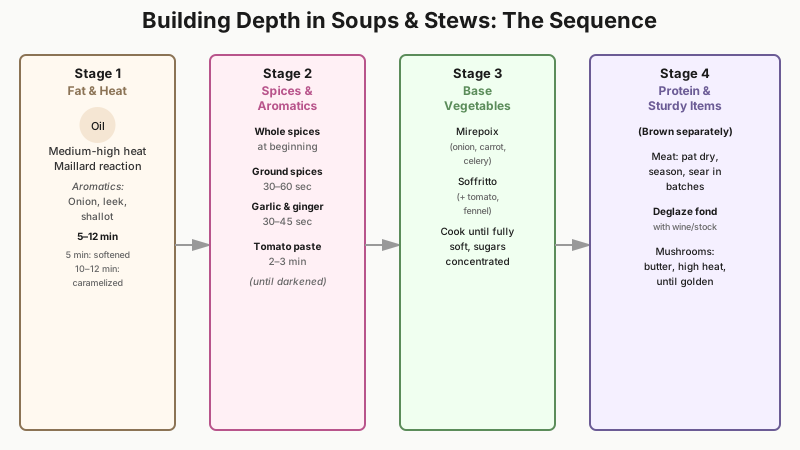
Flavor starts before any liquid appears. A wide, heavy pot (cast iron or enameled cast iron works well here) preheated over medium-high heat gives you the surface temperature needed for a proper Maillard reaction — the browning that creates hundreds of new aroma compounds that no amount of simmering can replicate.
Why fat choice matters: Olive oil brings its own grassy, bitter-edge character, which suits Mediterranean-leaning soups. Neutral oils let other flavors dominate. Brown butter or rendered lard adds another flavor layer before anything else hits the pan. Coconut oil can work in spiced lentil soups where its sweetness is an asset, not a distraction.
Add your aromatics — typically onion, leek, or shallot — to that hot fat and don’t rush them. A five-minute sweat softens the cell walls and drives off moisture; a ten- to twelve-minute deeper cook begins caramelization, which shifts onion flavor from sharp and vegetal to sweet and nutty. These aren’t the same thing, and which one you want depends entirely on the soup.

The Aromatic Core: Building Complexity in Stages
Once your base alliums are cooked down, you’re adding in concentric rings of flavor, each requiring different timing:
Dry Spices vs. Whole Spices
Ground spices bloom best when they hit dry fat — or at least very little liquid — for 30 to 60 seconds before anything wet arrives. That brief contact with heat opens the volatile aromatic compounds; add them too late and they taste dusty rather than fragrant. Whole spices (cumin seeds, cardamom pods, star anise) need even more time and should often go in at the very beginning with the oil, before the aromatics.
To make sure your spice choices actually deliver flavor, check out Build a Versatile Spice Cabinet from Scratch: Skip The Stale Jars for tips on stocking a cabinet that avoids stale, flavorless jars.
Garlic and Ginger
Both burn fast and both taste bitter when they do. Add them after the onions have had their time, not before, and stir constantly once they’re in. Thirty to forty-five seconds over medium heat is usually enough before you move to the next step. Fresh ginger and dried ginger are not interchangeable flavor-wise: fresh is bright and slightly floral; dried is warmer, deeper, slightly medicinal.
Tomato Paste — The Underused Depth Bomb
A tablespoon or two of tomato paste, allowed to fry in the aromatics for two to three minutes until it darkens and sticks slightly to the pan, contributes acidity, a mild umami note, and a layer of roasted, concentrated sweetness that canned tomatoes alone can’t match. This step is easy to skip; it’s also the step you notice when it’s missing.
Mirepoix, Soffritto, and Regional Equivalents
French mirepoix (onion, carrot, celery), Italian soffritto (with added tomato and sometimes fennel), Spanish sofrito (olive oil, tomato, pepper, garlic), Cajun holy trinity (onion, celery, bell pepper) — these regional building blocks encode a cuisine’s characteristic flavor signature. Use the one that matches your dish’s direction, and cook it long enough that the vegetables are fully soft and their sugars are concentrated.
Browning Your Protein and Vegetables — Don’t Skip It
If your recipe includes meat or sturdy vegetables (root vegetables, mushrooms, squash), brown them separately before they go into the broth. This is non-negotiable for depth.
For meat: Pat it completely dry, season it, and sear in batches that don’t crowd the pan. Crowding drops the surface temperature and steams instead of sears — gray meat instead of brown. The brown crust (again, Maillard browning) and any fond stuck to the pan are flavor, not mess.
Deglazing the fond: After searing, add a splash of wine, stock, or even water to the hot pan and scrape up every dark bit. That concentrated residue dissolves into the liquid and carries straight into your soup as an extra aromatic baseline. Red wine suits braised meat stews; white wine suits seafood or chicken soups; a dry sherry adds a nutty complexity worth trying in mushroom or bean soups.
For mushrooms: Cook them separately in butter over high heat, without stirring too often, until they’ve lost their water and turned deep golden. Mushrooms added directly to broth leach their moisture into the soup but rarely develop the roasted flavor they’re capable of.

Layering Liquids — Stock, Water, and Everything Between
The liquid you use is not neutral. It’s a flavor carrier.
Stock vs. Water
A well-made stock contributes gelatin (body), natural glutamates (umami), and a savory baseline that water simply can’t match. That said, overpowering the pot with a very strong store-bought stock can mask the very flavors you just built. Many experienced cooks use a mix: good stock for the baseline, some water to let the soup’s own character shine through.
If you want to take your base liquid to the next level, our guide How to Make Homemade Chicken Stock: Why Roasting Bones Deepens Flavor explains why roasting bones before simmering makes such a noticeable difference.
Umami Amplifiers
Umami — the savory fifth taste — builds synergistically: two umami sources together register as significantly more savory than the sum of either alone. Practical combinations:
- A Parmesan rind dropped into the pot while simmering (remove before serving)
- A splash of fish sauce in non-seafood contexts — particularly useful in tomato-based or meat stews where it reads as depth, not fishiness, when used sparingly
- Soy sauce or tamari in small amounts
- Dried mushrooms (porcini, shiitake) steeped or simmered in, with their soaking liquid strained and added too
- Miso stirred in at the end, off the heat (high heat diminishes its complexity and its probiotic content)
These aren’t meant to transform the dish’s identity; a teaspoon or two of any of these in a large pot of stew simply makes the existing flavors louder without being identifiable themselves.
Acid at Two Points
Acid is to soup what brightness is to a photograph: it doesn’t change the subject, it makes everything clearer. It works at two distinct stages:
- During cooking — a splash of wine or tomatoes early on rounds the sweetness of long-cooked aromatics and helps tenderize collagen in tougher cuts.
- Right before serving — a squeeze of lemon or lime, a small spoon of vinegar (sherry, red wine, apple cider), a spoonful of yogurt stirred in. This late-stage addition lifts the whole bowl. Many cooks forget it. You’ll notice if you do a side-by-side comparison: the bowl without the finish tastes slightly muddy; the one with it tastes alive.
Simmering, Reduction, and Knowing When to Stop
Once the liquid is in, temperature matters. A rolling boil drives off aromatics, can make proteins tough, and clouds stock unnecessarily. A gentle simmer — small bubbles breaking occasionally at the surface — extracts flavor slowly and lets gelatin-rich collagen in bones and skin dissolve into the liquid.
Reducing a portion of the soup — removing the lid and letting some liquid evaporate — concentrates flavors, but it also concentrates salt, so taste before you season at this stage. A common correction: if a soup tastes flat but already seems salty, the issue is often missing acid or body, not more salt.
Thickness comes from several routes:
- Starchy vegetables (potato, parsnip, squash) that break down during cooking
- A slurry of flour or cornstarch added carefully to avoid lumps
- Legumes partially blended in — a stick blender applied to one-third of the pot thickens without losing the chunky texture
- Reduction alone, for broth-forward soups
Final Seasoning and Finishing Touches
The last five minutes before serving determine whether everything you’ve built actually lands.
Salt: Season throughout, not only at the end — but do a final calibration just before serving. Underseasoned soup tastes dull even when everything else was done right. The benchmark is simple: can you taste each component distinctly? If everything blurs together, you’re usually a pinch of salt short, or missing acid.
Finishing fats and garnishes: A drizzle of good olive oil, a spoon of crème fraîche, a pat of herb butter, chili oil, toasted sesame oil — these add richness, aroma, and visual interest in a way that the cooked fat at the beginning can’t. They sit on top and are the first thing your palate hits.
Fresh herbs added at the end (parsley, cilantro, chives, fresh basil) provide volatiles that would have cooked off in the pot. Hardy herbs (thyme, rosemary, bay) belong in the pot; tender ones belong in the bowl.
Textural contrast: A crouton, a spoonful of cooked lentils or beans held back and added at the end uncrushed, a handful of toasted nuts, crispy chickpeas — texture makes a soup something to eat rather than something to drink.

Frequently Asked Questions
Why does my homemade soup taste flat compared to restaurant versions?
The most common culprits: skipping the browning step (protein and aromatics), underseasoning throughout (restaurants season at every stage, not just at the end), and missing an acid finish. A finishing drizzle of fat and a squeeze of citrus closes most of the gap.
Can I build layers of flavor starting from a store-bought broth?
Yes, but treat the broth as a neutral canvas. Still sauté your aromatics properly, bloom your spices, brown your protein, and add umami builders. Store-bought broth makes a reasonable foundation; skipping the aromatic build in favor of the broth doing all the work is where flavor goes flat.
At what point should I add wine, and does it matter if I use red or white?
Add wine after your aromatics are cooked and before the stock goes in. Let it reduce by at least half to cook off the sharpness. Red wine suits beef, lamb, and tomato-forward stews; white wine suits chicken, fish, corn, and cream-based soups. The style you’d drink with the dish is a reliable guide.
Why does my soup taste over-salted but still flat?
This usually signals missing acid or body rather than a true salt problem. Try a small splash of lemon juice or vinegar before adding more liquid — you may find the perceived saltiness drops and the flavor sharpens. Adding a raw potato to absorb salt is a common folk remedy; the evidence it works meaningfully is limited.
How do I fix a soup that tastes muddy or one-dimensional?
Work through the checklist: acid (add a small amount and taste), salt calibration, a fresh herb or herb oil to introduce volatile aromatics, and a finishing fat for richness. If it’s already overseasoned, a starchy addition (cooked rice, potato, extra beans) can dilute the intensity while adding body.