Sustainable Living in Small Apartments: 15 Real Tips

Why Small Spaces Are Actually a Sustainability Advantage
Living in a small apartment quietly tilts the odds in your favor before you even try. Smaller square footage means less energy to heat and cool, fewer surfaces to clean with chemical products, and a natural ceiling on how much stuff you can accumulate. That built-in constraint is a feature, not a bug.
But “sustainable living” can feel abstract — composting guides written for people with backyards, zero-waste advice that assumes a car and a bulk store nearby. This article focuses on what actually works in a compact urban apartment, with no backyard, limited storage, and possibly a shared laundry room down the hall.

Energy Use: The Biggest Lever You Have
Electricity consumption is where small-apartment dwellers can make their most measurable impact. A few targeted changes go further than dozens of small gestures.
Switch to LED Bulbs Everywhere
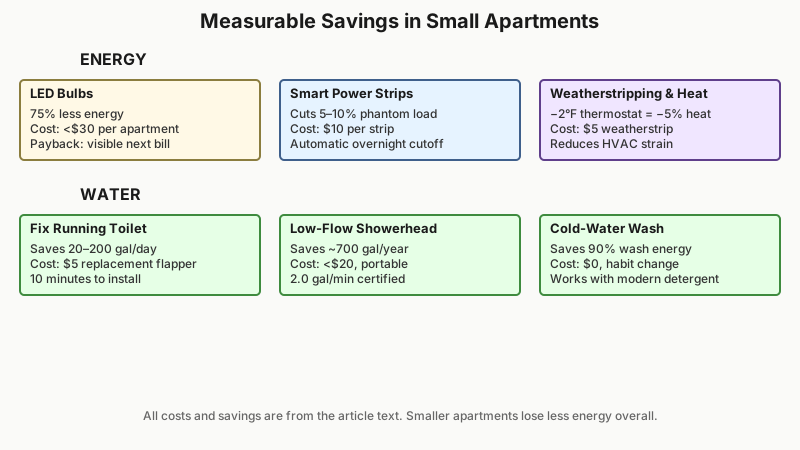
LED bulbs use roughly 75% less energy than incandescent equivalents and last 15–25 times longer, according to the U.S. Department of Energy. In a one-bedroom apartment you might have 10–15 light sockets. Switching all of them costs less than $30 and the savings show up on the next bill.
Attack Standby Power (“Phantom Load”)
Devices plugged in but not in use — TVs, phone chargers, gaming consoles, microwaves with clocks — collectively account for roughly 5–10% of residential electricity use in the United States, per the Lawrence Berkeley National Laboratory. A $10 smart power strip can cut that down automatically. Plug your entertainment setup into one and your desk gear into another, then schedule them to cut power overnight.
Rethink Heating and Cooling
Most apartments lose heat or cool air through gaps around windows and doors. A $5 roll of self-adhesive weatherstripping foam around a drafty window can meaningfully reduce how hard your HVAC works. If you have a window-unit air conditioner, keep it clean — a dirty filter makes it work 5–15% harder. And if you pay your own electricity bill, dropping the thermostat by even 2°F in winter reduces heating energy use by around 5%, according to the U.S. EPA.
Water: Small Changes, Compounding Effect
Water waste in apartments is often invisible — it happens in the 45 seconds you let the tap run waiting for warmth, or in a toilet that runs slightly after flushing.
Fix the Running Toilet
A toilet with a slow leak can waste 20–200 gallons per day without you noticing a dramatic change. Drop a dye tablet (or a few drops of food coloring) into the tank; if color seeps into the bowl without flushing, the flapper seal needs replacing. Replacement flappers cost about $5 and take 10 minutes to swap — check with your landlord first if you’re renting, since this often falls under their maintenance obligation anyway.
Low-Flow Showerheads
A standard showerhead flows at about 2.5 gallons per minute. WaterSense-certified low-flow models deliver 2.0 gallons per minute or less — saving roughly 700 gallons a year for a person who showers 8 minutes daily. Many models screw on without tools and cost under $20. You can take it with you when you move.
Cold-Water Laundry
About 90% of the energy a washing machine uses goes toward heating the water. Modern detergents — especially enzyme-based formulas — work just as effectively at 60°F (15°C) as they do hot. Switching to cold wash is one of the fastest, zero-cost habit changes available.
Reducing Waste Without a Backyard
This is the section that most apartment guides get wrong by suggesting elaborate setups that don’t survive contact with a 400-square-foot studio.

Countertop and Bokashi Composting
You do not need a garden. Countertop compost bins (sealed, odor-filtering models by brands like OXO or Full Circle) hold kitchen scraps without smell for 1–2 weeks. The question is where to take the collected material. Options include:
- Municipal composting programs: Many cities — New York, San Francisco, Portland, Seattle — now offer curbside food scraps collection or drop-off sites.
- Bokashi fermentation: A Japanese anaerobic method that pickles food waste in a sealed bucket using bran inoculated with beneficial microbes. The resulting pre-compost can go into a community garden or a friend’s yard. Starter kits run about $30–$50.
- Community gardens: Most accept food scraps donations at their compost pile.
Rethink Single-Use Plastics at the Source
The most effective waste-reduction strategy in a small apartment is buying less disposable stuff to begin with — not managing it once it exists. Practically:
- Keep a reusable bag hanging by the door, not stuffed in a drawer where it gets forgotten.
- Switch to bar soap, shampoo bars, or refillable dispensers. A shampoo bar typically replaces 2–3 plastic bottles and lasts longer.
- Buy pasta, grains, nuts, and dried beans in bulk where possible; store them in glass jars that stack neatly.
Electronics and Textile Waste
Old phones, laptops, and clothes are among the most wasteful items in any home. Before discarding:
- Electronics: Retailers like Best Buy, Staples, and Apple run take-back programs. Earth911.com has a searchable drop-off locator.
- Clothes: Brands like Patagonia and Levi’s have repair and recycling programs. ThredUp and local consignment stores handle the rest.
If you’ve accidentally shrunk a favorite sweater while trying to extend its life, How to Unshrink a Wool Sweater: The Hair Conditioner Rescue Trick can help you rescue it instead of tossing it out.
Sustainable Eating in a Small Kitchen
Food systems account for around 26% of global greenhouse gas emissions, according to Our World in Data, which cites research by Poore and Nemecek (2018). Your kitchen — however small — is connected to that system.
A sustainable kitchen also stays a functional one, and 10 Tips for Keeping a Clean Kitchen Every Day offers daily habits that pair nicely with meal planning and composting routines.
Reduce Meat, Especially Beef
Beef production emits roughly 20 times more greenhouse gas per gram of protein than legumes. You do not need to go fully vegan. Replacing beef with chicken, fish, or plant-based proteins three to four nights a week makes a measurable difference. Lentils, chickpeas, and canned beans also happen to be among the cheapest proteins available — useful in a small-budget apartment setup.
Plan Meals to Cut Food Waste
Around one-third of all food produced globally is lost or wasted. In apartments, the culprit is usually buying too much without a plan, letting produce go soft, or forgetting things at the back of the fridge. A simple weekly meal sketch (not a rigid schedule, just a rough plan) and a “use first” tray for produce nearing its peak can cut household food waste significantly. An NRDC report estimates the average American family wastes about $1,500 worth of food per year — money that directly translates to unnecessary production emissions.
A Small Herb Garden Earns Its Keep
A windowsill herb pot with basil, mint, and chives replaces those plastic-clamshell packs of fresh herbs sold at supermarkets, most of which are partially used and thrown away. The plastic reduction is genuine, and fresh herbs make a small kitchen feel more alive.

Mindful Buying: The Most Sustainable Square Foot Is an Empty One
Small apartments enforce minimalism whether you choose it or not, but intentional buying magnifies the effect. Before any purchase:
- Ask whether you already own something that does the job (a stock pot can double as a pasta pot and a steamer base).
- Consider whether the item is repairable or upgradeable. iFixit scores products on repairability; right-to-repair advocacy has pushed companies like Apple and Framework to offer better spare part access.
- Buy secondhand first — Facebook Marketplace, OfferUp, and Craigslist often have apartment-appropriate furniture and appliances for a fraction of retail cost.
Cluttered small apartments also run up hidden costs: duplicate purchases because something got lost, more energy used by appliances that can’t breathe, and the mental overhead of managing too much stuff.
If clothing is part of your mindful buying overhaul, How to Build a Sustainable Wardrobe on a Budget walks through how to build out a closet that lasts without straining your wallet or the planet.
Making It Stick: Systems Over Willpower
Sustainability habits in a small apartment fail when they depend on remembering or motivation. They stick when the environment makes the sustainable choice easier than the wasteful one.
Some setups that work:
- A dedicated reusables station near the front door: bags, water bottle, travel mug.
- A small recycling bin beside (not under) the main trash can, so sorting is the path of least resistance.
- A thermostat schedule or smart plug schedule set once and forgotten.
- A small whiteboard or app list of fridge contents to reduce phantom purchases.
You do not need to overhaul your life in a weekend. Changing two or three systems per month adds up to a genuinely different household by the end of a year.
Conclusion
Sustainable living in a small apartment is less about buying the right eco-products and more about running tighter, more intentional systems. Fix the running toilet. Switch to a cold wash. Plan your meals. Ditch phantom load. These are not inspiring Instagram moments — they’re just the things that actually work, and they happen to save money alongside reducing your environmental footprint.
The best part: a small apartment means the effort-to-impact ratio is favorable. You have fewer things to change, and each change covers a bigger percentage of your household’s total impact than it would in a larger home.
Frequently Asked Questions
Can a renter make these changes without landlord approval?
Most of the tips here — swapping bulbs, adding a smart power strip, installing a low-flow showerhead, weatherstripping a window — are fully reversible and generally don’t require landlord permission, though it’s worth a quick check in your lease. The one clear exception is toilet repairs: landlords in most jurisdictions are legally responsible for fixing a running toilet, so reporting it is often enough to get it done at no cost to you.
Do bokashi systems actually work in a studio apartment without producing bad odors?
Bokashi is anaerobic and sealed throughout the process, so when the bucket lid is kept on properly it produces very little noticeable smell — more of a faint vinegary or pickled odor than rotting food. The critical detail is that you should never add meat or dairy to a countertop bin, but bokashi bran can actually handle those items, making it more flexible than most indoor composting methods.
Is it worth buying energy-efficient appliances if they cost more upfront?
For renters who don’t own their appliances, this usually isn’t a decision to make. If you do own your appliances, energy-efficient models — particularly refrigerators and washing machines — typically recover their price premium through utility savings within a few years, and the savings continue for the appliance’s full lifespan, which can be a decade or more.
How do I recycle properly when my building only has one bin?
Check your city or municipality’s waste management website for the exact rules in your area, since contamination from wishful recycling (putting non-recyclables in hoping they’ll be sorted) actually degrades entire batches. For items your building can’t handle — electronics, batteries, textiles — store them temporarily in a small labeled bag and make a periodic trip to a dedicated drop-off point.