How to Brew Better Coffee at Home: Why Grind Timing Beats Bean Price

Most people who drink bad coffee at home aren’t using bad beans — they’re making small, fixable mistakes. Water temperature is off by ten degrees. The grind is inconsistent. The ratio is guesswork. Fix a handful of these, and the cup in your hand on a Tuesday morning can rival what you’d pay five dollars for down the street.
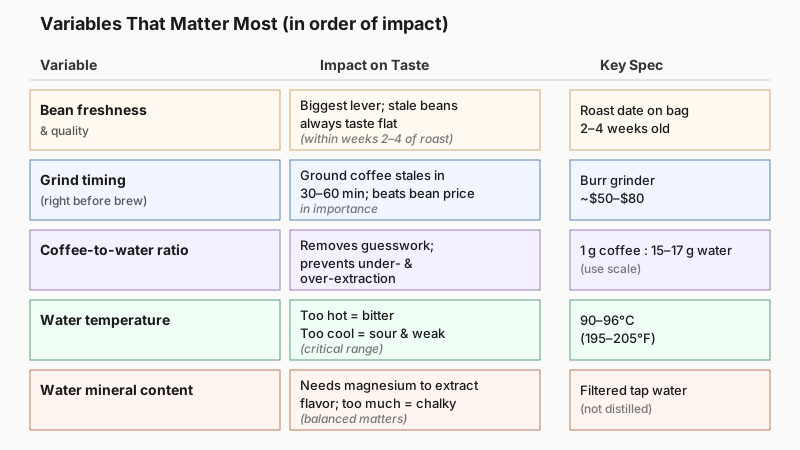
This guide covers the variables that actually matter, in order of impact.
Start With Fresh, Quality Beans
The single biggest lever you have is the coffee itself. Freshly roasted, quality beans make every other variable easier. Stale beans — no matter how carefully you brew — produce flat, lifeless coffee.
What to look for:
- A roast date on the bag, not a “best by” date. You want beans roasted within the last two to four weeks.
- Whole beans, not pre-ground. Ground coffee goes stale within 30–60 minutes of exposure to air.
- A roast level that suits your brew method. Lighter roasts tend to shine in pour-over and drip brewing, where their floral and fruity notes have room to develop. Darker roasts hold up well in espresso and French press.
You don’t need to buy the most expensive single-origin lot available. Many well-regarded roasters — including regional ones you might find at a local farmers market — sell excellent beans for a reasonable price. Subscription services can ship freshly roasted coffee directly to your door on a schedule that matches your consumption pace.

The same freshness-over-fancy-tools principle applies in the kitchen too, as our guide How to Poach an Egg Perfectly: Why Egg Freshness Beats Fancy Tools explains.
Nail the Coffee-to-Water Ratio
Most home brewers either underextract (too little coffee, too much water, resulting in thin, sour coffee) or overextract (too much coffee, too little water, resulting in bitter, harsh coffee). The solution is a consistent ratio.
The Specialty Coffee Association recommends a general starting ratio of 1 gram of coffee per 15–17 grams of water — roughly 1:15 to 1:17 by weight. A kitchen scale removes the guesswork entirely.
A simple starting point:
| Cup size | Coffee | Water |
|---|---|---|
| 1 cup (8 oz / 240 ml) | 15 g | 240 g |
| 2 cups | 30 g | 480 g |
| French press (1L) | 60 g | 1,000 g |
Once you have a baseline, adjust by taste. If the coffee tastes weak, use slightly more coffee (not hotter water). If it tastes bitter, try less coffee or a coarser grind before reaching for fewer beans.
Grind Right Before You Brew
A burr grinder is one of the best investments a home coffee drinker can make. Unlike blade grinders — which chop beans into uneven fragments — burr grinders crush beans between two abrasive surfaces, producing a consistent particle size.
Why does particle size matter? In brewing, water extracts compounds from ground coffee. Unevenly ground coffee has some particles that extract too quickly (bitter) and others that haven’t extracted enough (sour). Both flavors end up in your cup at once, creating muddy, unpleasant results.
Grind size by method:
- Coarse (like rough sea salt): French press, cold brew
- Medium-coarse: Chemex
- Medium: Flat-bottom drip machines, Aeropress with longer brew time
- Medium-fine: Pour-over (V60, Kalita Wave)
- Fine: Espresso
- Extra fine: Turkish coffee
You don’t need to spend hundreds of dollars. Entry-level hand grinders from brands like Timemore or 1Zpresso offer consistent burr grinding for around $50–$80 and punch well above their price point.

If you’re still using a blade grinder or none at all, our breakdown of Best Manual Coffee Grinders for Home: Grind Quality Over Hype will help you choose a burr grinder that actually delivers consistent particle size.
Use the Right Water
Coffee is roughly 98–99% water, which makes water quality a surprisingly important variable that most guides underemphasize.
Temperature: Water that’s too hot (above 96°C / 205°F) over-extracts and turns coffee bitter. Water that’s too cool (below 88°C / 190°F) under-extracts and produces sour, weak coffee. The ideal brewing range is 90–96°C (195–205°F) — just off a rolling boil. If you don’t have a temperature-controlled kettle, bring water to a boil and let it rest for 30–45 seconds.
Mineral content: Distilled water, paradoxically, makes terrible coffee. Water needs some dissolved minerals — particularly magnesium — to extract flavor compounds effectively. On the other hand, very hard tap water with excessive calcium can leave scale buildup and create chalky-tasting coffee. Filtered tap water (via a pitcher filter or under-sink filter) is usually the sweet spot for most households.
If you want to get precise, the SCA’s water standard recommends a total dissolved solids (TDS) level of around 150 mg/L and a pH close to 7. You can test your tap water with an inexpensive TDS meter.
Choose the Brew Method That Matches Your Goals
There’s no universally “best” brew method — only the one that fits what you want from your morning cup. Understanding each method’s character helps you pick one and master it.
For a broader comparison of options before you commit to one setup, check out 7 Best Coffee Brewing Methods at Home, Ranked.
Pour-Over (V60, Kalita Wave, Chemex)
Pour-over brewing rewards attention. You pour hot water in slow, controlled stages over a bed of grounds, and gravity pulls it through a filter into a vessel below. The result is a clean, bright cup with well-defined flavors — ideal for light-to-medium roast beans with interesting origin characteristics.
The trade-off: it takes time (four to six minutes for most methods) and requires a gooseneck kettle to control the pour.
French Press
French press is immersion brewing — grounds steep in hot water, then a metal mesh plunger separates them. It’s forgiving and produces a full-bodied, textured cup because the metal filter allows more oils and fine particles through than paper filters do.
The downside is a slightly murkier cup and the need for a coarse grind to avoid sediment.
Aeropress
The Aeropress is the most versatile tool in the home coffee arsenal. It brews under gentle air pressure in one to four minutes and is nearly impossible to break. You can mimic espresso-style concentrate or brew a cleaner filter-style cup depending on your recipe. It’s also the easiest to clean.
Automatic Drip Machine
For households brewing multiple cups daily, a quality automatic drip machine is hard to beat for convenience. Look for machines certified by the SCA that reach the proper brewing temperature and have a shower-head dispersion pattern. Brands like Technivorm Moccamaster and Breville Precision Brewer are often recommended by specialty coffee professionals.
Control Bloom and Extraction Time
This step is specific to filter methods (pour-over, drip, Aeropress) but makes a noticeable difference.
Fresh coffee contains CO₂ gas trapped in the grounds from the roasting process. When you first hit grounds with hot water, that gas escapes rapidly — a process called the bloom. If you skip the bloom, CO₂ creates a barrier that slows extraction and produces uneven results.
How to bloom: Pour roughly twice the weight of water to coffee (e.g., 30g water for 15g coffee) over the grounds and wait 30–45 seconds. You’ll see the grounds bubble and rise. Then continue with the rest of your pour.
Extraction time also matters. For most pour-over methods, a total brew time of 3–4 minutes is a reliable target. Too fast suggests your grind is too coarse or your pour is too aggressive. Too slow suggests a fine grind or channeling in the coffee bed.
Keep Your Equipment Clean
Coffee leaves behind oils and mineral residue. Old oils turn rancid and give every subsequent brew a stale, musty undertone — even when you’re using great beans.
Basic cleaning habits:
- Rinse your brewer, carafe, and filters with hot water after every use.
- Deep-clean your grinder monthly by running a few tablespoons of grinder cleaning pellets (or dry, unpopped popcorn kernels as a budget option) through it to absorb and expel old oils.
- Descale your kettle and machine every one to three months depending on your water hardness. A solution of white vinegar and water (1:1) works fine, or use commercial descaling tablets.
- For French presses: disassemble the plunger completely and wash all components. Coffee silt hides in the mesh and builds up fast.

Store Coffee Properly
Proper storage preserves freshness longer and makes your investment in good beans go further.
- Keep beans in an airtight container, away from light and heat. A ceramic canister with a rubber gasket works well; avoid clear glass jars on the countertop.
- Don’t refrigerate coffee. The fridge introduces moisture and absorbs surrounding odors. Room temperature storage is better.
- Freezing is debated but defensible if done correctly: divide beans into single-use portions, vacuum-seal them, and freeze. Thaw at room temperature before opening — never refreeze.
- Buy in smaller quantities more frequently rather than a giant bag that sits open for two months.
Taste Critically and Adjust
The final tip is the one most people skip: pay attention to what’s actually in your cup, then change one variable at a time.
If your coffee tastes:
- Sour or tart → under-extracted. Try a finer grind, hotter water, or longer contact time.
- Bitter or harsh → over-extracted. Try a coarser grind, cooler water, or shorter contact time.
- Weak and thin → adjust your ratio, use more coffee per gram of water.
- Flat and lifeless → your beans are probably stale. Buy fresher.
Keep a simple brew journal (even a notes app on your phone) with the date, bean, ratio, grind setting, and your tasting notes. After a few weeks, you’ll have a personal reference that no generic guide can provide.
Conclusion
Better home coffee doesn’t require an expensive machine or a barista certification. It requires fresh beans, consistent measurement, a decent grinder, clean equipment, and a habit of tasting critically and adjusting. Start with the ratio and grind — those two changes alone will improve most home setups significantly. Then layer in water quality, bloom technique, and storage habits over time.
The best cup you’ve ever had at home is probably two or three adjustments away.