How to Remove a Coffee Stain from a Shirt: Dish Soap Beats Tannins

Coffee stains are stubborn — but they’re not permanent. The key is understanding what you’re dealing with: coffee contains tannins, which are plant-based compounds that bond to fabric fibers quickly. The faster you act, the better your odds. But even a dried, set-in stain can often be lifted with the right approach.
This guide walks through seven proven methods, covering fresh stains, dried stains, and the specific challenges of different fabric types — cotton, silk, wool, synthetic blends, and white versus colored shirts.

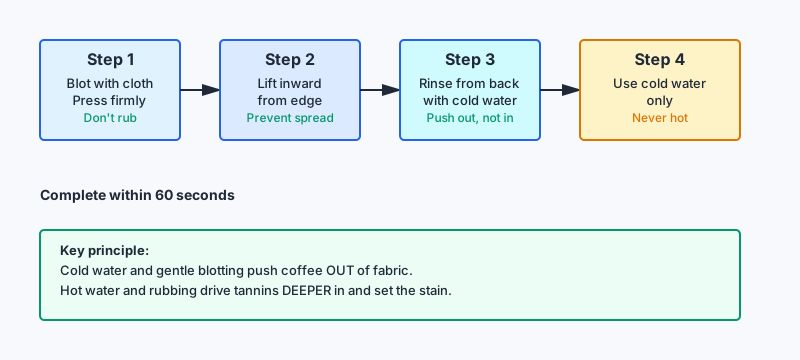
Act First: What to Do in the First 60 Seconds
If the spill just happened, your immediate actions matter more than any cleaning product.
- Blot, don’t rub. Grab a clean cloth, paper towel, or napkin and press firmly against the stain. Rubbing spreads the tannins deeper into the fiber and widens the stain.
- Lift, not drag. Work from the outer edge of the stain inward to stop it from spreading.
- Rinse from the back. Hold the shirt under cold running water from the reverse side of the fabric. This pushes the coffee out through the front rather than deeper in.
- Avoid hot water. Heat sets protein and tannin stains. Always use cold water in the first treatment.
After blotting and rinsing, you’re ready to treat with one of the methods below.
Method 1: Dish Soap and Cold Water (Best All-Purpose First Treatment)
This is the first thing to reach for at home or in a restaurant bathroom.
- Apply a small drop of liquid dish soap directly to the stain.
- Work it in gently with a finger or soft toothbrush using circular motions from the outside in.
- Rinse thoroughly with cold water.
- Repeat once or twice if needed before washing.
Why it works: Dish soap is formulated to cut through organic compounds. A surfactant-based formula (most standard brands) breaks the bond between the tannin molecules and the fabric fiber.
Best for: Cotton, linen, polyester blends, colored shirts.
Method 2: White Vinegar and Dish Soap
For stains that have had a few minutes to sit, add white vinegar to the equation.
- Mix one tablespoon of white vinegar with one tablespoon of dish soap in a small bowl of cold water.
- Apply to the stain with a clean cloth, working it in gently.
- Let it sit for three to five minutes.
- Rinse thoroughly with cold water, then launder as usual.
Why it works: Vinegar is mildly acidic, which helps loosen tannin compounds from fabric. Combined with the surfactant action of dish soap, it’s effective on moderately set stains.
Best for: Cotton and linen. Use with caution on synthetic fabrics — test on an inside seam first.
Method 3: Baking Soda Paste (Good for Dried Stains)
If the stain has dried and you didn’t get to it right away, a baking soda paste gives you gentle abrasion along with chemical action.
- Mix one to two teaspoons of baking soda with just enough cold water to form a thick paste.
- Apply it directly to the stain and press it in gently.
- Leave it on for 15 to 30 minutes.
- Brush off the dried paste, then rinse and launder.
Why it works: Baking soda is mildly alkaline and absorbs residue while gently lifting discoloration. The physical texture of the paste also helps dislodge dried tannin particles.
Best for: Dried coffee stains on cotton and denim. Avoid on silk and wool.

Method 4: Enzyme-Based Laundry Stain Remover
For a stain that’s been sitting for hours or has gone through a cold wash without full removal, an enzyme-based stain remover is the most reliable option.
- Spray or apply the enzyme stain remover directly to the stain.
- Let it soak in for the time specified on the product label — typically 5 to 15 minutes, though some products work better with up to 30 minutes.
- Launder with your normal detergent on the warmest water setting safe for that fabric.
Why it works: Enzyme-based removers contain biological catalysts — typically protease and amylase — that break down organic compounds at the molecular level. Tannins, like proteins and starches, respond well to enzymatic action.
Best for: Cotton, polyester, and most synthetic fabrics. Not recommended for wool or silk — enzyme cleaners can damage protein-based fibers.
Method 5: Hydrogen Peroxide (For White Shirts Only)
Hydrogen peroxide is effective on white cotton shirts, but it can bleach color out of dyed fabrics, so use it only on whites.
- Apply a small amount of 3% hydrogen peroxide (standard pharmacy grade) directly to the stain.
- Let it sit for five minutes — no longer on delicate fabrics.
- Rinse well with cold water.
- Check the stain and repeat if needed before laundering.
For stubborn stains, mix equal parts hydrogen peroxide and dish soap, apply, and leave for up to ten minutes before rinsing.
Why it works: Hydrogen peroxide is a mild oxidizing agent that breaks down the chromophores (color-causing molecular structures) in tannin compounds.
Best for: White cotton and white synthetic shirts. Never use on colored, patterned, or delicate fabrics.
Method 6: Salt or Club Soda (Emergency Field Fixes)
Not every spill happens near a kitchen. When you’re at a café or an office with limited supplies, these work as emergency measures.
Salt: Pour a generous amount of table salt over a fresh, wet stain immediately. The salt draws moisture and coffee compounds out of the fabric through osmosis. Leave it for a minute or two, then brush off and blot with a damp cloth.
Club soda: The carbonation lifts the stain slightly and the liquid dilutes and flushes the coffee out. Pour a small amount directly on the wet stain and blot firmly. It won’t fully remove the stain, but it limits how deep it sets while you get to a proper cleaning.
Best for: Fresh spills only. These are holding tactics — follow up with a proper treatment as soon as possible.
Method 7: Specialist Treatments by Fabric Type
Generic advice doesn’t always work. Here’s how to handle specific fabrics:
Silk
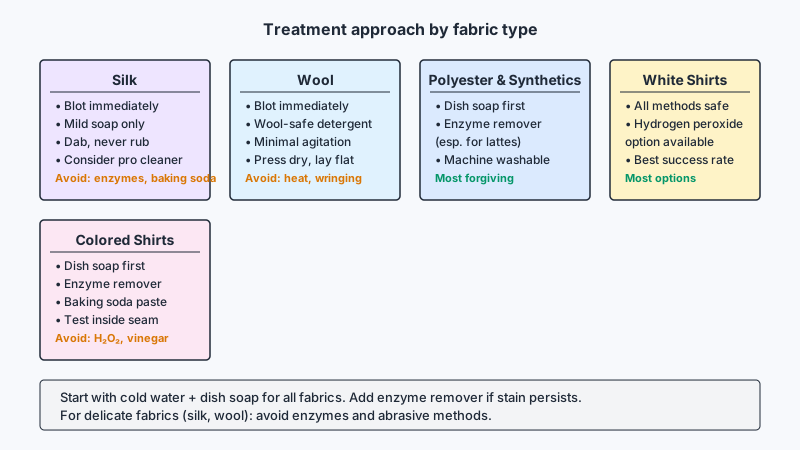
Silk is a protein fiber and extremely delicate. Avoid enzyme cleaners, baking soda, and strong acids.
- Blot immediately with a dry cloth.
- Mix one teaspoon of mild dish soap with two cups of cold water.
- Dab (never rub) the solution on the stain with a clean white cloth.
- Rinse gently by dabbing with a cloth dampened in plain cold water.
- If the stain persists, take the garment to a professional dry cleaner.
Wool
Wool is also a protein fiber and shrinks with heat and agitation.
- Blot immediately.
- Mix a drop of wool-safe detergent (such as one formulated for delicates) in cold water.
- Gently work the solution into the stain — minimal agitation.
- Rinse with cold water and press dry with a towel. Never wring.
- Lay flat to dry.
Polyester and Synthetic Blends
Polyester resists some stains but can hold onto oily compounds from milk-based coffee drinks.
- Treat with dish soap and cold water first.
- For milk-and-coffee stains (lattes, cappuccinos), an enzyme-based stain remover is especially effective since it breaks down the milk proteins as well as the coffee tannins.
- Launder as normal — polyester is generally machine washable.
Colored Shirts
Avoid hydrogen peroxide and undiluted white vinegar, both of which can fade dye. Stick with dish soap and cold water, enzyme-based removers, or baking soda paste.

Dealing with Dried, Set-In Coffee Stains
A stain that’s been dried for hours or days — or worse, gone through a hot dryer — is the hardest case. Heat from a dryer essentially bakes the tannins into the fiber. It may not come out completely, but this sequence gives you the best shot:
- Re-wet the stain with cold water and a few drops of dish soap to loosen it.
- Apply an enzyme-based stain remover and let it soak for 30 minutes.
- Wash in the warmest water the fabric allows — check the care label.
- Check before drying. If the stain is still visible, do not put the shirt in the dryer. Repeat the enzyme treatment instead.
- For white shirts, try hydrogen peroxide after step 2 if the enzyme treatment isn’t enough.
Patience matters here. A single wash cycle may not do it. Repeat treatments are normal with dried stains.
Does Laundry Detergent Alone Work?
Most standard laundry detergents will fade a fresh coffee stain noticeably, but they rarely eliminate it entirely without pre-treatment. Modern concentrated detergents contain enzymes and surfactants that help, but the contact time in a wash cycle is too short to fully break down set tannin compounds.
Pre-treating — even just with a drop of dish soap — meaningfully improves the result.
If your coffee habit is also leaving residue in the machine that made the mess, How to Clean a Coffee Maker Properly: Vinegar Rinse Beats Ruined Brews will help you tackle that too.
Frequently Asked Questions
Can I use hand sanitizer to remove a coffee stain?
In a pinch, the alcohol in hand sanitizer can loosen fresh coffee stains slightly, but it’s much less effective than dish soap and can dry out the fabric. Use it only as a last resort when nothing else is available, and rinse it out thoroughly as soon as you can.
Will dry cleaning remove a dried coffee stain?
Professional dry cleaning is often effective on stubborn or set-in coffee stains, particularly on delicate fabrics like silk or cashmere where home treatments risk damage. Let the cleaner know about the stain and what it is — this helps them choose the right solvent treatment.
Does coffee with milk stain differently than black coffee?
Yes. Coffee with milk introduces protein compounds (from the milk) on top of the tannins from the coffee itself. This makes the stain slightly more complex — enzyme-based removers that target both proteins and tannins are the most effective option for milk-based drinks like lattes and flat whites.
Is it safe to put a shirt with a coffee stain in the dryer?
Not until the stain is fully gone. The heat from a dryer sets stains permanently into fabric fibers, making them nearly impossible to remove. Always check that a stain is fully lifted before machine drying.
What’s the best commercial stain remover for coffee?
Enzyme-based sprays or gels are consistently the most effective. Products in this category include OxiClean, Zout, and Carbona Stain Devils No. 4 (formulated specifically for tea, coffee, and juice). Check product labels for fabric compatibility before use.
The Bottom Line
Speed is your biggest advantage with coffee stains — cold water and dish soap in the first minute will handle most of them. For dried or stubborn stains, enzyme-based removers are your best tool. Match your treatment to the fabric, never use the dryer until the stain is gone, and repeat treatments rather than giving up after one wash. Most coffee stains, even older ones, will respond to a methodical approach.
For a broader playbook on tackling other everyday spills and marks before they set, check out How to Remove Common Stains from Clothes: Why Speed Beats Scrubbing.