Homemade Pasta from Basic Ingredients: Just Flour, Eggs, and Time

Making pasta at home is one of those skills that sounds intimidating until the first time you actually do it. Once you’ve felt the dough come together under your hands and watched it transform into silky ribbons, it becomes hard to justify buying the boxed stuff for anything other than Tuesday-night convenience.
This guide walks you through every step — from the flour on the counter to the finished plate — using ingredients you almost certainly already have.
What You Actually Need (Ingredients and Equipment)
The Flour Question
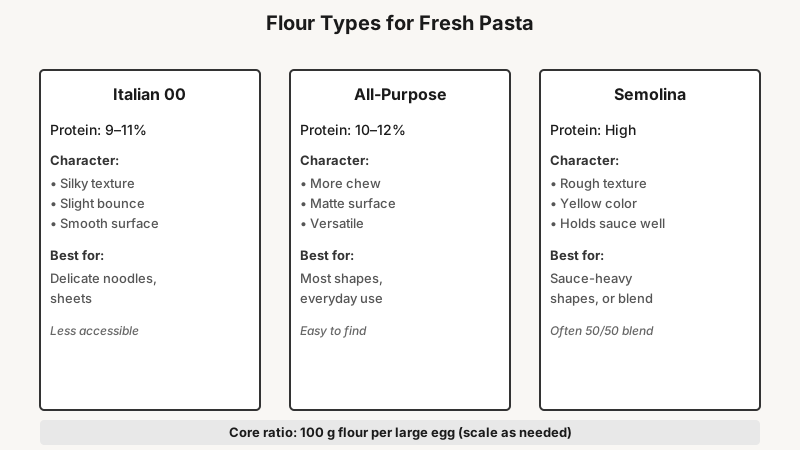
The single most consequential ingredient decision is flour type. Italian 00 flour is finely milled and low in gluten-forming proteins (around 9–11%), which gives fresh pasta its characteristic silkiness and slight bounce. All-purpose flour (10–12% protein) works perfectly well and is more accessible — the pasta will have slightly more chew and a matte surface, but most home cooks won’t miss the difference.
Semolina flour — coarsely milled durum wheat — is high in protein and produces a rougher, yellower pasta that holds sauce exceptionally well. Many traditional southern Italian recipes blend semolina with 00 or all-purpose flour (roughly 50/50) for the best of both worlds: bite and silkiness.
The core ratio for egg pasta: 100 grams of flour per large egg. That’s it. Scale up as needed. A 300g flour / 3 egg batch feeds three to four people.
Eggs vs. Water
Egg pasta (common in northern Italy) is richer, more pliable, and slightly forgiving to work with. Water-based pasta — typically semolina and water — is the southern Italian tradition and the basis for most dried pasta shapes like orecchiette and cavatelli. It requires more kneading but produces excellent results and is the right call if you’re avoiding eggs.
For a water-based dough, use roughly 180ml water per 300g semolina, adjusting as needed for humidity.
Equipment
You don’t need a pasta machine to make good pasta. A rolling pin, a sharp knife, and a clean flat surface are sufficient for fettuccine, pappardelle, and most stuffed shapes. A pasta machine (hand-cranked or stand-mixer attachment) does make rolling faster and more consistent — particularly for thin pasta like tagliolini or lasagne sheets.
Other useful tools:
- A bench scraper for portioning dough cleanly
- A pasta board or large wooden cutting board (surfaces with some grip are better than marble, which can be too smooth)
- A fork or dough whisk for the initial mix

Step-by-Step: Making the Dough
1. Building the Well
Mound your flour on the work surface and make a wide well in the center — wide enough that the eggs won’t overflow when you start beating them. Crack the eggs into the well, add a pinch of salt, and use a fork to beat the eggs gradually while pulling flour in from the inner walls. Work from the inside out, keeping the outer wall intact until the mixture thickens enough not to run.
Alternatively, combine everything in a bowl first, then turn out onto the surface. The bowl method is more controlled and equally valid.
2. Kneading
Once the dough is shaggy, start working it with the heel of your hand: push forward, fold back, quarter-turn, repeat. You’re developing gluten, and you’ll feel the difference — a sticky, uneven mass gradually becomes smooth, elastic, and slightly glossy. This typically takes 8–10 minutes of continuous kneading.
The finished dough should not stick to your hands. If it does, dust lightly with flour. If it’s cracking and dry, dampen your hands with a few drops of water rather than pouring water directly on the dough.
A stand mixer with a dough hook cuts this to about 6–7 minutes on medium speed. The texture is comparable.
3. Resting
Wrap the dough tightly in plastic wrap and rest it at room temperature for at least 30 minutes — an hour is better. This step lets the gluten relax, which makes rolling dramatically easier. Skip it and you’ll spend twice as much effort fighting the dough as it springs back.

4. Rolling Out
By hand: Flatten the rested dough with your palm, then roll outward from the center in all directions, turning the sheet as you go. Work gradually — don’t force the dough thin in one pass. Dust underneath lightly if it sticks. Aim for 2–3mm thickness for most shapes, or near-translucent (you should see your hand through it) for delicate noodles.
By machine: Cut the dough into portions the size of a small orange. Keep the rest wrapped. Flatten each piece slightly with your palm, then pass it through the widest setting. Fold it like a letter, press flat again, and repeat two or three times (this is essentially kneading and improves texture). Then progressively work through thinner settings. For fettuccine, setting 5 or 6 on a standard 9-setting machine is about right.
5. Cutting and Shaping
Fettuccine/tagliatelle: Dust the sheet lightly, roll it loosely like a scroll, and slice across the roll into ribbons about 6mm wide. Shake out the noodles as you cut.
Pappardelle: Same process, cut wider — about 2–2.5cm.
Lasagne sheets: Cut into rectangles to fit your dish.
Farfalle (bow-ties): Cut into small rectangles with a pastry wheel, pinch in the center.
Ravioli: Place filling at regular intervals on one rolled sheet, lay a second sheet over the top, press to seal around each mound, and cut into squares.
Freshly cut pasta can be used immediately or dried on a rack for up to a couple of hours before cooking.
Cooking and Serving
Cooking Fresh Pasta
Fresh pasta cooks fast — often in just 2–3 minutes once the water returns to a boil after you add it. The only reliable test is tasting. Pasta should be cooked through but still have a very faint resistance (not raw-flour resistance — that’s different from al dente with dried pasta). Fish it out with tongs rather than draining, which lets you control water retention.
Salt the cooking water generously. The standard advice — “salty as the sea” — is an exaggeration, but a tablespoon of salt in a large pot of water is about right.
Matching Pasta to Sauce
Shape and sauce are not arbitrary. Wide, flat noodles like pappardelle are made for slow-braised meats — their surface area catches rich, chunky sauces. Thin, silky tagliolini suits butter or light cream sauces. Ridged or rough surfaces (semolina-based pasta, especially) grip oil and tomato-based sauces better than egg pasta.
The simplest pairing for fresh homemade pasta is also often the best: browned butter with sage, or a quick pan sauce from the pasta cooking water, good olive oil, and whatever herb is on hand. You’ve made something from scratch — it doesn’t need a complicated sauce to compete.

Once you’ve settled on a shape, pairing it well matters just as much as the noodle itself, so see Homemade Pasta Sauce: 7 Recipes & Pro Techniques for ideas on what to spoon over your fresh strands.
Storing Leftovers
- Fresh (uncooked): Nest into small nests, dust with flour, and refrigerate on a tray covered loosely with a cloth for up to 24 hours. Or freeze on the tray until solid, then transfer to a bag — cooks from frozen in about 4–5 minutes.
- Cooked: Toss lightly with olive oil to prevent sticking. Refrigerate for up to 2 days. Reheat in a pan with a splash of water.
Troubleshooting Common Problems
Dough is tough and keeps springing back: Under-rested. Wrap it and give it another 20 minutes.
Pasta tears when rolling thin: Either the dough is too dry (add water next time, adjust) or you’re moving too fast. Let the sheet rest for 2 minutes mid-roll.
Noodles stick together after cutting: Insufficient dusting with flour. Toss them immediately after cutting, or dry them on a rack.
Dough is sticky and won’t clean off the surface: Too much egg relative to flour (egg sizes vary). Incorporate a small amount of extra flour, but do it gradually — a tablespoon at a time.
Pasta tastes bland: More salt in the dough itself (a half-teaspoon per 300g batch), and always properly salted cooking water.
A Few Variations Worth Trying
Once you’re comfortable with the base recipe, small additions unlock a lot of variety:
- Spinach pasta: Blanch and squeeze dry about 80g of spinach, purée it, and use it in place of one egg. The dough turns deep green and has a mild savory flavor.
- Squid ink pasta: A teaspoon of squid ink added to the egg mixture gives striking black pasta with a subtle oceanic flavor. Pairs naturally with seafood sauces.
- Semolina-only pasta: 300g semolina, roughly 130–140ml warm water, a pinch of salt. Knead for a full 12 minutes — this dough is stiffer than egg pasta. Great for orecchiette and cavatelli shapes.
- Extra-yolk pasta: Replace one whole egg with two yolks per 100g flour for deeply golden, rich pasta typically used in delicate stuffed shapes like tortellini.
If working dough by hand has you hooked, Homemade Pizza Dough: A Step-by-Step Guide That Works walks through another kitchen staple built on the same well-and-knead technique.
Conclusion
Homemade pasta isn’t difficult — but it does reward attention. The difference between good results and great results usually comes down to resting the dough long enough, not rushing the kneading, and salting at every stage. Once those habits are in place, you can make a batch from scratch in under an hour, including resting time if you prep during that window.
Start with a simple 200g / 2 egg batch, make fettuccine, and serve it with whatever sauce takes least effort that day. The goal the first time is just to see how the process feels — everything else follows from there.