Fluffier Scrambled Eggs: The Cornstarch Method Explained

Why Cornstarch Works in Scrambled Eggs
Cornstarch does something to scrambled eggs that nothing else quite replicates: it gets between the egg proteins and slows down how tightly they bond during cooking. The result is curds that stay looser, softer, and more tender than eggs cooked without it.
Here’s the short version of the science. Egg proteins coagulate when heat causes them to unfold and bond together. The faster and tighter that bonding happens, the rubbery and drier your eggs get. Cornstarch — mostly starch granules suspended in your eggs — physically interrupts those protein networks, keeping the texture open and custardy. A small amount of starch also absorbs some moisture, which then releases slowly as steam during cooking, contributing to lift.
The effect is real, but it depends on two things: the right amount of cornstarch and the right heat. Too much starch and the eggs turn gluey; too high a heat and the proteins seize faster than the starch can buffer them.

Cornstarch’s thickening power shows up elsewhere in the kitchen too, as explained in How to Thicken a Sauce Naturally: Reduction Over Cornstarch.
The Exact Ratio and Technique
How Much Cornstarch to Use
The ratio that consistently works without making eggs gluey is ½ teaspoon of cornstarch per 2 eggs. Some recipes push up to 1 teaspoon per 2 eggs for an even more pronounced custard-like set, but beyond that, the texture tips toward starchy and thick rather than fluffy. Start at the lower end and adjust from there.
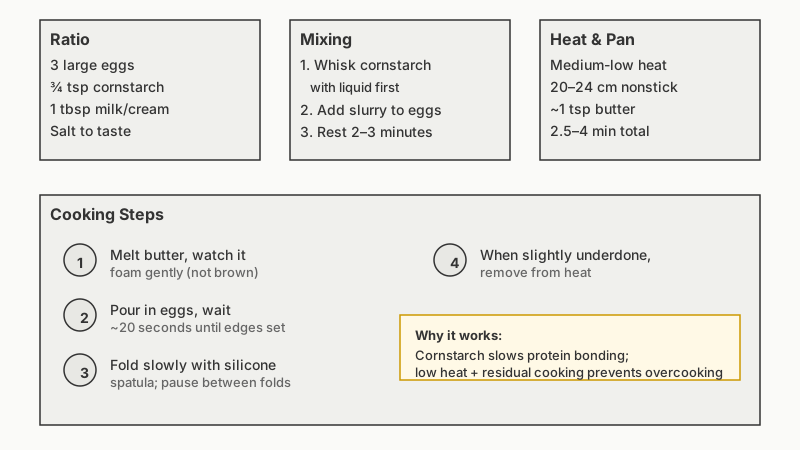
For a standard three-egg serving:
- ¾ teaspoon cornstarch
- 3 large eggs
- 1 tablespoon whole milk, cream, or water (optional, but adds a little more steam)
- Salt to taste (added after cooking, or just before — salting raw eggs too far ahead draws out moisture)
Mixing It Properly
Don’t just drop cornstarch into beaten eggs — it clumps. Instead, whisk the cornstarch with a small amount of liquid (the milk or water from your recipe) first to form a smooth slurry, then whisk that slurry into the eggs. This ensures it disperses evenly, which matters for uniform texture across every curd.
Whisk the whole mixture vigorously enough to fully combine, then let it sit for 2–3 minutes. The short rest gives the starch granules time to hydrate before heat hits them.
Cooking the Eggs
Low and slow is the key phrase here, and with cornstarch it’s even more important than usual:
- Use a small, heavy pan — a nonstick skillet or well-seasoned carbon steel in the 20–24 cm range for 2–3 eggs.
- Medium-low heat. The pan is ready when a small drop of butter foams gently but doesn’t brown immediately.
- Add butter (about 1 tsp per 2 eggs) and let it melt completely before adding the eggs.
- Pour in the egg mixture and leave it alone for about 20 seconds until you see the edges just beginning to set.
- Use a silicone spatula to fold slowly, pushing from the edges toward the center. Pause between folds. You’re not scrambling constantly — you’re letting large, soft curds form.
- Pull the pan off heat while the eggs look slightly underdone. Residual heat in the pan finishes them without overcooking.
Total cooking time for 2–3 eggs on medium-low is roughly 2.5 to 4 minutes, depending on your stove and pan thickness.

Variables That Change the Result
Dairy vs. No Dairy
Adding a splash of whole milk or heavy cream alongside the cornstarch amplifies the fluffy result — the fat coats protein strands and the water turns to steam. That said, cornstarch works without any dairy at all, which matters if you’re cooking for someone who avoids it. The eggs will be slightly less rich but still noticeably softer than plain scrambled eggs.
Egg Temperature
Room-temperature eggs incorporate the starch slurry more evenly and cook more uniformly than cold eggs straight from the fridge. If you have 10–15 minutes, leave the eggs on the counter before starting. It’s not dramatic, but cold eggs are more prone to seizing at the edges before the center sets.
Pan Material
Nonstick is the most forgiving surface for this method because the starch can make the eggs slightly more prone to sticking than normal. If you’re using stainless steel, make sure the butter fully coats the surface and keep the heat low enough that the butter never fully clarifies before the eggs go in.
Salt Timing
There’s a common claim that salting eggs 15 minutes ahead makes them fluffier by loosening protein structure. The evidence for a big effect here is genuinely mixed — some cooks swear by it, others notice little difference. Salt timing matters more for omelets than scrambled eggs. For most purposes, salting just before cooking or after is fine.
Common Mistakes and How to Avoid Them
Using too much cornstarch. Even ¼ teaspoon over the ideal amount tips the texture noticeably. Measure rather than eyeball.
High heat. This is the single most common reason scrambled eggs fail regardless of any add-ins. Cornstarch buys you a little margin against protein over-coagulation, but it doesn’t fix high-heat cooking.
Skipping the slurry step. Dry cornstarch added directly to eggs results in tiny lumps in the finished dish. Always hydrate it in liquid first.
Constant stirring. Constant agitation produces fine, crumbly curds instead of large, pillowy ones. Fold less often than you think you need to.
Waiting too long to plate. Scrambled eggs continue cooking on a warm plate. Remove from heat a moment early and plate immediately.

If you’re also chasing perfect texture in other egg dishes, Crispy Fried Eggs With Perfect Runny Yolks: Lacy Edges, Silky Centers shows how to get lacy edges and silky yolks in a fried egg.
Frequently Asked Questions
Does cornstarch change the taste of scrambled eggs?
At the recommended ratio (½ tsp per 2 eggs), no detectable starchy flavor comes through. The improvement in texture is the noticeable effect, not any flavor change.
Can I use arrowroot or potato starch instead?
Arrowroot works and behaves similarly to cornstarch in egg dishes. Potato starch is slightly more powerful — use about 30–40% less if substituting. Both are good options if you’re avoiding corn.
Does this work with egg whites only?
Yes, but egg whites alone have less fat and emulsifiers to buffer the starch, so the texture improvement is subtler. Stick to the lower end of the ratio (closer to ¼ tsp per 2 egg whites) to avoid any gluey quality.
What if I don’t have liquid to make a slurry?
Whisk the cornstarch with just a few drops of water — even a teaspoon is enough to dissolve it before adding it to the eggs.
Is this the same trick used in Chinese-style egg dishes?
Related, yes. In many Chinese stir-fried egg preparations and in the technique for “silky” scrambled eggs popularized in Cantonese cooking, a small amount of starch or starch-rich liquid is used to control protein coagulation. The cornstarch trick in Western scrambled eggs draws on a similar principle, applied to a slower, lower-heat cooking style.