Cutting Boards for Every Food Type: How to Choose and Use Them Right

A cutting board is one of those kitchen tools that seems simple until you start thinking about what actually happens on its surface every day — raw chicken juices pooling near yesterday’s garlic residue, or a wood board that smells faintly of fish when you go to slice strawberries. Choosing the right board, and using it correctly for different foods, makes a real difference in both food safety and the quality of what you cook.
This guide breaks down the materials, the use cases, and the practical habits that separate a well-run kitchen from a messy one.
The Main Materials — and What Each One Actually Does
Before matching a board to a food type, you need to understand what different materials offer and where each falls short.
Wood
Wood boards — typically made from maple, walnut, cherry, or teak — have been a kitchen staple for centuries, and for good reason. Hardwood (particularly end-grain maple) is relatively gentle on knife edges, which matters if you’re using a quality chef’s knife. The tight grain structure of hardwoods like hard maple also tends to close around superficial knife cuts over time, a property that makes bacteria less likely to survive in those grooves compared to boards with wide, open scratches.
That said, wood absorbs moisture. It should never go in the dishwasher, and it must be dried promptly after washing. Wood boards need periodic oiling with food-grade mineral oil (not olive oil, which goes rancid) to prevent cracking and warping.
Best for: Vegetables, bread, fruit, cheese, cooked meats.
Avoid for: Raw poultry and raw fish — the absorption risk is real, and thorough sanitation is harder to verify on a porous surface.
Plastic (Polyethylene)
Plastic boards are the workhorse of professional kitchens precisely because they’re easy to sanitize and dishwasher-safe. Color-coded plastic systems are standard in commercial food service for a reason: they make cross-contamination nearly impossible to accidentally commit.
The catch is that plastic boards develop deep grooves from knives much faster than hardwood, and once those grooves appear, bacteria can harbor inside them and resist surface cleaning. Research published by the University of California, Davis found that bacteria could become entrapped in knife scars on plastic cutting boards and survive there — a nuance that surprises many home cooks who assume plastic is categorically safer.
Best for: Raw meat, raw poultry, raw fish, anything that requires aggressive sanitizing.
Replace when: Deep knife scars make the surface impossible to fully clean.
Bamboo
Bamboo is technically a grass, not a wood, and it’s harder than most hardwoods — which sounds like a plus but actually means it can be rougher on knife edges. It’s more water-resistant than traditional wood and tends to harbor fewer bacteria due to its density. However, bamboo boards vary significantly in quality. Cheaper versions are glued together with adhesives that can degrade over time.
Best for: Light prep work — herbs, vegetables, fruit.
Caution: Not ideal for sustained heavy chopping or raw meat.
Rubber and Composite
Rubber boards (sometimes called Boos Board soft-rubber or similar) sit in a useful middle ground: gentler on knives than plastic, non-porous enough to clean thoroughly, and stable enough not to warp. They’re relatively heavy, which keeps them from sliding. High-quality rubber boards can also be resurfaced by sanding.
Composite boards made from paper and resin (like some Epicurean boards) are dishwasher-safe and resist warping — practical for people who want the look of wood with the maintenance profile of plastic.
Best for: Raw meat (rubber), general use (composite).

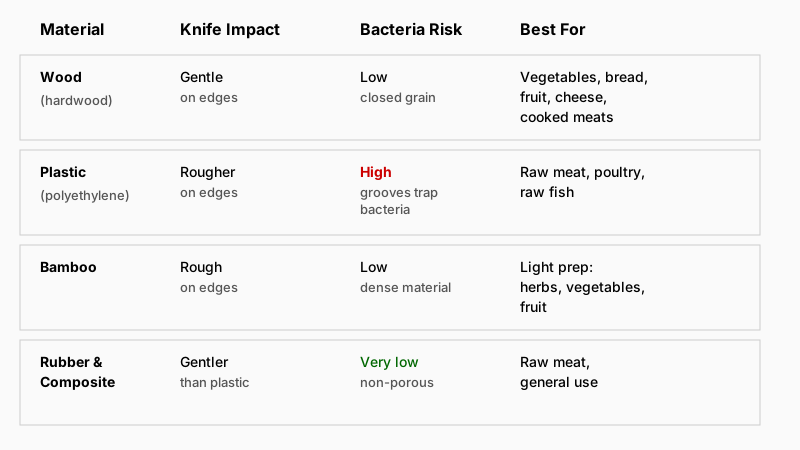
| Material | Knife Friendliness | Water Resistance | Bacteria Harbor Risk | Dishwasher Safe | Best Food Types | When to Replace |
|---|---|---|---|---|---|---|
| Wood (hardwood) | Gentle on edges | Low — requires prompt drying and oiling | Low (closed grain) | No | Vegetables, bread, fruit, cheese, cooked meats | Never — maintain with food-grade mineral oil |
| Plastic (polyethylene) | Rougher on edges | High | High (deep grooves trap bacteria) | Yes | Raw meat, poultry, fish | When deep knife scars develop |
| Bamboo | Rough on edges | Medium-high | Low (dense) | Varies | Herbs, vegetables, fruit (light prep) | When adhesive degrades (varies by quality) |
| Rubber and composite | Gentler than plastic | High | Very low (non-porous) | Yes (composite); varies (rubber) | Raw meat (rubber); general use (composite) | Can be resurfaced by sanding |
Color-Coding: The System That Eliminates Cross-Contamination
If you cook proteins regularly, a color-coded board system is worth the modest investment. The HACCP (Hazard Analysis and Critical Control Points) color system used in commercial kitchens assigns specific board colors to specific food categories:
- Red — Raw beef and other red meats
- Yellow — Raw poultry
- Blue — Raw fish and seafood
- Green — Fruits and vegetables
- White — Dairy and bakery items
- Brown — Cooked meats
You don’t need all six in a home kitchen. At minimum, keep one dedicated board for raw poultry and another for everything else. Adding a separate board for fish is worthwhile if you cook seafood more than occasionally, since fishy odors and cross-flavor contamination are real, even if bacteria isn’t the issue.
Mark boards clearly — even a strip of colored electrical tape on the edge works if you’re using plain boards.
Matching Boards to Food Types: A Practical Breakdown
Raw Poultry
Raw chicken, turkey, and duck carry the highest contamination risk in most home kitchens. Salmonella and Campylobacter are the main concerns. Use a dedicated plastic or rubber board — never your main wood board — and wash with hot soapy water immediately after use. For extra security, follow with a diluted bleach solution (roughly one tablespoon of unscented bleach per gallon of water) or run it through the dishwasher if the board is rated for it.
Don’t set cooked poultry back on the same board you used for the raw bird without washing it first.
Raw Red Meat and Pork
The risks here are lower than with poultry — whole cuts of beef are contaminated on the surface only, so if you’re searing a steak, it’ll hit a hot pan and surface bacteria are destroyed. But ground meat is a different story: grinding distributes surface contamination throughout, so treat ground beef with the same caution as poultry.
A plastic or rubber board works well. A dedicated board for raw meat (separate from your vegetable board) is the cleaner habit.
Raw Fish and Seafood
Fish is delicate in two ways: food-safety risk and flavor transfer. A board that smells of salmon will be immediately obvious when you slice cucumber on it. Use a dedicated board — plastic or rubber — and clean it promptly, since fish proteins begin breaking down and odors intensify quickly.
If you’re breaking down a whole fish or shucking oysters, rubber or heavy plastic gives you the grip and stability you need.
Vegetables and Fruit
This is where a quality wood or bamboo board shines. You want a surface that’s gentle on your knife for repetitive fine cuts — dicing onions, chiffonading basil, slicing tomatoes. A heavy end-grain maple board with good heft won’t slide around and gives you a pleasant surface to work on.
Avoid using a board that has been in contact with raw meat unless it has been thoroughly washed and dried — residual raw meat juices next to salad greens is a genuine risk.

Since a sturdy vegetable board often ends up doing double duty in the kitchen, our guide How to Cook Dried Beans from Scratch (The Right Way) is a handy next step for stocking your pantry.
Of course, a good cutting board only matters as much as what’s on it, so if you’re starting from the store, How to Choose Quality Produce at the Farmers Market can help you pick produce worth prepping in the first place.
Bread and Pastry
A large flat board — wood or composite — works well for slicing bread or rolling pastry. The main consideration here is size: you want enough surface area. A wood board also gives you a warmer, more stable surface for pastry work than a cold composite.
Cheese
Wood boards double as serving boards for cheese — something a plastic board can’t do elegantly. Hardwood or slate serves both the prep and presentation role well. Just keep in mind that soft cheeses can leave residue in grooves if the board is deeply scarred.
If you’re building a whole spread rather than slicing a single wedge, check out Cheese & Charcuterie Boards That Wow Every Guest for ideas on arranging cheese and charcuterie together.
Care and Maintenance: Making Boards Last
How you maintain a cutting board affects both its safety and its lifespan significantly.
Wood Board Care
- Wash by hand with mild dish soap and warm water immediately after use. The “never use soap on wood” advice is outdated — mild soap is fine and won’t strip seasoning.
- Dry immediately — stand it on its edge if possible so both sides dry evenly. Laying a wet board flat causes one side to absorb more moisture, which warps it.
- Oil monthly with food-grade mineral oil. Apply generously, let it soak in for several hours or overnight, then wipe off the excess. Repeat until the board stops absorbing oil readily.
- Revive with salt and lemon: A paste of coarse salt and half a lemon rubbed across the surface lifts surface stains and odors before rinsing.
Plastic Board Care
- Run through the dishwasher when possible for thorough sanitation.
- Sanitize manually with a bleach solution for raw meat or poultry boards.
- Replace once deep knife grooves develop — there’s no good way to fully clean a heavily scarred plastic board.
Rubber and Composite
- Both are generally dishwasher-safe.
- Rubber can be lightly sanded with fine-grit sandpaper to restore a clean surface.
- Composite boards benefit from occasional oiling to keep the surface in good condition.

Size, Stability, and Setup
Board size is underrated. A board that’s too small forces you to work awkwardly and increases the chance of food rolling off mid-cut. A general-purpose board for vegetable prep should be at least 12×18 inches; larger if your countertop allows. Dedicated raw-meat boards can be smaller since you’re usually not doing extensive prep work on them.
Stability matters too. Place a damp kitchen towel or a piece of non-slip mat under any board that tends to slide. This is especially important when using a sharp knife with force — a board that shifts mid-cut is a safety hazard.
If counter space is limited, consider boards that stack easily or hang on a rail. The key is that dedicated boards should be stored in a way that makes it obvious which is which — muscle memory matters when you’re reaching for a board quickly.
The Practical Takeaway
You don’t need a large collection of exotic boards. What you need is a clear system:
- One large, quality wood board for everyday vegetable, herb, fruit, bread, and cheese work.
- One or two dedicated plastic or rubber boards for raw proteins — at minimum one for poultry, ideally one for fish.
- A consistent cleaning routine that treats each board according to what it last touched.
Good boards, used deliberately and maintained properly, make cooking more efficient, keep food safer, and last years. The wood board you season and care for correctly will outlast a dozen thin plastic ones — and your kitchen will smell cleaner for it.