Fix Stubborn Odors and Stains on Countertops and Cutting Boards

Garlic from Tuesday, beet juice from last weekend, a faint but persistent fishiness you can’t quite locate — kitchen surfaces collect a lot. The good news is that most persistent odors and stains aren’t a cleaning failure; they’re a material problem. The surface you’re dealing with dictates which method will actually work, and using the wrong approach can make things worse or silently damage the surface over time.
This guide breaks down solutions by material, because wiping a marble countertop with the same mixture you’d use on a plastic cutting board is a fast way to etch or stain something permanently.

Cutting Boards: Wood vs. Plastic vs. Composite
Wooden Cutting Boards
Wood is the trickiest surface for odors and stains because it’s porous — smells and pigments migrate below the surface, beyond the reach of a quick wipe. That’s not a flaw unique to cheap boards; even high-quality end-grain hardwood does it.
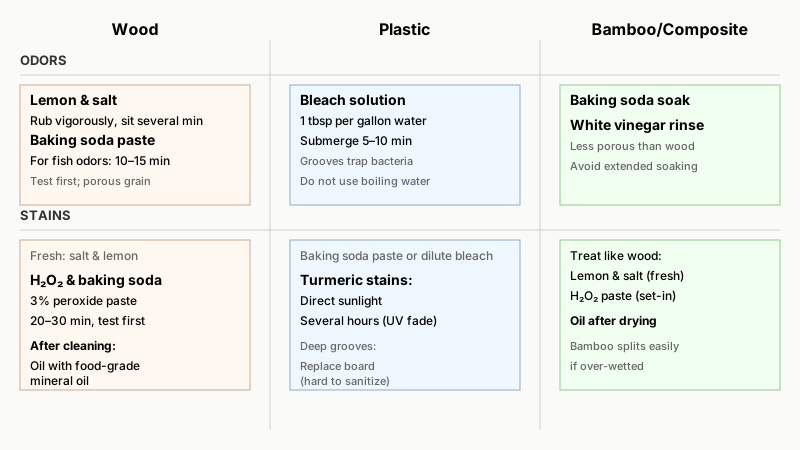
For odors: Cut a lemon in half, rub it vigorously across the board, and let the juice sit for several minutes before rinsing. The citric acid neutralizes sulfur compounds (the source of garlic and onion smell) and mild bacterial odors. For stronger smells, sprinkle coarse salt over the surface first — it acts as a mild abrasive that opens the grain slightly while the lemon works. Baking soda paste (a tablespoon of baking soda mixed with just enough water to form a thick spread) left for 10–15 minutes is a reliable alternative for fish odors specifically.
For stains: Beet, berry, and turmeric stains go deep fast on wood. If they’re fresh, the salt-and-lemon method can lift a surprising amount. For set-in stains, a paste of hydrogen peroxide (3% drugstore grade) and baking soda applied to the stain and left for 20–30 minutes will bleach the pigment in many cases — but test on an inconspicuous area first, as peroxide can lighten dark woods unevenly. Avoid soaking the board in water or leaving any wet treatment on too long; prolonged moisture causes warping and cracking.
After any deep cleaning: Oil the board once it’s completely dry. Unrefined food-grade mineral oil or a purpose-made board conditioner (often a blend of mineral oil and beeswax) keeps the grain sealed and makes the surface less hospitable to future staining. The FDA recognizes food-grade mineral oil as safe for this use.
For a daily maintenance routine that keeps these issues from coming back, check out How to Clean a Wooden Cutting Board Properly: Prevent Cracks Daily.
Plastic and High-Density Polyethylene Boards
Plastic boards develop knife scars over time, and those grooves trap bacteria and odors more effectively than new plastic does. Research published in food safety literature has found that once a plastic board is heavily scored, it becomes significantly harder to sanitize than a well-maintained wood board — a counterintuitive finding that has shifted professional guidance somewhat.
For a plastic board that smells despite repeated washing: make a solution of one tablespoon of unscented liquid bleach per gallon of cold water. Submerge or flood the board with this solution and let it stand for 5–10 minutes, then rinse thoroughly and allow to air dry. The NSF recommends a similar bleach-concentration approach for food-contact surface sanitizing. Do not use boiling water — it can warp thinner plastic boards.
For stain removal on plastic, a baking soda paste or a diluted bleach solution will address most discoloration. Turmeric is the exception; it bonds aggressively to plastics. Leaving a stained plastic board in direct sunlight for several hours (a UV-exposure method) can fade turmeric stains noticeably — this works better than most chemical methods on plastic and requires no products.
If a plastic board has deep grooves that can’t be sanded out (unlike wood, plastic doesn’t re-surface well), replacing it is safer than continuing to use it as a primary food-prep surface.
Bamboo and Composite Boards
Bamboo is technically a grass, not wood, and it’s less porous than many hardwoods — but it still stains. Treat it similarly to wood: lemon and salt for odors, hydrogen peroxide paste for stains, mineral oil to condition. Avoid extended soaking, as bamboo splits more readily than most woods when dried out after over-wetting.
Composite boards (made from compressed wood fibers or recycled materials) vary widely by brand. Most resist staining well but can hold odors in micro-cracks. A baking soda soak or diluted white vinegar rinse works for most odor complaints; follow the manufacturer’s instructions for anything more aggressive.

Kitchen Countertops: A Surface-by-Surface Guide
Countertops are where the wrong cleaning method causes the most lasting damage. A treatment that’s safe for laminate can ruin natural stone.
Natural Stone: Granite, Marble, and Quartzite
Granite and marble are porous and sensitive to acid. This rules out vinegar, lemon juice, and any citrus-based cleaner — even diluted. These acids etch the surface and dull the polish, sometimes permanently.
For odors on stone: The safest approach is a pH-neutral dish soap and warm water, combined with a dedicated stone cleaner if odors persist. Baking soda paste (pH ~8.3) is mild enough to use on granite in small applications; rinse completely. Avoid it on marble for anything but the most occasional use, as even mildly alkaline substances can cause micro-etching over time with repeated exposure.
For stains on stone: A poultice method is the professional approach. Mix an absorbent powder (diatomaceous earth, baking soda, or uncolored talc) with enough hydrogen peroxide to make a thick paste. Spread it over the stain, cover with plastic wrap taped down at the edges, and let it sit for 24–48 hours. As it dries, the poultice draws the stain out of the stone. This is genuinely effective for oil-based stains (cooking oil, butter) and many pigment stains on granite; results on marble are less predictable. Remove, rinse well, and reseal the stone after the area dries.
Sealing granite and marble regularly (typically once or twice a year, depending on porosity and product used) dramatically reduces future staining.
Engineered Quartz
Quartz countertops (brands like Silestone, Caesarstone, and others) are non-porous and highly stain-resistant in normal use. Persistent odors are rare because the surface doesn’t absorb them. When they do occur — usually from a strong spill left to dry — a paste of baking soda and water left for 10–15 minutes followed by a thorough rinse resolves most issues.
For stubborn stains on quartz: a small amount of rubbing alcohol or a non-abrasive surface cleaner will address most problems. Avoid bleach at full strength (it can discolor some quartz finishes), and avoid abrasive scrub pads, which scratch the resin surface.
Laminate (Formica-Style)
Laminate is cost-effective and fairly forgiving, but the seams and any chips are vulnerability points — moisture and stains penetrate there and become difficult to remove.
For surface odors and stains on intact laminate, a paste of baking soda and dish soap is effective and safe. A solution of equal parts white vinegar and water handles many stains, and because laminate has no natural stone to etch, vinegar is safe here. For persistent discoloration, a diluted bleach solution (one part bleach to ten parts water) applied briefly, then rinsed, is appropriate — but don’t leave it long, as bleach can fade the pattern over time.
Avoid abrasive scrubbers; they scratch the decorative layer and make the surface harder to clean going forward.
Butcher Block and Wood Countertops
Think of a wood countertop as an enormous cutting board, and treat it the same way. Odors and stains respond well to the lemon-and-salt method, hydrogen peroxide paste for set-in pigment stains, and periodic oiling to maintain the seal. Sanding is an option that wood countertops have over cutting boards — a light sanding with fine-grit paper (180-grit or above) removes the top layer along with its stains, followed by oiling to re-seal. This is a more disruptive fix but genuinely restores the surface.
If your butcher block doubles as a serving surface, you might also enjoy Flavored Butter Boards: The Complete How-To Guide for creative ways to dress it up.
Stainless Steel Countertops
Stainless steel resists bacterial growth well and doesn’t absorb odors in the way porous surfaces do. Persistent smell on stainless is almost always a residue issue — grease or food trapped in scratches or around the sink joint. A paste of baking soda applied in the direction of the grain, then rinsed, removes most residue and light staining. For rust spots (usually from water left pooling near the sink), a specialized stainless steel cleaner with oxalic acid dissolves the oxidation without damaging the surface. Avoid steel wool or cross-grain scrubbing — both create new scratches that trap future grime.

When Cleaning Isn’t Enough
Some problems aren’t solvable with household treatments:
- Deep microbial contamination in scored plastic boards — if a plastic board has extensive knife grooves and still smells after proper sanitizing, the bacteria live below where cleaning reaches. Replace it.
- Porous stone that repeatedly re-stains — a stone surface that absorbs stains rapidly despite cleaning likely needs professional resealing, or was never properly sealed to begin with.
- Laminate with swollen seams — moisture under laminate causes the material to bubble and separate. This isn’t treatable from the surface; it requires patching or replacement.
- Persistent mold smell that doesn’t respond to bleach treatment — in rare cases, mold is growing beneath the countertop surface (in the substrate or around the sink), and surface cleaning won’t reach it.
In these situations, escalating to a professional or replacing the surface is the practical answer, not a failure of cleaning technique.
If the source of your kitchen’s bad smells extends beyond the counters and boards, our guide How to Deodorize a Kitchen Naturally (No Commercial Products) tackles the fridge and cooking surfaces where odors love to linger.
Frequently Asked Questions
Does white vinegar actually sanitize cutting boards?
Vinegar has some antimicrobial properties, but it is not a registered sanitizer and doesn’t reliably kill common kitchen pathogens like Salmonella or E. coli at household concentrations. It’s reasonable for odor control and mild cleaning, but for genuine sanitizing, a diluted bleach solution or a food-safe quaternary ammonium sanitizer is more reliable.
Can I use bleach on a wooden cutting board?
Occasionally and briefly — a diluted bleach rinse (one tablespoon per gallon of water, rinsed thoroughly) won’t immediately destroy a wood board. But regular bleach use dries and degrades wood fibers over time, eventually causing cracking. It’s better to use the peroxide-and-baking-soda approach for wood and reserve bleach for plastic.
Why does my granite still smell after cleaning?
Granite is porous, and cooking odors — especially fat-based ones — can penetrate below the surface, particularly if the sealer is worn or absent. A baking soda poultice (as described above) helps draw out residue. If the smell returns quickly, the countertop needs resealing.
How often should I oil my wooden cutting board or butcher block?
When the wood starts to look dry or grey, or water no longer beads on the surface — that’s the practical signal, not a calendar schedule. For boards in heavy use, this might be every few weeks; for occasional-use boards, once or twice a season. New boards benefit from an initial heavy oiling (three to four applications over a few days) before first use.
Is sunlight really effective for removing turmeric stains from plastic?
For plastic specifically, yes — UV exposure breaks down curcumin (the pigment in turmeric) fairly effectively. Leave the stained board outdoors in direct sun for two to four hours. Results depend on UV intensity (stronger in summer, at higher altitude, and at lower latitudes), but many cooks find it outperforms bleach on turmeric for plastic surfaces. It doesn’t work well on wood, where the stain is deeper in the grain.
Sources
- https://www.fda.gov/industry/color-additives/color-additive-status-list
- https://www.nsf.org/consumer-resources/articles/safe-food-handling
- https://www.fsis.usda.gov/food-safety/safe-food-handling-and-preparation/food-safety-basics/cutting-boards-and-food-safety
- https://extension.umn.edu/preserving-and-preparing/cutting-board-safety