How to Choose Quality Produce at the Farmers Market

Farmers markets can feel almost overwhelming — dozens of stalls, abundant color, and vendors who each insist their tomatoes are the ripest in the county. The difference between coming home with extraordinary produce and settling for disappointment often comes down to knowing exactly what to look for before you reach into the bin.
This guide breaks down quality cues by produce type, covers the vendor questions worth asking, and flags a few common traps that trip up even experienced shoppers.

The Foundational Rule: Buy With Your Senses, Not Your Eyes Alone
Supermarkets train us to shop visually — uniform color, shiny skin, no blemishes. Farmers market produce often looks rougher on the outside and far better on the inside. Reorienting toward smell, weight, and feel is the single biggest shift you can make.
Smell is the most honest signal produce gives you. A ripe cantaloupe smells like cantaloupe through its skin at the blossom end. Fresh basil should be assertively fragrant, not faintly green. Peaches that smell of nothing will taste of nothing. If a vendor won’t let you smell or gently squeeze, move on.
Weight signals water content and freshness. A heavy cucumber relative to its size is turgid with moisture. A lightweight ear of corn has already started losing its sugars — corn converts sugar to starch quickly after harvest, so weight and picking date both matter.
Feel reveals structure. Gently press; don’t pinch. You’re looking for resilience — the surface should spring back slightly under light pressure, not indent and stay.
Reading Quality Cues by Produce Type
General rules only go so far. Here’s what to look for across common categories:
Stone Fruits (Peaches, Nectarines, Plums, Cherries)
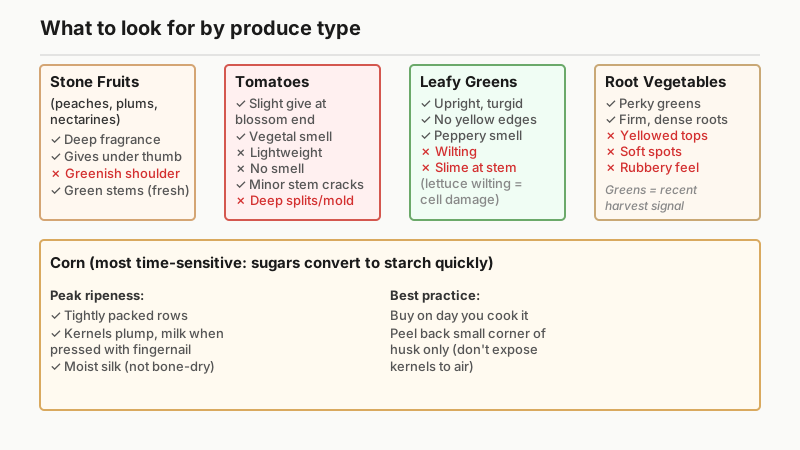
Fragrance first. A peach that smells deeply of itself at room temperature is ready or very close. Look for skin that gives slightly under gentle thumb pressure near the seam. Avoid fruits with greenish shoulders — they were picked before the sugars had time to develop and won’t ripen correctly off the tree. Cherries should be firm, glossy, and dark for their variety; stems still green (not brown and shriveled) indicate they came off the tree recently.
Tomatoes
Skip any tomato that feels light for its size or has a hollow, cardboard smell. Heirloom tomatoes come in wild colors — deep purple, streaked green, near-black — so don’t use color uniformity as a guide. Instead, press gently at the blossom end: there should be slight give. Smell the stem end. Ripe field tomatoes smell distinctly vegetal and warm. A tomato with no smell will have no flavor.
Cracks near the stem are harmless and often indicate the tomato grew very quickly during a rain — those can be the sweetest ones. Deep splits, mold, or weeping juice are different; pass on those.
If your market run leaves you with a bag of sweet onions too, How to Caramelize Onions Properly: A No-Shortcut Guide shows you how to turn them into a rich, golden condiment.
Leafy Greens (Lettuce, Kale, Chard, Arugula)
Look for turgid, upright leaves with no yellowing at the edges or sliminess at the stem end. Farmers market greens are often cut the morning of the market, so wilting is a reliable sign a vendor has been sitting unsold for a few days. Arugula and mustard greens should smell sharp and peppery. Wilted kale can be revived with an ice bath at home, but wilted lettuce is usually a lost cause — it signals cell damage, not just thirst.
Root Vegetables (Carrots, Beets, Turnips, Radishes)
Greens still attached are your best freshness signal for carrots, beets, and radishes. Perky, bright greens mean the root came out of the ground recently. Floppy, yellowed tops mean the root has been sitting, and its moisture and nutrients are declining. The roots themselves should feel firm and dense — no give at all. Avoid any that feel rubbery or show soft spots.
Note: vendors sometimes remove tops to extend shelf life. That’s not a mark against them, but ask when they were harvested if there’s no foliage to read.
Corn
Corn is one of the most time-sensitive vegetables you’ll buy. Its sugars convert to starch within hours at room temperature (somewhat slower when refrigerated). Ideally, buy it on the day you’ll cook it. Pull back just a small corner of the husk — don’t peel the whole thing, as that dries the kernels. Look for tightly packed rows reaching all the way to the tip, kernels that are plump and milk when pressed with a fingernail, and silk that is moist rather than bone-dry.

Summer Squash and Zucchini
Small to medium is almost always better than large. A zucchini over about 8–10 inches tends to have tough seeds, watery flesh, and diluted flavor. Look for firm, blemish-free skin with a slight sheen. The stem end should look freshly cut, not dried and brown. Avoid any that feel soft when pressed.
Herbs
Fresh herbs should look almost aggressively alive — bright color, no blackening at leaf edges, stems that look recently cut. Smell a leaf by gently bruising it. Basil should smell anise-sweet; cilantro distinctively pungent; dill feathery and grassy. Dried-out or weak-smelling herbs have lost most of their essential oils and won’t significantly improve a dish.
Apples and Pears
Firm apples (Honeycrisp, Fuji) should feel rock-solid. Pears are trickier: they ripen from the inside out, so a pear that feels soft outside is already past its peak. Check near the neck — gentle give there, with the body still firm, means it’s in its prime. Any apples with wrinkled skin have been stored too long (storage apples can sit for months) or have dried out; fine for applesauce, but disappointing fresh.
The Vendor Questions That Actually Matter
Farmers market vendors range from certified organic growers who farm five acres themselves to produce resellers who buy wholesale and show up in the booth. Both can be legitimate, but the product is often very different.
A few straightforward questions:
“Did you grow this yourself?” A direct question deserves a direct answer. Genuine growers usually have specific, enthusiastic responses. Resellers often deflect or answer vaguely.
“When was this harvested?” Same-day or yesterday is ideal for fragile crops. For root vegetables, a few days is fine. For leafy greens, you want yesterday at most.
“What variety is this?” Growers who know their product can name varieties. A vendor who can’t tell you whether a tomato is a Brandywine, Sun Gold, or Cherokee Purple likely didn’t grow it.
“Do you use any sprays?” Not every small farm can afford organic certification, but many use minimal or no sprays. This opens a useful conversation. A grower who farms responsibly is usually happy to talk about their practices in detail.
Spotting Resellers and Repackaged Produce
Some vendors at farmers markets aren’t growers at all — they’re buying from the same wholesale distributors that supply grocery stores. This isn’t automatically bad, but it’s worth knowing, especially if you’re paying a premium for “local” produce.
Tell-tale signs of resellers:
- PLU stickers on produce (those small price look-up codes on supermarket fruit)
- Produce from climates or seasons that don’t match your region (tropical fruit in a northern market in spring)
- Pristine, perfectly uniform items that look more like a grocery shelf than a farm
- Inability to answer basic questions about the farm, growing methods, or harvest date
- Cardboard boxes with distributor labels still visible behind the stall
None of this is definitive, but taken together, these signals suggest caution.

Seasonality as a Quality Filter
One of the most reliable quality indicators at a farmers market is whether a product is actually in season for your region. A vendor selling local strawberries in August in the northern US should raise a small flag — most strawberry seasons in those areas run May through early July. That doesn’t mean no strawberries, but it might mean stored or trucked-in berries.
Knowing rough seasonal windows for your area pays dividends. Spring: asparagus, peas, early greens, radishes. Summer: tomatoes, corn, stone fruit, beans, zucchini. Fall: winter squash, apples, root vegetables, kale. Early winter: storage crops, cold-hardy greens, late apples.
Produce sold in season tends to be fresher simply because it doesn’t have to travel far or sit in storage. Off-season produce at a farmers market is either very impressive local greenhouse growing or worth a skeptical look.
Practical Tips Before You Leave the Market
- Arrive early for the best selection of fragile items (berries, stone fruit). Arrive late — last hour — for potential discounts on items vendors don’t want to haul home.
- Bring your own bags. Canvas bags let produce breathe; plastic bags trap moisture and speed wilting.
- Keep cold items cold. If you’re spending time at the market, pack a small insulated bag for items like fresh cheese, cut fruit, or leafy greens.
- Buy less than you think you need on your first few visits to a new vendor. Build trust gradually, rather than investing heavily in a stall you haven’t vetted.
- Handle gently. Bruising starts a clock on decay. Treat ripe peaches or tomatoes like something you’d rather not drop.
Once you’ve brought your haul home, How to Store Fresh Produce to Extend Shelf Life will help you keep everything fresh for as long as possible.
Frequently Asked Questions
Is unwashed produce from a farmers market safe to eat?
All fresh produce carries some level of microbial risk, whether it comes from a farm stall or a supermarket. Wash produce under cool running water before eating. The FDA and food safety authorities recommend not using soap, detergents, or bleach on produce. Scrub firm-skinned items like cucumbers with a clean vegetable brush.
Does “organic” at a farmers market mean USDA certified?
Not always. USDA organic certification is a regulated standard requiring annual inspection and documentation. Small farms sometimes use the word loosely to mean “we don’t spray.” If the certification matters to you, ask to see paperwork or look for the official USDA Organic seal.
How do I store farmers market produce differently from supermarket produce?
Most farmers market produce hasn’t been waxed, gassed, or treated to extend shelf life, so it may have a shorter window. Fragile items (berries, ripe stone fruit, fresh corn) should be used within one to two days. Most root vegetables and sturdy squash keep well in a cool, dark place for a week or more. Many tomatoes keep best at room temperature — refrigerating them below about 55°F damages texture and dulls flavor.
Is it worth paying more for farmers market produce?
That depends entirely on the vendor and what you’re buying. A genuinely local, just-harvested tomato from a small farm can be dramatically better than anything in a grocery store — both in flavor and in nutrition, since some nutrients decline after harvest. But a reseller charging a premium for the same wholesale peaches you’d find elsewhere offers no particular advantage. The quality cues and vendor questions in this guide help you sort one from the other.
What should I do if produce I bought turns out to be bad?
Go back and mention it politely to the vendor. Most legitimate growers care about their reputation at a market they return to weekly and will make it right. Consistent problems with one vendor are a sign to shop elsewhere.
The Bigger Picture
Choosing well at a farmers market is part skill, part relationship. The skill part — reading smell, weight, and feel — improves quickly with practice. The relationship part develops over a season: you learn which vendor’s tomatoes are always worth the price, which herb farmer cuts fresh every morning, which stone fruit grower can be trusted when they say “these are ready today.”
Good produce doesn’t require expensive taste. It requires paying attention to the right things — and asking a few honest questions.