Crispy Roast Potatoes: The Step-by-Step Guide to Perfect Results

If your roast potatoes keep coming out pale and soggy, the cause is almost always one of a handful of specific things — a wet surface, fat that wasn’t hot enough, or too many potatoes crowded into one tin. Every one of them is fixable. Done properly, a roast potato shatters when you bite into it: a crackling golden shell giving way to a fluffy, almost cloud-like interior.
Why Are My Roast Potatoes Not Crispy?
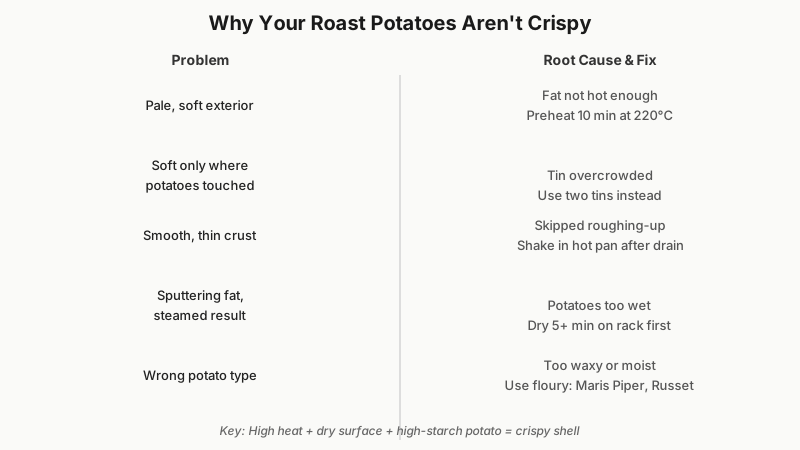
Work through these symptoms first — the cause is usually obvious once you can name what went wrong. The sections below explain the technique behind each fix.
Pale, soft exterior all over. The fat wasn’t hot enough when the potatoes went in, or the oven temperature dropped mid-roast (opening the door repeatedly does it). The tin and fat should preheat for a full 10 minutes at 220 °C / 425 °F, and each potato should sizzle aggressively on contact.
Soft only where they touched each other. The tin was overcrowded. Potatoes packed together trap steam between them and stew rather than roast. Use two tins rather than one crowded one.
A smooth, thin crust that never turns crunchy. You skipped the roughing-up. After draining, the potatoes need a vigorous shake in the hot dry pan until the surface looks chalky and furry — that ragged starch layer is what actually crisps.
Sputtering fat and a steamed result. The potatoes went into the fat wet. Give them at least five minutes on a rack, or in the uncovered pan, so surface water steams off first.
Crispy skin that falls off the flesh. The parboil went too far. The potato was too soft going into the oven and the outer layer separated. Aim for edges that are just soft while the centre stays firm.
Dark brown but still not crispy. Usually a fat problem — too much fat pooling in the tin, or a fat whose smoke point is too low for 220 °C, so it burns before the surface finishes dehydrating.
They stick to the tin and tear when you lift them. They weren’t ready. A properly crisped roast potato releases from the pan on its own. Give it another five minutes and try again.
They never crisp no matter what you do. Check the variety. Waxy or “salad” potatoes hold too much moisture and too little starch to form a crust — you need a floury type like Maris Piper, King Edward or Russet.
Choosing the Right Potato
The variety matters more than most recipes admit. You want a high-starch potato — one that cooks up dry and fluffy rather than waxy and dense.
- Maris Piper (UK) — the gold standard in British kitchens; high starch, rough skin that creates excellent surface area
- King Edward (UK) — slightly waxier than Maris Piper but still produces a good crust
- Russet / Idaho (North America) — the closest equivalent to Maris Piper; very high starch, ideal for crisping
- Desiree — a red-skinned potato with medium starch; acceptable but not ideal
Avoid new potatoes, Charlotte, or any variety labeled “salad potato” — their lower starch content and higher moisture produce a roast that steams rather than crisps.

If crispy spuds are your obsession, our guide to Crispy French Fries at Home: The Complete Fresh Potato Guide applies many of the same starch-and-moisture principles to a different cut entirely.
The Science Behind the Crunch
Crisping a potato is fundamentally a dehydration process. You need to drive out surface moisture fast, at high heat, in the presence of fat. Three things accelerate this:
The same dry-surface, high-heat logic explains why Crispy Roasted Chickpeas: Bone-Dry Beans, Bold Coating Ratios turn so shatteringly crisp in the oven.
1. Parboiling (and why it must be rough)
Boil your peeled, cut potatoes in generously salted water until the outside is genuinely starting to soften — roughly 8–10 minutes after the water returns to the boil for large chunks. You want the surface of each piece to look slightly chalky and furry, not smooth.
Drain them, then return them to the hot, empty pan and shake vigorously. This roughing-up creates a thick, starchy, irregular surface layer. That layer is what turns crispy in the oven; without it, you get a thin, almost papery crust that falls off.
2. Steam-drying
After shaking, spread the potatoes on a wire rack (or just leave them in the pan, uncovered) for at least five minutes. The steam coming off the surface carries away moisture. If you drop wet potatoes straight into hot fat, you get a sputtering pan and a potato that partially steams before it starts to roast.
3. Fat temperature
The fat in your roasting tin must be screaming hot before the potatoes go in — not warm, not just out of the oven, but visibly shimmering and starting to smoke lightly. Heat your tin in the oven at 220 °C / 425 °F (fan: 200 °C) for at least 10 minutes before adding the potatoes.
When each potato piece hits that fat, it should sizzle aggressively. This immediate contact seals and begins browning the exterior before the interior has a chance to release more moisture outward.
Choosing the Best Fat
Fat choice changes both flavor and crispiness:
- Goose or duck fat — the classic British Sunday roast option; high smoke point, rich flavor, produces an especially deep golden color
- Lard or beef dripping — excellent smoke point, very neutral flavor, renders a hard, durable crust
- Vegetable or sunflower oil — reliable and affordable; higher smoke point than olive oil, crispy results
- Extra-virgin olive oil — lower smoke point means it struggles at 220 °C, but refined olive oil works fine
- Coconut oil — can work, adds subtle flavor, but the smoke point is lower than ideal at peak temperatures
For the crispiest possible result without the luxury of goose fat, refined sunflower or vegetable oil is genuinely competitive. The fat quantity matters too — each potato piece should be coated but not submerged. Roughly 3–4 tablespoons of fat for 1 kg of potatoes is a good starting point.

Seasoning and Flavor Additions
Salt is non-negotiable. Flaky sea salt added just before serving preserves its texture and adds a crunch of its own. Salting during roasting can pull out more moisture, which is actually helpful at the beginning.
Beyond salt, a few additions earn their place:
- Semolina or polenta — toss rough-surfaced potatoes in a light dusting of fine semolina before they hit the fat. It creates a slightly grainier, crunchier coating without changing the flavor much.
- Garlic — whole unpeeled cloves tossed in during the last 20 minutes perfume the fat without burning
- Fresh rosemary or thyme — strip the leaves and add for the final 15 minutes; any earlier and the herbs scorch
- Smoked paprika — a light dusting on the potatoes before they roast adds color and a subtle depth
Oven Temperature and Timing
High heat is essential. 220 °C / 425 °F (fan: 200 °C) for the duration of cooking — usually 45–55 minutes for large chunks.
Timing pointers:
- Don’t crowd the tin. Every piece needs direct contact with hot fat and hot air. If potatoes are touching, steam builds up between them and you get a soft, slightly stewed exterior. Use two tins if necessary.
- Turn once or twice. At around 20 minutes, use tongs or a spoon to turn each potato so a fresh face contacts the fat. Turn again at 35–40 minutes. Each turn encourages even browning and crisping across more surfaces.
- Check the base, not the top. The underside is always further along than it looks from above. Lift one piece with tongs — if the base is a deep, even gold, you’re getting there.

A Reliable Base Recipe
Here’s the method distilled:
- Peel and cut 1 kg of Maris Piper or Russet potatoes into large chunks (roughly 6–7 cm). Uneven shapes are fine — jagged edges crisp more.
- Place a roasting tin with 4 tablespoons of goose fat, duck fat, or sunflower oil in the oven at 220 °C / 425 °F (fan 200 °C).
- Boil the potatoes in well-salted water for 8–10 minutes until the edges are soft and chalky.
- Drain, return to the pan, cover with a lid, and shake firmly 5–6 times.
- Spread on a wire rack for 5 minutes to steam-dry.
- Optional: toss in 1 tablespoon of fine semolina.
- Carefully place potatoes in the screaming-hot fat. Season with salt.
- Roast for 45–55 minutes, turning twice, until deeply golden on all sides.
- Drain on kitchen paper for 1–2 minutes. Finish with flaky sea salt and herbs.
Ahead-of-Time Options
One practical constraint with roast potatoes is the timing: they need oven space and attention. A few strategies help:
- Parboil and roughen the potatoes up to 6 hours in advance. Let them cool on a rack, uncovered, in the fridge. The surface dries out even further, which actually improves crispiness.
- Semi-roast and reheat. Roast for 30 minutes until just starting to color, cool, then blast in a very hot oven for 20–25 minutes before serving. The results are 90% as good as straight-through.
- Don’t freeze parboiled potatoes unless pre-fried. A raw freeze-thaw cycle breaks down the starchy layer you’ve built up.
Conclusion
There’s no single secret to crispy roast potatoes — it’s a combination of factors: the right variety, a thorough roughing-up, proper steam-drying, blazing hot fat, and enough space in the tin. Nail all five and the results become reliably excellent rather than occasionally lucky. Start with one batch focused purely on the method, and the technique will stick faster than any recipe card.