How to Store Spices Right and Keep Their Flavor

Spices are cheap to buy but expensive to waste. Open any older kitchen cabinet and you’ll likely find a graveyard of faded paprika, rock-hard cinnamon sticks, and ground cumin that smells more like cardboard than anything edible. The problem isn’t that spices go bad overnight — it’s that most storage habits slowly bleed their potency long before the jar hits the trash.
This guide covers how flavor actually degrades, which storage conditions matter most, and the practical steps that keep your spices tasting like spices.
Why Spices Lose Flavor (And What’s Actually Happening)
Spice flavor comes from volatile aromatic compounds — primarily essential oils. When a spice is ground, it exposes far more surface area to the surrounding environment. Heat accelerates the evaporation of those oils. Light triggers oxidation. Humidity draws in moisture that clumps powders and speeds up microbial breakdown.
The result is a cascade of small degradations:
- Oxidation turns fats in spices (especially in paprika, chili powder, and nutmeg) rancid, producing off-flavors.
- Evaporation of volatile oils leaves behind the dry, fibrous base with almost no aroma.
- Moisture absorption causes clumping and invites mold in poorly sealed jars.
Ground spices degrade faster than whole ones for the simple reason that more surface area is exposed. A whole nutmeg, kept properly, retains flavor for three to four years. Pre-ground nutmeg is closer to six months to a year at peak quality.

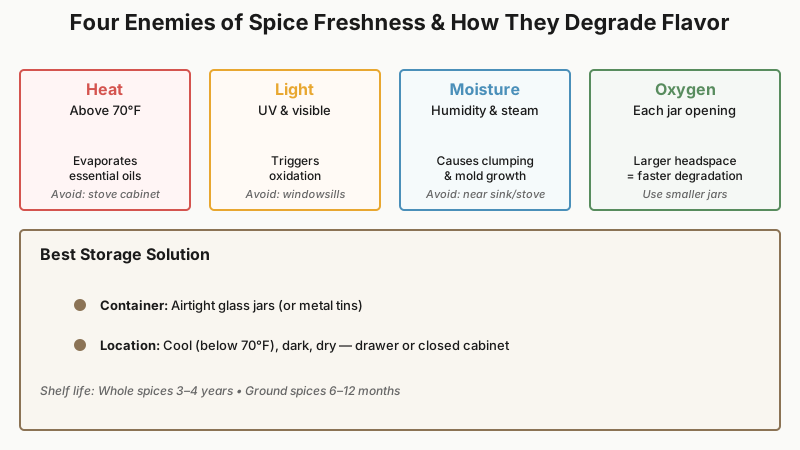
The Four Enemies of Spice Freshness
Understanding these four culprits makes every storage decision obvious.
1. Heat
The stove top and the cabinet directly above or beside it are the worst possible locations for spices — yet they’re where most people store them. Ambient heat above about 70°F (21°C) noticeably shortens shelf life. Every spike to 90°F or above strips aromatic compounds faster.
The same applies to dishwashers. Washing spice jars in the dishwasher heats the interior of the lid and jar, and even small amounts of residual moisture create problems when you refill them.
2. Light
Ultraviolet and visible light both degrade the chlorophyll in green spices (parsley, dill, chives) and accelerate oxidation across the board. This is why commercial spice producers use opaque or dark-tinted containers. A windowsill herb rack looks appealing in a kitchen but is essentially a slow-motion flavor destroyer.
3. Moisture and Humidity
Moisture is the most underrated threat. Introducing a wet spoon to a jar, storing spices near the stove where steam rises, or simply living in a humid climate — all of these let moisture in. Once it’s there, clumping is the minor issue. Mold and loss of potency are the bigger ones.
Humidity also causes what’s called “caking” — where powdered spices fuse into solid lumps that are hard to measure and release flavor inconsistently during cooking.
4. Oxygen
Every time you open a jar, a little oxygen enters and a little aromatic oil exits. This is unavoidable, but the size of the jar matters. Keeping a massive jar of cumin half-empty means a large air headspace — more oxygen constantly interacting with the spice surface. Smaller jars, kept fuller, age better.
How to Store Spices Properly: The Practical System
Choose the Right Container
Airtight glass jars are the gold standard. Glass doesn’t absorb odors, doesn’t leach chemicals, and is easy to clean without retaining scent. Metal tins work well too, particularly for whole spices, as long as they seal tightly.
Plastic containers are fine for short-term use but are more porous over time and can absorb strong aromatics like cloves or star anise, making them harder to repurpose later.
If you buy spices in bulk, transfer them immediately into smaller airtight glass jars rather than storing large amounts in a single container.
The same airtight, cool-and-dark logic applies to other pantry staples, so check out How to Store Nuts and Seeds for Maximum Freshness for another easy freshness win.
Find the Right Location
The ideal spice storage spot is:
- Cool — consistently below 70°F (21°C) if possible
- Dark — inside a closed drawer or opaque cabinet
- Dry — away from the stove, dishwasher, sink, and any steam source
A dedicated spice drawer (horizontal, labels facing up) is one of the most practical setups — it keeps everything visible, dark, and away from heat. A closed pantry shelf works nearly as well.
Avoid: the cabinet above the stove, open shelving in front of a window, the countertop near the kettle or coffee maker.

Whole vs. Ground: Buy Strategically
For spices you use infrequently, buy whole and grind as needed. Whole coriander, black pepper, cumin, cardamom, cinnamon sticks, and cloves all hold their flavor dramatically longer than their ground equivalents. A small electric coffee grinder dedicated to spices (or a mortar and pestle) makes this genuinely easy.
For everyday workhorse spices you go through quickly — like paprika in a household that cooks Spanish or Hungarian food regularly — buying ground is perfectly practical, since you’ll use it before it degrades anyway.
The calculation is simple: if a jar of ground spice is going to sit in your cabinet for more than a year, buy it whole.
If you’re leaning toward buying more whole spices, Toast & Grind Whole Spices for Maximum Flavor will show you how to unlock their full potential right before cooking.
Refrigeration and Freezing
Refrigeration is occasionally recommended, but it comes with a real practical problem: condensation. Every time a cold jar comes out of the fridge into a warm kitchen, moisture forms on and inside the jar. Unless you’re pulling the whole jar out infrequently and sealing it immediately, the fridge creates as many problems as it solves.
Freezing is more viable for large quantities of whole spices you want to keep for extended periods — vacuum-sealed bags of whole chili peppers or saffron, for example. For everyday ground spices in jars, room temperature in a proper dark, cool cabinet is more practical and almost as effective.
Label Everything With a Date
This sounds obvious, but most people never do it. When you buy or refill a spice jar, write the purchase date on a small label or piece of tape on the bottom of the jar. This takes five seconds and saves you from ever guessing whether that cumin is one year old or three.
General freshness guidelines (from purchase, stored well):
- Ground spices: 6 months to 1 year at peak, usable up to 2–3 years
- Whole spices: 2–4 years at peak, often usable longer
- Dried herbs: 1–2 years at peak
- Salt: indefinite (it doesn’t spoil, though iodized salt can lose iodine potency over time)
- Whole dried chiles: 1–2 years at peak
The Smell Test
Dates are a guide, not a rule. Your nose is the real judge. Crush or rub a small amount between your fingers. If you get a clear, distinct aroma immediately — the spice is still good. If you smell almost nothing, or something vaguely musty, it’s time to replace it.
Lack of aroma doesn’t just mean the spice tastes weak — it means you’ll over-add trying to compensate, and the cooking balance shifts. Fresh spices let you cook with precision.
Buying Better Spices to Start With
Storage prolongs quality, but it can’t fix a low-quality spice to begin with. Supermarket spice racks often hold stock for months before it reaches a shelf, then sit on the retail shelf for months more.
Some better sourcing options:
- Specialty spice shops and markets: higher turnover means fresher stock
- Ethnic grocery stores: often dramatically fresher and cheaper than mainstream supermarkets for staples like cumin, turmeric, coriander, and chili powders
- Online spice retailers: companies that roast-to-order or package in small batches (Burlap & Barrel, Diaspora Co., and Penzeys are commonly cited examples — though availability varies by region)
- Buying small quantities more frequently: a half-ounce of something you use rarely is smarter than a four-ounce jar that will sit for two years
Note: some of these retailers have affiliate programs, but none are endorsed for commercial reasons here — they’re cited as representative examples of the fresh-sourcing model.

A Simple Spice Audit: Where to Start
If your current spice situation is chaos, a one-time audit resets everything:
- Pull every spice out of wherever it lives.
- Smell each one. Discard anything with no discernible aroma.
- Consolidate duplicates.
- Transfer anything still in paper packets or oversized bags to smaller airtight glass jars.
- Label the bottom of each jar with today’s date.
- Find a dark, cool cabinet or drawer and make it the dedicated spice home.
This takes about 30–45 minutes once. After that, the system practically runs itself — you just replace jars as they empty or lose potency.
Conclusion
Proper spice storage isn’t complicated, but the default kitchen setup actively works against it. Heat from the stove, light from open shelves, and moisture from cooking steam all degrade the volatile compounds that make spices worth using in the first place.
The fix is straightforward: airtight glass jars, a cool dark location, whole spices where practical, and a date label on every jar. Follow those basics and a $4 jar of smoked paprika actually delivers on its promise for a full year or more — instead of fading into something vaguely reddish and pointless by month three.
That’s the real payoff: not saving money on spices (though you will), but cooking food that actually tastes the way you intended it to.