How to Unshrink a Wool Sweater: The Hair Conditioner Rescue Trick

Yes, You Can Rescue a Shrunken Wool Sweater
You pull a favorite merino crewneck out of the dryer and it looks like it belongs to a ten-year-old. Most people assume the sweater is ruined. It usually isn’t — but the window for rescue is real, and the method matters.
Wool fibers shrink because heat, agitation, and moisture cause the tiny scales on each fiber to lock together in a process called felting. The key insight: if that felting hasn’t gone too far, you can reverse it by relaxing those scales with a protein-softening agent and gently stretching the garment back to its original dimensions. Baby shampoo and hair conditioner both contain surfactants and conditioning agents that do exactly that.
This guide covers the full method, what affects your odds of success, and how to avoid the problem in the future.
What You’ll Need Before You Start
Gather everything first — speed matters once the sweater is wet.
- Lukewarm water (not warm, not cold — aim for room temperature or just slightly above)
- Baby shampoo or cheap hair conditioner — either works; avoid anything with strong dyes or fragrance oils that could stain
- A clean sink or large basin
- Two clean, dry towels (thick bath towels are best)
- A flat drying surface — a mesh drying rack, a clean table covered with a towel, or a foam blocking board if you have one
- Measuring tape or a ruler — optional but helpful if you want to track progress
One note on conditioner: the active ingredients that relax wool fibers are cationic surfactants, which coat and lubricate the fiber scales. A basic drugstore conditioner costing a dollar or two works just as well as an expensive one here.

The Step-by-Step Method to Unshrink Wool
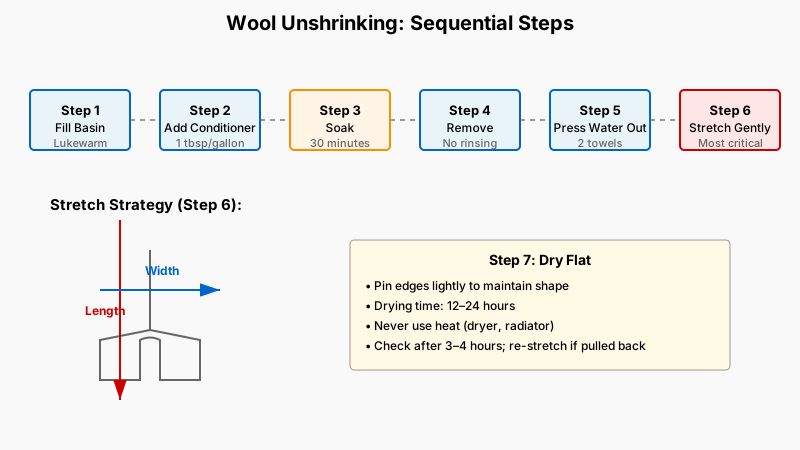
Step 1: Fill the Basin with Lukewarm Water
Fill your sink or basin with enough lukewarm water to fully submerge the sweater. Temperature is critical — anything above about 30°C (86°F) risks locking the fibers further. Err on the side of cooler rather than warmer.
Step 2: Add Your Softening Agent
Add about one tablespoon of baby shampoo or hair conditioner per gallon (roughly 4 liters) of water. Swirl gently to dissolve — don’t create a lot of foam. You want the water barely sudsy.
Step 3: Submerge and Soak
Place the sweater in the water and gently press it down until fully saturated. Do not agitate, scrub, or wring — every squeeze or twist risks tightening the felted fibers further. Just let it soak undisturbed for 30 minutes. Some knitters swear by 20 minutes; others go up to 45. Half an hour is a reliable middle ground.
You’ll often notice the sweater feels noticeably softer in the water — that’s the conditioner doing its job.
Step 4: Remove Without Rinsing
Lift the sweater out of the water gently, supporting it from underneath with both hands (wool is heavy when wet and will stretch unevenly if you pull from one end). Do not rinse. Leaving the conditioner in the fibers keeps them pliable during the stretching phase.
Step 5: Press Out Excess Water
Lay the sweater flat on a dry towel. Roll the towel up around the sweater and press firmly — don’t twist. Unroll, swap for a second dry towel if needed, and repeat. The goal is to remove enough water that the sweater isn’t dripping, while keeping it damp enough to be manipulated.

Step 6: Stretch It Back to Shape
This is where the real work happens. Lay the damp sweater on your flat drying surface.
- Pull the body lengthwise first — place both hands at the bottom hem and gently tug downward while someone (or a weight) holds the shoulders, or anchor the shoulders with a towel and work section by section.
- Pull the sleeves lengthwise from cuff to underarm.
- Work the width by spreading the chest section outward from the center.
- Use a measuring tape if you know the original dimensions. If not, compare against a similar garment that fits correctly.
Work in small, repeated movements rather than one aggressive pull. Wool under tension can develop thin spots if you force it. Stretch, release slightly, stretch again.
Step 7: Pin and Let It Dry Flat
Once you’ve reached the target dimensions, pin the edges lightly (rust-proof T-pins work well on a foam board; on a towel, fold the edge to hold the shape) and leave it to dry completely. This can take 12–24 hours depending on humidity. Do not use a dryer, radiator, or hair dryer — heat is the enemy here.
Check on it after a few hours. If it has pulled back in, it’s still damp enough to stretch again. Gently re-stretch and leave it longer.
What Affects Your Chances of Success
Not every shrunken sweater will recover fully. Here’s what to consider honestly:
Fiber content matters most. Pure wool — merino, lambswool, Shetland — responds best to this method. A wool-synthetic blend is less predictable. If the label says “superwash wool,” the fibers have been treated to resist felting, which means they also won’t respond to this technique in the same way (though superwash wool rarely shrinks dramatically in the first place).
How badly it felted. A sweater that went through a hot wash once has a much better chance than one that went through a hot dryer cycle on high heat for an hour. If the fabric has taken on a dense, matted, almost-felt-like texture, the fibers have permanently bonded and stretching will distort rather than restore.
Gauge and knit structure. A loosely knit chunky sweater has more room to be coaxed open. A tightly woven or machine-knit sweater with a very fine gauge has less room to move.
Number of attempts. This process can be repeated two or three times if the first round doesn’t fully recover the dimensions. Each soak relaxes the fibers a little more.
Common Mistakes That Make Things Worse
- Using hot water. Even briefly — it reactivates the felting. Keep everything cool.
- Wringing or twisting the wet sweater. This distorts the knit structure permanently.
- Rinsing out the conditioner before stretching. The conditioner is your lubricant; removing it prematurely defeats the point.
- Drying vertically. Hanging a wet wool sweater causes gravity to stretch it unevenly — lengthening the body while the shoulders narrow.
- Impatience. Rushing the drying phase by using heat locks in whatever shape the sweater is in at that moment.

If the sweater also has a stubborn spot you’re worried about, How to Remove Common Stains from Clothes: Why Speed Beats Scrubbing explains why acting fast matters more than aggressive scrubbing.
Prevention: How to Wash Wool So It Stays the Right Size
Once you’ve rescued the sweater, you’ll want to keep it that way. Wool care is genuinely simple if you follow a few consistent habits.
Hand-wash in cool water with a wool-specific detergent — Eucalan, Woolite, or similar. These products are pH-balanced for protein fibers and don’t require rinsing (Eucalan in particular is designed to be left in).
Machine-wash only on a true wool or delicate cycle with cold water and low spin. Many modern machines have a “handwash” setting that barely agitates — those are fine for most wool.
Never put wool in a standard dryer. Even a cool setting carries risk because the tumbling action causes the mechanical agitation that triggers felting. Air-dry flat every time.
Check the care label. Superwash-treated wool and wool-blend garments sometimes tolerate gentle machine washing. The label is more reliable than guesswork.
If you’re unsure about a new wool purchase, wash a single item deliberately before you commit to caring for an entire collection the same way.
For other delicate items that don’t belong in the washing machine, How to Wash a Backpack Properly: Skip The Machine, Save The Straps offers a similar hand-care approach worth following.
A Few Realistic Expectations
This method works surprisingly well — many people recover a sweater to within a centimeter or two of its original measurements. But it’s not magic. A sweater that shrank 30% in one hot cycle may only get back 15–20% of that loss after three soaking sessions. The earlier you catch it (ideally before the dryer, while still damp from the wash), the better your results will be.
If the sweater can’t be fully rescued to wearable size, consider whether it could be repurposed: felted wool makes excellent material for small projects, mittens, or patches on worn elbows.
The conditioner method costs almost nothing and takes about an hour of active time. Given what a good wool sweater is worth — and how much sentiment can be attached to one — it’s almost always worth trying before writing the garment off.