How to Thicken a Sauce Naturally: Reduction Over Cornstarch

Thin sauce is one of those kitchen problems that feels minor until it ruins a dish. A watery bolognese slides off pasta, a runny curry loses its coating power, and a flat pan sauce tastes diluted no matter how good the underlying flavors are. The good news: you don’t need cornstarch packets or processed thickeners to fix it. Every method below relies on ingredients you likely already have or techniques that cost nothing.
Why Sauces Turn Out Thin
Before fixing the problem, it helps to understand it. Most sauces thin out for one of three reasons:
- Too much liquid added early — stock, wine, or water overwhelms the base before it has time to reduce.
- Insufficient cooking time — starches, proteins, and natural sugars haven’t had the heat exposure needed to concentrate and bind.
- Low fat or gelatin content — emulsified sauces and braises depend on fat and collagen for body; skip them and you get broth, not sauce.
Knowing the cause points you toward the right fix.

Method 1: Reduction (The Default Approach)
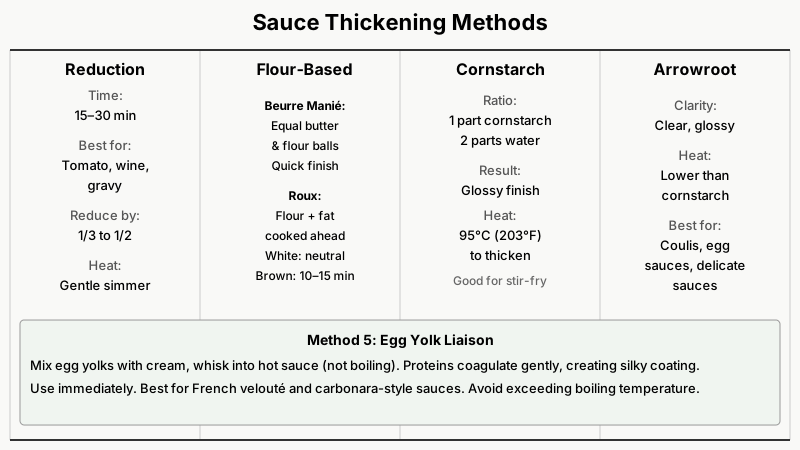
Reduction is the simplest and most flavor-forward method. You remove moisture by simmering the sauce uncovered, concentrating everything left behind — sugars, acids, proteins, aromatics.
How to do it:
- Keep the heat at a steady simmer, not a rolling boil. Boiling can scorch a sauce and make it bitter before it thickens.
- Stir occasionally and keep the pan partially covered if you want to slow evaporation (useful if the sauce is already well-flavored and you don’t want it more intense).
- A sauce typically needs to reduce by roughly one-third to one-half to gain meaningful body.
Reduction works especially well for tomato sauces, wine-based pan sauces, and stock-based gravies. It won’t work as a quick fix — plan for 15 to 30 minutes of patient simmering.
Method 2: Flour-Based Thickening
Beurre Manié
This is a French technique where equal parts softened butter and plain flour are kneaded together into small balls, then whisked into a hot sauce a piece at a time. The fat coats the starch granules and prevents lumping, which is why it works more reliably than sprinkling raw flour directly into liquid.
Use beurre manié near the end of cooking — it thickens quickly and the sauce only needs a few minutes of simmering afterward to lose the raw flour taste.
Roux (Made in Advance)
A roux (flour cooked in fat before liquid is added) is the foundation of béchamel, velouté, and most classic gravies. If you’re making a sauce from scratch and want guaranteed thickness, start with a roux. A white roux (barely cooked) gives a neutral flavor; a brown roux (cooked 10–15 minutes until nutty and dark) adds depth but slightly less thickening power, since prolonged heat breaks down some starch.
Method 3: Cornstarch Slurry — Natural, Just Not Grain-Free
Some readers avoid processed additives but still reach for cornstarch — and that’s perfectly reasonable, since cornstarch is simply ground corn. A slurry is made by mixing one part cornstarch with two parts cold water before whisking it into a simmering sauce.
Key rules:
- Never add dry cornstarch directly — it clumps.
- Bring the sauce back to a simmer after adding the slurry; cornstarch thickens at around 95°C (203°F).
- Don’t overcook once thickened — prolonged boiling breaks down the starch and the sauce thins again.
Cornstarch gives sauces a slightly glossy finish, which works well in Asian-style stir-fry sauces and sweet-and-sour dishes.

If tomato-based sauces are your main concern, Creamy Tomato Sauce That’s Never Watery: A Complete Guide dives deeper into keeping them thick and rich without any watery separation.
Method 4: Arrowroot
Arrowroot powder comes from the rhizomes of the Maranta arundinacea plant and behaves similarly to cornstarch, but with a couple of key differences:
- It produces a clearer, glossier sauce — ideal for fruit coulis and light-colored sauces where you don’t want any cloudiness.
- It doesn’t hold up as well at high heat or when reheated, so use it for sauces served immediately.
- It thickens at a lower temperature than cornstarch, making it useful for delicate egg-based sauces where you can’t push the heat.
Use arrowroot as a 1:1 substitute for cornstarch in most recipes, mixed into a slurry first.
Method 5: Egg Yolks (Liaison)
A liaison is a mixture of egg yolks and cream whisked together and stirred into a hot (but not boiling) sauce. The proteins in the yolk coagulate gently and thicken the sauce without making it starchy. This is how a classic French velouté gets finished, and it’s what gives a good carbonara its silky coating.
Critical technique note: The sauce must not exceed roughly 82°C (180°F) after adding the liaison, or the eggs scramble. To avoid this, temper the liaison — ladle a small amount of the hot sauce into the egg-cream mixture and whisk, then pour that back into the main pot.
A liaison also enriches flavor significantly, so it’s a thickener and a finishing step rolled into one.
Method 6: Pureed Vegetables
Pureeing a portion of the sauce’s own vegetables — or adding cooked root vegetables to a sauce that lacks them — is one of the most underused thickening techniques. It adds body, flavor, and nutrition simultaneously.
Practical applications:
- Tomato sauce: Blend a portion until smooth, then stir back in.
- Curries and dals: Blend cooked onion, tomato, and garlic from the base.
- Soups-turned-sauces: Puree cooked butternut squash, carrot, or parsnip into cream-based or broth-based preparations.
This technique is particularly effective for anyone avoiding starches entirely. A blended onion base, for example, can turn a watery tikka masala into something that clings properly to chicken.
Method 7: Legume and Grain Starches
Beyond cornstarch and arrowroot, several less-common natural starches thicken effectively:
- Potato starch: Similar behavior to cornstarch; slightly heavier texture. Common in gluten-free cooking.
- Rice flour: Cooked directly into a sauce or used as a slurry. Gives a less glossy finish than cornstarch.
- Tapioca starch: Produces a chewy, stringy texture if overused — better suited to pie fillings and fruit sauces than savory preparations.
- Red lentils: Dissolved into a tomato or vegetable sauce as they cook, they disappear entirely while adding protein and body. This works best when lentils are added early and cooked for at least 20 minutes.
Method 8: Nut Butters and Nut Pastes
Peanut butter, tahini, cashew cream, and almond butter all thicken sauces while adding fat, flavor, and a touch of natural sweetness. This is already standard in many cuisines — West African groundnut stew, Indonesian satay sauce, and Middle Eastern tahini dressings all rely on it.
For a neutral application, cashew cream (soaked raw cashews blended with a little water) is the most versatile. It thickens without dominating the flavor and works in everything from vegan cream sauces to curries.
Note: Nut butters can separate if overheated. Add them off the heat or at a low simmer, and whisk constantly.

Method 9: Dairy Reduction and Cream
Adding heavy cream or crème fraîche and then simmering the sauce reduces and thickens it through fat concentration. This works differently from starch thickening — fat molecules bind with the liquid phase, and as water evaporates, the sauce becomes increasingly rich and coating.
Crème fraîche has the added advantage of stability: it doesn’t split when simmered the way sour cream or regular cream can at high temperatures. Stir in a tablespoon or two toward the end of cooking, simmer for 5 minutes, and the texture change is immediate.
For a lighter result, Greek yogurt can be stirred in at the very end (off the heat) — it thickens through protein content but curdles if boiled.
Method 10: Cooking Down Tomato Paste
A spoonful of tomato paste cooked in oil for two to three minutes before liquid is added doesn’t just thicken — it deepens color and adds an umami foundation. This step is called pinçage in classical French cooking (toasting the paste in fat) and appears in everything from Italian ragù to braised short ribs.
Added late, tomato paste still contributes some body, but cooking it in fat first unlocks far more flavor and a slightly better thickening effect.
Choosing the Right Method for Your Sauce
No single technique works for every sauce. Here’s a quick guide:
| Sauce Type | Best Methods |
|---|---|
| Tomato / marinara | Reduction, blending, tomato paste |
| Pan sauce / gravy | Beurre manié, roux, reduction |
| Curry / stew | Pureed vegetables, lentils, nut butter |
| Asian stir-fry | Cornstarch slurry, arrowroot |
| Cream / white sauce | Roux, cream reduction, egg yolk liaison |
| Fruit coulis | Arrowroot, reduction |
For a practical walkthrough of putting these thickening principles to work on the stovetop, check out How to Make a Quick Pan Sauce in 5 Simple Steps.
Practical Troubleshooting Tips
- It’s getting thicker but also saltier: You’re concentrating too far. Add a splash of unsalted stock or water, then use a starch slurry to finish thickening without more reduction.
- Lumps appeared after adding flour: Whisk vigorously off the heat, then pass through a fine sieve.
- The sauce thickened then thinned again: Overcooking a cornstarch- or arrowroot-thickened sauce breaks down the starch. Finish thickening just before serving.
- The sauce is thick but flat: Thickening concentrates everything — including blandness. Taste and adjust salt, acid (a squeeze of lemon), or umami (a dash of soy sauce or fish sauce) after thickening.
Conclusion
Thickening a sauce naturally is less about memorizing a formula and more about understanding what’s making it thin in the first place. Reduction and pureed vegetables require no extra ingredients; a beurre manié or slurry takes two minutes to prepare. The best approach is almost always the one that adds the least interference to the flavors you’ve already built.
Start with reduction if time allows. Layer in a starch slurry or a handful of blended vegetables if you need results faster. And always taste after thickening — texture and flavor are inseparable, and a properly thickened sauce deserves to taste as good as it looks.