Creamy Tomato Sauce That's Never Watery: A Complete Guide

Why Tomato Sauce Turns Watery — and What’s Actually Happening
Before fixing the problem, it helps to understand it. Tomatoes are roughly 94% water by weight. When you cook them, that water has to go somewhere: either out through evaporation, or it stays trapped in your sauce and dilutes everything — flavor, texture, richness, color.
The watery result isn’t usually one mistake; it’s a combination of small ones that stack up. Too much liquid added too early, a lid on the pan, low heat that can’t drive off steam, cream added before the tomato base is properly reduced, or fresh tomatoes with a high water content treated the same as canned. Identifying which of those applies to you is half the fix.
Building the Base: Reduction Before Cream
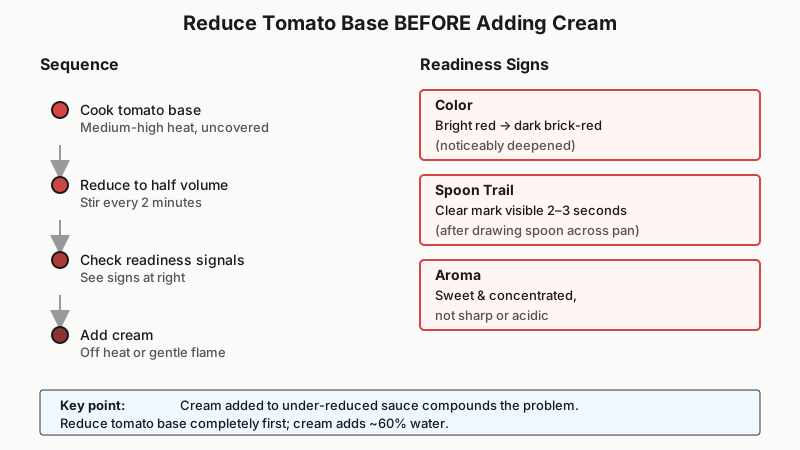
This is the non-negotiable step that most watery sauces skip entirely: your tomato base must be fully reduced before you add any dairy.
Here’s why that sequencing matters. Cream, crème fraîche, and mascarpone all carry their own water — heavy cream is around 36% fat, which also means roughly 60–64% is water and other liquids. If you add cream to a thin, under-reduced tomato base, you’re compounding the problem, not solving it. The result is a pale, thinly colored sauce that coats nothing.
How to tell when the tomato base is ready
Don’t guess by time — judge by behavior. A properly reduced tomato base will:
- Hold a clear trail across the bottom of the pan for 2–3 seconds after you draw a spoon through it.
- Have deepened noticeably in color — from bright red to a darker, almost brick-red tone.
- Smell sweet and concentrated, not sharp or acidic.
- Have shrunk to roughly half its original volume if you started from crushed canned tomatoes.
Only once you’re there should cream go anywhere near the pan.
Heat management
Use medium to medium-high heat for the reduction phase, not a timid simmer. A proper reduction needs enough heat to turn water into steam and push it out of the sauce. Keep the pan uncovered — a lid traps steam and defeats the entire purpose. Stir every couple of minutes to prevent scorching on the bottom, which happens quickly with a concentrated tomato base.
Choosing the Right Tomatoes and Dairy
Not all tomatoes reduce to the same endpoint, and not all cream behaves the same way in a hot acid environment. Getting these choices right saves you effort later.
Canned vs. fresh tomatoes
San Marzano-style canned whole tomatoes (or quality crushed canned tomatoes) are, for a sauce like this, more reliable than most fresh options — not because fresh tomatoes are inferior, but because their water content varies enormously by variety, season, and ripeness. A supermarket roma in January behaves very differently from a garden-ripe plum in summer.
If you’re using canned whole tomatoes, crush them by hand into the pan and leave the liquid behind in the can at first — you can add some of that liquid back if the sauce gets too thick, but you can’t take it away once it’s in.
If you’re using fresh tomatoes, seed and salt them first. Halve the tomatoes, scoop out the seed cavities (which hold the most liquid), salt the cut sides lightly, and let them drain on a rack or paper towels for 20–30 minutes before cooking. You’ll be surprised how much liquid pulls out.

Which dairy gives the best result
Different dairy options produce genuinely different sauces — not just in richness, but in stability:
Heavy cream (double cream): The most reliable. Its high fat content means it’s less prone to breaking or curdling when it meets hot acidic tomato. Add it off the heat or on a gentle flame, never at a rolling boil after the cream is in.
Crème fraîche: Thicker than cream, slightly tangy, and stabilized by its own fermentation — it holds up well to heat and gives a cleaner, more complex flavor. Use about 60–70% as much as you would cream.
Mascarpone: The richest option, ultra-creamy, and very low in acidity so it softens the tomato’s bite effectively. A tablespoon or two stirred in at the very end (off the heat) gives a velvety finish without any dairy flavor dominating.
Milk or half-and-half: Both are genuinely prone to curdling and thinning. If you’re trying to make a lighter sauce, reducing the cream quantity is a better move than swapping to lower-fat dairy.
Coconut cream (for dairy-free): Full-fat coconut cream works reasonably well — the fat content keeps it stable, though the coconut flavor is detectable and works better in some cuisines than others.
The tomato paste move
Tomato paste is concentrated, cooked-down tomato with much of its water already gone. Adding two to three tablespoons to your sautéed aromatics and cooking it in the dry pan for two minutes — until it darkens slightly and smells slightly sweet — adds body, deepens color, and gives your sauce a head start on reduction. It’s one of the easiest single steps for fixing a consistently thin result.
Technique Details That Make the Difference
Pan choice matters
A wide, heavy-bottomed pan or skillet dramatically outperforms a tall, narrow saucepan for reducing sauces. Surface area is what drives evaporation. A 12-inch skillet can reduce a sauce in roughly half the time of a 2-quart saucepan holding the same volume — the physics are straightforward. Stainless steel or enameled cast iron are both excellent. Non-stick is fine but doesn’t allow the fond (the sticky, browned bits that form on a steel pan) that adds flavor.
The fond contribution
If you’re using stainless steel: let the onion and garlic cook until they’re genuinely golden and some of them are beginning to catch on the pan. Deglaze with a splash of white wine or even just a tablespoon of water, scraping those brown bits up. That fond is caramelized sugar and Maillard-reaction compounds — concentrated flavor that a non-stick pan quietly skips.
When cream breaks
A broken cream sauce (fat separated, grainy texture) usually comes from one of three causes: the sauce boiled hard after cream was added, the tomatoes were too acidic without enough reduction, or you added cold cream to a very hot pan all at once. Fixes: always let the reduced tomato base cool for 30 seconds off the heat before adding cream; add cream in a slow pour, stirring as you go; keep heat at medium-low once cream is in.
If your sauce does break, don’t panic. Remove from heat, add a tablespoon of cold butter, and whisk vigorously — this often brings it back together.

Salt timing
Salt early in the tomato reduction, not just at the end. Salt draws water out of the tomato pulp (osmosis) and speeds the reduction slightly. It also seasons the sauce at every layer, not just on the surface. Taste and adjust again after the cream goes in — cream mutes salt perception slightly, so sauces almost always need a final pinch after the dairy is added.
A quick thickening tool if you’re short on time
If the tomato base is almost reduced but not quite there, a small knob of butter — a tablespoon or so — stirred in before the cream adds emulsified richness and perceived body without changing the flavor much. This is a restaurant technique for finishing sauces quickly. It works best as a support act to proper reduction, not a substitute for it.
If you want a deeper dive into reduction as a thickening strategy beyond just tomato sauce, check out How to Thicken a Sauce Naturally: Reduction Over Cornstarch.
Putting It All Together: A Working Method
Here’s how the technique flows in practice:
- Soften aromatics — onion in olive oil, medium heat, 8–10 minutes until golden. Add garlic for the last 2 minutes.
- Toast the tomato paste — add 2–3 tablespoons, cook 2 minutes, stirring, until it shifts from bright red to a deeper brick tone.
- Add tomatoes — canned crushed or hand-crushed whole tomatoes. Season with salt. Add a pinch of sugar only if the tomatoes taste sharp.
- Reduce uncovered over medium-high heat — 20–35 minutes depending on volume and pan width, until the sauce passes the spoon-trail test above.
- Lower the heat — to medium-low. Let the pan sit off the heat for 30 seconds.
- Add cream — pour in slowly, stir. For mascarpone, stir in off the heat entirely.
- Simmer gently for 3–5 minutes — no boiling. Sauce should coat a spoon. Taste, adjust salt.
- Finish with butter or Parmesan (optional) — either adds final body and gloss.
This takes 40–50 minutes total, but most of that is hands-off reduction time.
Once your sauce is silky and never watery, the next step is making sure it actually adheres to your noodles, a topic covered in How to Cook Pasta So the Sauce Actually Clings.
Frequently Asked Questions
Why does my sauce get watery again after I add the pasta?
Pasta water — which clings to noodles and releases during tossing — dilutes the sauce. Either finish your pasta in the sauce pan with a splash of starchy pasta water (which actually helps emulsification), or reduce your sauce a little more aggressively than you think you need to, knowing the pasta will loosen it.
Can I make this sauce ahead and reheat it without it going watery?
Yes — creamy tomato sauce reheats well if you go low and slow. Reheat in a pan over medium-low heat, stirring, and add a tablespoon of cream or a splash of water if it’s thickened too much in the fridge. Avoid the microwave on full power; it boils the sauce unevenly and can break the cream emulsion.
My sauce tastes acidic even after reducing. What helps?
A small pinch of baking soda (a quarter teaspoon or less) neutralizes acid chemically — the sauce will foam briefly, then settle. Alternatively, a teaspoon of sugar or the addition of mascarpone at the end both reduce the perceived sharpness without flattering the natural tomato flavor.
Is it worth blending the sauce smooth before adding cream?
For a restaurant-style, very uniform texture, yes — an immersion blender after the tomato reduction gives a silky result and actually helps the cream incorporate more smoothly. If you prefer texture, leave it chunky; the technique works either way.
Can I freeze a creamy tomato sauce?
Cream-based sauces can split on freezing and thawing, though heavy-cream sauces fare better than lighter ones. If you make the sauce frequently, freezing the tomato base before the cream is added is more reliable — add fresh cream when reheating. Mascarpone-finished sauces should not be frozen.
Conclusion
A creamy tomato sauce fails when it’s rushed — specifically, when cream is added to an under-reduced base. Get the tomato layer genuinely thick and concentrated first, use a wide pan, choose high-fat dairy, and add that dairy off or near-off the heat. None of these steps is complicated; they just require a bit of patience and knowing what to look for before you move on. Do that once or twice and the method becomes automatic.