How to Store Seasonal Clothing: Beat Moths And Musty Odors

Storing seasonal clothing properly is one of those tasks that sounds straightforward until you pull out last year’s wool sweater and find it moth-eaten, musty, or stretched beyond repair. Done right, seasonal storage protects your investment and saves you time every time you rotate your wardrobe.
This guide covers the full process — cleaning, sorting, choosing containers, controlling your environment, and bringing clothes back out — with specific advice that actually makes a difference.
Why Proper Storage Actually Matters
Clothing breaks down faster in storage than it does in regular use if conditions are wrong. Heat accelerates fabric degradation. Moisture feeds mold and mildew. Darkness doesn’t protect against insects — moths lay eggs in dirty wool and cashmere regardless of whether a light is on. And plastic bags trap humidity, which is the opposite of what most people expect.
The good news: none of the fixes are expensive. Most of what damages stored clothes is either skippable with a small habit change or solvable with inexpensive materials.
Step 1 — Clean Everything Before It Goes Away
This is the single most important rule, and it’s the one most people skip.
Why it matters: Invisible sweat, skin oils, and food residue are exactly what insects feed on. Stains that look faint now oxidize and set permanently over months of storage. Even a blouse that looks clean after one wear should be washed or dry-cleaned before going into a box.
Practical tips:
- Wash delicates on a gentle cycle in a mesh laundry bag to reduce friction.
- Dry-clean wool, cashmere, and structured blazers rather than hand-washing, especially before long-term storage.
- Make sure garments are completely dry before folding — residual moisture is how mildew starts.
- Don’t starch clothes before storing. Starch attracts silverfish.

Step 2 — Sort and Edit as You Pack
Storage is the ideal moment to audit your wardrobe. Before anything goes into a container, hold each piece and ask:
- Did I wear this at all last season?
- Does it still fit and flatter?
- Is it worth repairing, or has it degraded past its useful life?
Donate or recycle items you’re keeping out of guilt. Storing clothes you won’t wear again wastes space and, more importantly, wastes your attention every time you unpack.
Organize what remains by category — knitwear together, denim together, outerwear together — so retrieval is fast.
If your closet space is tight year-round, How to Organize a Small Closet: Purge First, Then Map The Space can help you rethink the whole layout, not just the seasonal overflow.
Step 3 — Choose the Right Storage Containers
Not all containers are equal, and the wrong choice can cause more harm than no container at all.
If you’re on a roll organizing closets and bins, How to Store Board Games Neatly: 12 Smart Solutions offers similar container strategies for another cluttered corner of the house.
Fabric Bins and Breathable Cotton Bags
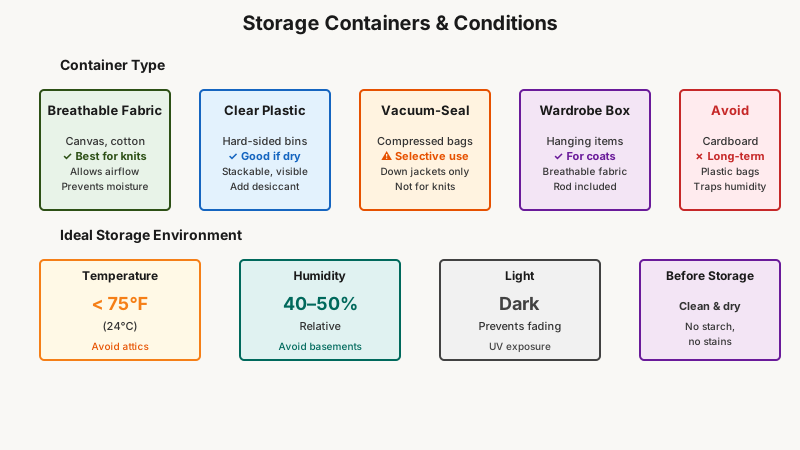
For natural fibers — wool, cashmere, linen, silk — breathable fabric containers are far superior to airtight plastic. They allow air circulation that prevents moisture buildup. Canvas storage boxes with lids work well.
Vacuum-Seal Bags (With Caveats)
Vacuum bags compress bulky items like down jackets and duvets efficiently, but they’re not ideal for knits or structured garments. Compressing wool for months can permanently distort the fibers. Use vacuum bags selectively for down-filled or synthetic-fill items, not as a default solution.
Clear Plastic Bins
Hard-sided clear plastic bins are acceptable for most clothing as long as the environment is dry and temperature-controlled. They’re stackable, visible, and pest-resistant. Avoid using plastic bags or non-breathable bins in spaces with humidity fluctuations (like basements) without also adding desiccant packets.
Wardrobe Boxes
For hanging items — suit jackets, formal dresses, heavy coats — garment bags made of breathable fabric (not dry-cleaning plastic) allow airflow while keeping dust off. Wardrobe boxes with a hanging rod are useful if you’re storing in a moving or garage context.
Skip: Cardboard boxes for long-term storage. They attract insects, absorb moisture, and can transfer acid to fabric over time. If cardboard is your only option, line it with acid-free tissue paper.
Step 4 — Control the Storage Environment
The container is only part of the equation. Where you store clothes matters as much as what you put them in.
Temperature and Humidity
Ideal storage conditions for clothing are cool (below 75°F / 24°C), dry (40–50% relative humidity), and dark. Avoid:
- Attics: Temperature swings from freezing to 120°F+ in summer cause fibers to expand and contract repeatedly.
- Basements: High humidity without dehumidification causes mildew and encourages silverfish and carpet beetles.
- Garages: Both temperature and humidity extremes, plus exposure to pests.
A climate-controlled closet, a bedroom closet, or an under-bed storage solution in a conditioned space is significantly better.
Pest Prevention Without Chemicals
Mothballs work — but they contain naphthalene or paradichlorobenzene, both of which are toxic and leave a persistent smell that’s difficult to remove from fabric. Better alternatives:
- Cedar blocks or balls: Cedar contains natural oils that repel moths. Replace or sand lightly every 6–12 months to refresh the scent.
- Lavender sachets: Effective as a mild deterrent and leave clothes smelling pleasant.
- Sealed containers: Physical exclusion is the most reliable pest prevention. Clean clothes in sealed bins simply don’t attract moths.

Moisture Control
If you’re storing in a space prone to humidity, add silica gel desiccant packets to each container. Replace them seasonally or dry them out in an oven (most silica gel packets are reusable) to restore their absorbing capacity.
Step 5 — Fold vs. Hang: Knowing the Difference
Getting this wrong can permanently damage specific garments.
Fold these:
- Knitwear (sweaters, cardigans, knit dresses) — hanging stretches the shoulders and body over time.
- Heavy denim — hanging causes waistband distortion.
- T-shirts and casual cotton — folding is more space-efficient and causes no harm.
Hang these:
- Structured blazers and suit jackets — folding creates permanent creases in the shoulders.
- Formal dresses with structured bodices.
- Heavy coats — only if hung in a breathable garment bag with wide, supportive hangers.
Fold with care:
- Silk blouses — fold with acid-free tissue between layers to prevent crease lines from setting.
- Beaded or embellished garments — store face-down with padding to protect embellishments, or lay flat in a shallow box.
Step 6 — Label Everything Clearly
This sounds obvious. Most people skip it.
Label each container with its contents and the season it belongs to. A label like “Winter — Heavy Knitwear” takes ten seconds to make and saves you from opening five boxes in October looking for your wool turtleneck.
For clear bins, visual identification helps. For opaque or fabric bins, adhesive labels or a marker on painter’s tape work fine.
Step 7 — Bringing Clothes Back Out
The unpacking step is where many people undo months of careful storage.
- Air everything out before wearing. Even well-stored clothes benefit from 24 hours hanging in a ventilated room before going back in the closet. This removes any storage odor and lets fabric relax.
- Check for damage immediately. If you find evidence of moths (small holes, silky webbing near seams), treat the problem before returning items to your main wardrobe. Isolate affected pieces in a sealed bag and either freeze them for 72 hours (kills eggs and larvae) or take them to a dry cleaner.
- Re-assess your system. If you pulled out musty clothes, increase ventilation or add desiccant next time. If you found moth damage, clean more thoroughly before storing. Each rotation is data.

Special Cases Worth Knowing
Leather and Suede
Never store leather in plastic — it needs to breathe or it dries out and cracks. Condition leather jackets and boots before storage. Use a breathable dust bag or pillowcase. Stuff leather boots with acid-free tissue or boot trees to maintain shape.
Down and Puffer Jackets
Store down jackets uncompressed — the fill clusters lose loft permanently if packed tight for too long. A large breathable cotton bag on a shelf is better than a vacuum-seal bag for this.
Swimwear and Activewear
Elastane (spandex/Lycra) degrades in heat. Don’t store swimwear in an attic or hot garage. A cool drawer or a fabric bin in a climate-controlled space preserves elastic for years longer.
Formal and Occasion Wear
Items worn once a year deserve the most care. Store formal wear cleaned, in breathable garment bags, with acid-free tissue in folds. If you store bridesmaid dresses, suits, or evening gowns in plastic dry-cleaning bags, remove them — those bags are not meant for long-term storage and will yellow fabric over time.
A Quick Checklist Before You Seal the Bin
- Every item washed or dry-cleaned
- Completely dry — no exceptions
- Sorted by category and season
- Heavy knits folded, not hung
- Structured pieces in garment bags or tissue-padded boxes
- Cedar blocks or lavender sachets included
- Desiccant packets added (if humid environment)
- Container labeled clearly
If sorting through seasonal clothes gets you in the mood for a bigger purge, How to Declutter Your Home Step by Step (That Actually Works) lays out a room-by-room approach for the rest of the house.
Conclusion
Storing seasonal clothing well doesn’t require a special closet or expensive equipment — it requires cleaning clothes before they go in, choosing breathable containers, controlling temperature and humidity, and using natural pest deterrents. Follow those basics and you’ll pull out your wardrobe each season in exactly the condition you left it.
The upgrade from chaotic seasonal rotation to a consistent system takes a couple of hours the first time you do it. After that, it’s 30 minutes twice a year — and noticeably better clothes for much longer.