How to Store Board Games Neatly: 12 Smart Solutions
If you own more than a handful of board games, you already know the problem: towers of boxes sliding off shelves, missing tokens, rule booklets shoved in the wrong lid, and that one card that somehow ended up behind the radiator. Neat board game storage is less about aesthetics and more about protecting your investment and actually using what you own. Disorganized games get skipped because nobody wants to spend 10 minutes hunting for pieces before the fun starts.
This guide covers practical, tested approaches — from quick shelf fixes to dedicated game-room setups — without pushing you to buy expensive gear you don’t need.
1. Audit What You Actually Have
Before buying a single storage product, pull every game off the shelf and assess it honestly.
- What’s the box condition? Crushed corners and warped lids are a sign the box itself is failing as a container. Those games need a different solution.
- How often do you play it? Games you reach for monthly deserve prime real-estate. Games played once a year can go on a high shelf or in a secondary location.
- How many pieces does it have? Component-heavy games — think Gloomhaven, Terraforming Mars, or large co-ops — need dedicated internal organization that basic shelving can’t solve.
Sort into three piles: frequently played, occasionally played, and rarley (or never) played. That sorting decision should drive every storage choice that follows.
If sorting through your game collection sparks a bigger decluttering mood, How to Declutter Your Home Step by Step (That Actually Works) offers a broader framework for tackling every room in the house.
2. Choose the Right Shelving
Most board game collectors eventually land on open shelving. Here’s why it works — and what to watch for.
The same zone-based thinking behind good shelving also works wonders in the kitchen, as explained in How to Organize Kitchen Cabinets: Assign Zones By Daily Habit.
Depth Matters More Than Width
Standard bookcase shelves (around 11–12 inches deep) fit most small-to-medium box games upright. But larger titles — Wingspan, Catan, many Kickstarter games — often come in square boxes that are 11–12 inches wide, so they need to lie flat or sit in a deeper shelf.
IKEA’s KALLAX unit (15.75 inches deep per cube) has become a near-universal solution in the hobby community because each 13×13-inch square fits most standard game boxes standing upright or lying flat. A 4×4 KALLAX holds around 32–64 games depending on box thickness.
Shelf Adjustability
If you’re using a traditional bookcase, look for adjustable shelves. The variability in board game box heights — from a slim card game like Skull to a tall box like Pandemic Legacy — means fixed shelves leave wasted vertical space on almost every row.
Wall Anchoring
Board games are heavy. A full KALLAX loaded with games can exceed 200 lbs. Anchor any shelving unit to the wall. This isn’t optional.

3. Organize the Boxes Themselves
The outside of your shelf matters, but so does what’s happening inside each box. Most game inserts — especially cardboard ones — are fragile, poorly designed, or both. Here are your main options.
Keep (and Reinforce) the Original Insert
For well-designed originals, the easiest fix is to add small zip-lock bags for tokens, coins, and cards. Label them. This alone prevents 80% of the “where did that piece go?” problem.
For fragile cardboard inserts, a few strips of foam tape or EVA foam sheets cut to fit can stop the insert collapsing when the box is tilted. This is a 10-minute fix that extends insert life by years.
Replace With a Custom Insert
Companies like Folded Space and The Broken Token sell pre-cut foam and wood inserts for popular games. These snap pieces into dedicated spots, dramatically reduce setup time, and survive rough handling. They’re worth the cost for any game you play frequently.
If you’re handy, the Hobby Lobby foam board method — cutting interlocking dividers from 3mm foamcore — costs almost nothing and works well for medium-sized games.
Sort Small Pieces With Pill Organizers
Weekly pill organizers are genuinely underrated for board game tokens. A 7-day pill organizer fits neatly inside most medium boxes and separates coins, cubes, and markers without adding much height. You can find them at any pharmacy for under $5.
4. Vertical vs. Horizontal Storage
This debate comes up in every board game community. Here’s the practical answer:
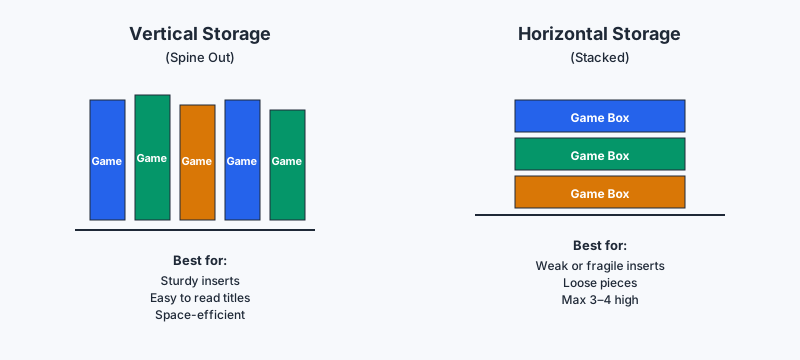
- Store games vertically (spine out) when the insert is sturdy. It mimics how books are shelved, saves space, and lets you read titles easily.
- Store games horizontally (stacked) when the insert is weak or when small pieces would fall out of bags. Stack heavier boxes at the bottom, lighter ones on top. Never stack more than 3–4 high, or retrieval becomes a balancing act.
A mixed approach works well: sturdier games stand upright, flimsier ones lie flat in dedicated stacks. Label the top of horizontal boxes so you can identify them without lifting everything.
5. Label Everything
This sounds obvious but most people skip it. Labels do two things: they help you find games fast, and they help guests and family members put things back in the right place.
Spine Labels
Many games print the title on the box spine — but not all do, and the printing fades or gets hidden. Print clean spine labels on cardstock, laminate them if you can, and stick them with removable adhesive. Include the game name and a color-coded dot indicating your frequency-of-play category (frequent = green, occasional = yellow, archived = red).
Inside-Lid Labels
A printed sheet taped inside the box lid showing where each component belongs makes post-game cleanup faster for everyone. Some publishers include this; many don’t. Making your own takes 15 minutes and is worth it for any complex game.

6. Handle Expansions and Odd-Sized Boxes
Expansions are the bane of tidy collections. They’re often half the size of the base game, come in weird aspect ratios, and there’s rarely a good place for them.
The Combined Box Approach
If the base game’s box is large enough (and many are, since game publishers often leave excess space), store small expansions inside the base game box. Remove any flimsy inner tray, reorganize the components, and fit the expansion pieces alongside. Label a zip-lock for each expansion’s unique components.
Magazine File Boxes
Thick cardboard magazine files — the kind designed for binders or large magazines — work surprisingly well for expansion decks and rule booklets. Stand them upright on a shelf and label the front. A set of 6 magazine files costs around $15–$20 at an office supply store.
Deep Storage for Rarely Played Games
Games you’re keeping for nostalgia but rarely play can go into archival storage: label a plastic storage bin (Sterilite or similar), wrap fragile boxes in acid-free tissue paper, and stack flat. Store in a dry location — humidity is the enemy of cardboard and paper components.
If you’re already carving out deep storage for occasional-use items, our guide to How to Store Seasonal Clothing: Beat Moths And Musty Odors offers similar strategies for keeping bulky, seasonal items fresh and organized until you need them again.
7. Digital Cataloguing Helps More Than You’d Think
Once you have 30 or more games, a simple catalogue pays off. The free app BoardGameGeek (available on iOS and Android) lets you log your collection, track plays, and see expansion compatibility. When someone asks “do you have something for 6 players in under 45 minutes?”, you can answer immediately instead of scanning every shelf.
Alternatively, a basic spreadsheet (Game Name | Players | Play Time | Location | Notes) in Google Sheets or Apple Numbers takes 30 minutes to set up and serves the same purpose without requiring any app.
8. Kid-Proofing and Pet-Proofing Your Storage
If you have small children or pets, loose-piece games pose two problems: missing components and safety hazards (small tokens are a choking risk for toddlers).
- Keep complex, piece-heavy games on higher shelves — above eye level for children.
- Use resealable containers (small Tupperware, click-top food storage containers) inside boxes instead of open-top trays for anything with very small pieces.
- Consider a cabinet with doors or a lockable storage bench for your most valuable or dangerous-to-small-hands games.

9. Maintain the System (The Hard Part)
Every storage system degrades the moment people stop using it correctly. Build maintenance into your game nights:
Sort during cleanup, not after. When you pack up a game, sort components back into their bags or trays before putting the lid on. This takes an extra 3–5 minutes but means the game is ready next time.
Schedule a quarterly audit. Every few months, pull games you haven’t played, assess whether they’re still in your collection for the right reasons, and re-donate or trade games that aren’t being played. A smaller, better-curated collection is always easier to store neatly than a sprawling one.
Fix boxes when they break. Reinforcing a failing box flap with book-binding tape takes 60 seconds. Ignoring it until the box disintegrates takes everything inside with it.
Putting It Together
Neat board game storage isn’t a single product or a one-afternoon project — it’s a set of decisions layered together. Get the shelving right first: deep enough, adjustable, wall-anchored. Then address what’s inside the boxes with bags, inserts, or custom solutions. Label everything, handle expansions deliberately, and build cleanup habits into your gaming routine.
The payoff is real: games that are easy to see and access get played more. You stop buying duplicates of things you forgot you owned. And setup time drops sharply when pieces are where they’re supposed to be. That’s the point of all of it — less friction between the shelf and the table.