How to Store Bread and Revive a Stale Loaf at Home

Stale bread is one of the most common forms of household food waste, and it’s almost entirely avoidable. Whether you’ve got half a sourdough boule going hard on the counter or a sandwich loaf that dried out faster than expected, there are practical, tested ways to keep bread fresher longer — and to bring it back when it’s already past its prime.
This guide covers everything: the science behind why bread goes stale, the best storage methods by bread type, and the techniques that actually work to revive a loaf you thought was destined for the bin.
Why Bread Goes Stale (and Why It Matters)
Staleness isn’t simply dehydration. The main culprit is starch retrogradation — a process where the starch molecules in bread recrystallize over time, pushing water out of the crumb structure. The bread can actually contain adequate moisture and still feel hard and dry. This is why refrigerating bread speeds up staleness: cold temperatures accelerate starch retrogradation significantly.
Mold, by contrast, is a separate problem caused by surface moisture and airborne spores. A humid kitchen in summer will mold your bread before it stales. A dry, cool environment stales it before mold takes hold.
Knowing this distinction changes how you store and revive bread. Heat reverses starch retrogradation temporarily — which is why warming a stale loaf actually works. It doesn’t just warm up the bread; it genuinely restructures the starch and restores softness.
The Best Storage Methods by Bread Type
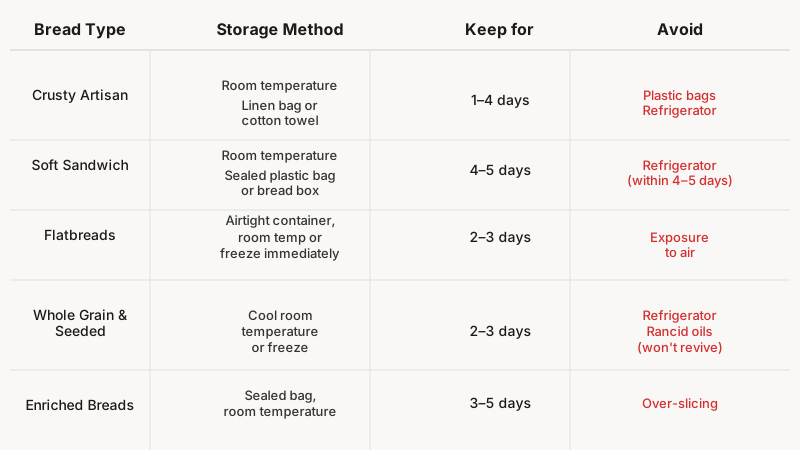
No single storage rule fits all breads. A crusty artisan loaf, a soft sandwich loaf, and a flatbread behave differently and need different treatment.
Crusty Artisan Loaves (sourdough, baguettes, ciabatta)
These are best stored at room temperature, cut-side down on a wooden board, or loosely wrapped in a clean linen or cotton tea towel. The goal is to let the crust breathe while protecting the crumb from drying out too fast.
Avoid plastic bags for crusty bread: the trapped moisture softens the crust and can encourage mold. A paper bag is better for short-term (one day), but it dries the loaf out quickly. A linen bread bag — a slightly porous fabric pouch — is the closest thing to ideal for artisan loaves: it wicks excess moisture while retaining enough to keep the crumb soft.
Expect 1–2 days of good eating from a fresh baguette at room temperature. Sourdoughs with higher hydration and acidity typically last 3–4 days.
Soft Sandwich Loaves
These are engineered to stay soft, usually through added fats (oil or butter) and sometimes sugar, so they’re more tolerant of being sealed in plastic. Store them in their original sealed bag or a zip-lock bag, pressing out excess air, at room temperature. Keep away from direct sunlight and heat sources.
Do not refrigerate if you plan to eat within 4–5 days. Refrigeration will make the crumb firm and gummy faster than leaving it out, thanks to starch retrogradation. If your kitchen is particularly humid or warm, a bread box (which regulates humidity better than a plastic bag alone) is worth the counter space.
Flatbreads (pita, naan, tortillas)
Flatbreads dry out fast because of their surface-to-volume ratio. Seal them in a zip-lock or airtight container at room temperature and consume within 2–3 days. Alternatively, freeze immediately if you won’t use them within a day or two. They revive exceptionally well from frozen — 30–60 seconds in a dry skillet or a quick pass over a gas flame restores them almost completely.
Whole Grain and Seeded Breads
The oils in seeds and whole-grain flours go rancid faster than refined flour does, which makes these loaves more perishable than their density suggests. Keep them cool but not cold — the fridge is still the wrong answer — and plan to finish them within two to three days or freeze early. A loaf that smells faintly like old nuts has gone rancid rather than stale, and reheating will not fix that.
Gluten-Free Breads
Most gluten-free formulas stale noticeably faster than wheat loaves because the starches they rely on — rice, tapioca, potato — retrograde more aggressively. Treat the first day as the whole window and freeze whatever you won’t eat that day. Gluten-free bread also revives better from frozen than from the counter, so freezing early costs you nothing.
Enriched Breads (brioche, challah, milk bread)
The extra eggs and fat in enriched doughs slow staling naturally. Store these sealed at room temperature for 3–5 days. Because they’re rich enough to support moisture, an airtight bag works better here than a towel. If the loaf is unsliced, the intact crust acts as its own barrier — don’t slice more than you need.

Where You Keep It Matters as Much as How
The same loaf in the same wrapper behaves differently depending on where it sits.
Heat accelerates mold, not just staling. In a kitchen that regularly runs above 77°F (25°C), bread left on the counter can grow mold within 24 to 48 hours no matter how well it is wrapped. At that point freezing stops being an option and becomes the default.
Direct sunlight dries a loaf fast. A sunny windowsill is the worst spot in the kitchen. A closed cupboard, or a bread box on a shaded counter, is measurably better.
Mold spreads before you can see it. If one slice of a sliced loaf shows mold, the spores have almost certainly reached the neighboring slices. Bread is not like hard cheese — discard the loaf rather than cutting around the spot.
Clean the bread box itself. Spores accumulate inside and quietly inoculate the next loaf. Wipe the interior with a cloth dampened in dilute vinegar every week or two and let it dry fully before use. It is the most overlooked step in bread storage.
Freezing Bread: The Right Way to Do It
Freezing is the single best long-term storage strategy for bread, and it works because freezing halts starch retrogradation almost completely. The key is doing it correctly.
Freeze bread while it’s still fresh. Freezing stale bread doesn’t un-stale it — it just locks in whatever state the bread is in. The same day you buy or bake is ideal; within 24 hours is fine.
Slice before freezing (for loaves you’ll use piece by piece). This lets you pull exactly what you need without thawing and refreezing the whole loaf. Lay slices flat in a zip-lock freezer bag with a piece of parchment between each slice to prevent them sticking together, then seal tightly, removing as much air as possible.
For whole loaves or large pieces, wrap tightly in plastic wrap first, then place in a freezer bag or wrap in aluminum foil. Double-wrapping prevents freezer burn, which is essentially surface dehydration from cold dry air.
Frozen bread keeps well for up to 3 months without significant quality loss. Beyond that, it’s still safe but flavor and texture start to degrade.
Thawing Frozen Bread
- Individual slices: Drop straight into the toaster from frozen. No thawing needed. The toaster’s heat revives the crumb and crisps the exterior.
- Whole loaves: Unwrap and place on a wire rack at room temperature for 1–2 hours, then finish in a 180°C (350°F) oven for 10 minutes to re-crisp the crust.
- Flatbreads: Straight into a dry skillet over medium heat for 30–60 seconds per side.
How to Revive Stale Bread
This is where the food science earns its keep. Because staling is about starch recrystallization rather than permanent moisture loss, heat can reverse it — at least temporarily. Here are the methods that work.
The Oven Method (Best for Whole or Large Pieces)
- Run the loaf under cold water briefly — just wet the crust, don’t soak it. Alternatively, dampen your hands and rub them over the surface.
- Place the damp loaf directly on the oven rack at 200°C (400°F).
- Bake for 8–12 minutes depending on size. A baguette might take 8 minutes; a thick sourdough might need 12–15.
- Remove and let rest on a rack for at least 5 minutes before cutting.
The water creates steam inside the crust as it heats, which penetrates the crumb and helps re-gelatinize the starch. The result is a loaf that genuinely feels freshly baked — with one caveat: eat it within the hour. Once it cools again, retrogradation resumes faster than it did the first time.
The Steaming Method (For Individual Slices or Rolls)
If you have a stovetop steamer or even a fine-mesh sieve over a pot of boiling water, place the bread above the steam for 30–60 seconds. This works particularly well for rolls, burger buns, and single slices — it restores softness without the crust-crisping effect of the oven.
The Skillet Method (Quick and Effective)
Add a few drops of water to a cold skillet, place the bread in, cover with a lid, and heat over medium-low. The trapped steam warms and softens the bread within 2–3 minutes. Best for flatbreads, rolls, or sliced bread you want soft rather than crisp.
The Toaster (For Sliced Bread)
For standard sandwich bread that’s gone stiff, the toaster is the fastest route. It won’t restore the original soft texture — it converts the bread into toast — but toast is genuinely useful. Stale bread makes excellent toast because lower moisture means faster, more even browning.

When Bread Is Too Far Gone: Cooking with Stale Bread
Some bread passes the point where revival makes sense, but that doesn’t mean it’s wasted. Stale bread is often a better cooking ingredient than fresh bread.
- Breadcrumbs: Tear or pulse in a food processor, then toast in a dry pan or oven. Use immediately or freeze in a bag. Works on pasta, gratins, meatballs, and coatings.
- Croutons: Cube, toss with olive oil and seasoning, roast at 180°C (350°F) for 15–20 minutes. Keeps for a week in an airtight container.
- Panzanella: The Italian tomato-and-bread salad is specifically designed for stale bread, which holds up to the dressing without disintegrating.
- French toast (pain perdu): The French name literally means “lost bread” — designed to rescue old loaves by soaking in an egg-and-milk custard.
- Ribollita or bread soup: Tuscan bread soup uses thick chunks of stale Tuscan bread as a thickener and body for the broth.
- Bread pudding: Dessert that started as a thrifty use of old bread; stale bread absorbs custard better than fresh.

If you enjoy squeezing the most out of pantry staples, How to Store Nuts and Seeds for Maximum Freshness offers similar tips for keeping other kitchen basics fresh longer.
If You Bake Your Own Bread
Homemade loaves usually stale faster than supermarket bread, and that is not a flaw in your baking. Commercial breads contain emulsifiers and enzymes that delay starch retrogradation structurally, and often a mold inhibitor such as calcium propionate. A homemade loaf has none of that scaffolding.
The practical consequence is that the freezer strategy matters more for bread you baked yourself, not less. Slice and freeze whatever you won’t eat within 24 to 36 hours on baking day — before the loaf has started to stale — rather than waiting until it already has.
One trick worth borrowing from professional bakers: a tablespoon of olive oil or a small amount of honey in a lean dough acts as a humectant and slows staling. It won’t match a commercial shelf life, but it reliably buys an extra day.
Frequently Asked Questions
Does putting bread in the fridge keep it fresh longer?
No. Refrigeration actually speeds up staling because cold temperatures accelerate starch retrogradation. Unless mold is a serious problem in your kitchen, keep bread at room temperature and freeze what you won’t eat within a few days.
Can you revive bread that’s moldy?
No. Mold on bread isn’t surface-only — the mycelium threads penetrate the crumb. Cutting off the moldy section isn’t safe for bread (unlike hard cheeses or firm vegetables). Discard moldy bread entirely.
Why does bread from the bakery go stale faster than supermarket bread?
Supermarket sandwich loaves typically contain added emulsifiers, preservatives, and fats that slow staling and inhibit mold. Artisan or bakery bread has none of these additives, so it stales and molds faster. This is actually a sign of fewer processed ingredients — but it does mean you need a plan for storage.
What’s the best container for storing bread at home?
For crusty bread: a linen bread bag or a wooden bread box. For soft sandwich bread: a sealed plastic bag or airtight container. A ceramic or wooden bread box moderates humidity better than plastic alone and is worth using if you buy bread regularly.
Can you re-freeze bread after it’s been thawed?
Technically safe but not recommended for quality. Refreezing drives out more moisture each cycle, leaving the bread dry and crumbly. Slice before freezing so you only thaw what you need.
The Short Version
Keep crusty bread in a linen bag or on the board, cut-side down. Keep soft loaves sealed in plastic at room temperature. Freeze anything you won’t eat within a few days — sliced, well-wrapped, and while it’s still fresh. Revive stale loaves with a quick damp-and-oven treatment. And when a loaf is genuinely done, it’s halfway to becoming something better: croutons, breadcrumbs, panzanella, or French toast. Very little actually needs to go in the bin.
For more ways to simplify your kitchen routines and cut down on food waste clutter, check out How to Declutter Your Home Step by Step (That Actually Works).