How to Organize a Small Entryway: 12 Smart Ideas

A small entryway is one of the most high-traffic, high-chaos spots in any home. Keys land on the wrong surface, shoes multiply overnight, and bags pile up in doorways until the whole entrance feels like an obstacle course. The good news: you don’t need square footage to fix it. You need a system — and the right furniture and habits to support it.
This guide covers practical, proven strategies for organizing a small entryway, whether you’re working with a dedicated foyer, a narrow hallway, or just a strip of wall beside the front door.
1. Start With a Ruthless Edit
Before buying a single hook or basket, remove everything from your entryway and look at what actually belongs there. Most cluttered entries contain three layers of stuff:
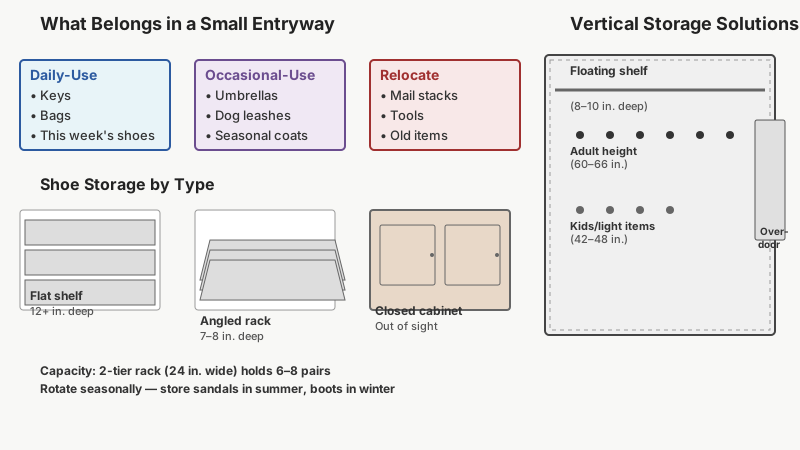
- Daily-use items — keys, bags, shoes worn this week
- Occasional items — umbrellas, dog leashes, seasonal coats
- Things that drifted in — mail stacks, random tools, that one boot from last winter
Only the first two categories belong in an entryway. Everything else should be relocated. A cleared-out entry feels twice as large before you add a single organizer.

The same purge-first mindset applies throughout the house, and How to Organize a Small Closet: Purge First, Then Map The Space walks through how to apply it to another notoriously cluttered space.
2. Work Vertically — Wall Space Is Your Friend
Floor space is scarce in a small entry, so shift your thinking upward. A simple row of wall-mounted hooks can replace a bulky coat rack entirely. Here’s how to layer them effectively:
Double Up on Hook Heights
Mount a row of sturdy hooks at adult height (around 60–66 inches from the floor) for coats and bags. Add a second row at 42–48 inches for kids’ backpacks or lighter jackets. This doubles your hanging capacity without using more wall width.
Add a Floating Shelf Above the Hooks
A shallow shelf — even 8 inches deep — gives you a landing spot for a small tray, a plant, or a basket for mail. It also visually anchors the wall arrangement and keeps the surface below from accumulating debris.
Use the Back of the Door
An over-the-door organizer with pockets handles gloves, sunscreen, dog bags, and small items that typically end up on every flat surface. The back of the door is genuinely free real estate in most entries.
3. Choose Furniture That Does Two Jobs
In a tight entry, every piece has to earn its spot. Furniture that combines seating with storage is almost always the right call.
Entryway Benches with Storage
A bench with a hinged lid or open cubbies underneath lets people sit down to put on shoes — which matters more than it sounds if you have kids or older family members — while hiding seasonal or less-used items inside. Look for benches between 14 and 18 inches deep; anything deeper eats too much floor space in a narrow hall.
Narrow Console Tables with Drawers
If a bench doesn’t fit, a console table as slim as 10–12 inches can hold a key dish, a lamp, and a drawer for essentials, without jutting into traffic. Avoid glass-topped consoles in high-traffic entries — they show every fingerprint and scratch quickly.
Storage Ottomans
If your entry opens directly into a living area without a clear boundary, a storage ottoman near the door acts as a visual stop point, a seat, and a spot to stash bags.

4. Solve the Shoe Problem Properly
Shoes are the biggest clutter culprit in most entries. Piling them near the door is instinctive but messy. A few targeted solutions:
Define a Shoe Zone
A simple mat or rug that outlines a specific area tells everyone — adults and kids — where shoes belong. Pair it with a tiered shoe rack or a row of cubbies, and suddenly the habit forms itself because there’s a clear home for footwear.
How much space do you actually need? A two-tier rack roughly 24 inches wide holds 6–8 pairs of adult shoes. Rotate seasonally — sandals don’t need to live in the entry in January.
Angled Shoe Racks Over Flat Ones
Angled racks (where shoes rest toe-down at a slant) hold more pairs per inch of shelf depth than flat shelves. This is worth knowing if your entry is genuinely narrow — you can fit an angled rack 7–8 inches deep versus the 12+ inches a standard shelf needs.
Closed Storage for Visual Calm
If the entry is visible from main living areas and visual clutter bothers you, a closed cabinet with doors — even a small armoire-style piece — keeps everything out of sight. The tradeoff is that it takes more discipline to maintain: closed storage tends to become a black hole without an internal organizer or habit.
5. Create a Key and Mail Command Center
Losing keys and misplacing important mail are two of the most common complaints about disorganized entries. They share the same root cause: no fixed home.
Key Hooks vs. Key Dishes
Key hooks mounted beside the door are more reliable than dishes or trays — hanging is more specific than dropping. A small mounted strip of 3–4 hooks at eye level next to the door handle takes about five minutes to install and solves the lost-key problem for most households.
Contain the Mail
Mail needs a single container: one vertical file holder or a shallow wall-mounted slot. The rule is simple — mail goes in, and gets sorted at least once a week. A second slot labeled “To Action” versus “To File” reduces the pile-up without adding complexity.
Charging Solutions
If phones get plugged in at the door, route a charging cable through a small basket or cable box on the shelf so the cables don’t drape across surfaces. One small detail, but it makes the entry look far tidier.
6. Use Baskets and Trays as Visual Containers
Loose items — batteries, dog treats, receipts, sunglasses — need a home. A basket on a shelf corrals them without demanding they be perfectly organized. The visual effect of “things in a container” versus “things on a surface” is significant even when the actual tidiness level is the same.
Practical basket sizing guide for small entries:
- Deep square baskets (10“ x 10”): Good for scarves, hats, and gloves
- Shallow rectangular trays: Ideal for sunglasses and wallets on console surfaces
- Small round baskets: Perfect for a single category like dog leashes or hand sanitizer
Natural materials — seagrass, rattan, linen bins — tend to look less clinical than plastic bins and are worth the modest extra cost in a visible space like an entryway.

If loose odds and ends tend to pile up in containers faster than you’d like, How to Organize a Messy Junk Drawer: Three Honest Piles Beat Chaos offers a simple sorting method that works just as well for entryway catch-alls.
7. Use Light and Mirrors to Open the Space
This is more about making the organization feel sustainable than about storage directly. A dim, cluttered-feeling entry is harder to keep tidy because it feels hopeless. A bright one feels worth maintaining.
Add a Mirror
A mirror near the door serves the obvious functional role (last-look before leaving) but also reflects light and makes the entry feel larger. Tall, narrow mirrors work best in tight spaces — aim for a height of at least 36 inches.
Improve the Lighting
If your entry has a weak overhead fixture, add a plug-in wall sconce or a small table lamp on the console. Warm bulbs (2700–3000K) make the space feel welcoming rather than like a storage closet.
8. Build Habits to Match the System
No organization system maintains itself. The entries that stay tidy long-term have one thing in common: very low friction. The goal is to make the right behavior (hanging the coat, dropping keys in the hook) easier than the wrong behavior (dropping everything on the floor).
A few habits that reliably stick:
- One-minute reset: Before leaving or at the end of the day, do a 60-second tidy. Return one misplaced item, toss one piece of junk mail.
- Season swap: Every 2–3 months, rotate shoes and coats for the current weather. It keeps the entry functional and prevents storage overflow.
- One-in-one-out: When a new bag, coat, or pair of shoes comes in, one leaves. This is especially important in a small entry with limited hooks.
Putting It Together: A Simple Entry Blueprint
If you had to prioritize, here’s the order that delivers the biggest improvement fastest:
- Edit out everything that doesn’t belong (15 minutes, free)
- Mount a row of hooks (under $30, one hour)
- Add a shoe rack or defined shoe zone (under $50)
- Install a key hook beside the door (under $10)
- Add one basket or tray for loose items (under $25)
- Hang a mirror ($30–$150 depending on size)
You can build an organized, functional small entryway for well under $200 — often much less — if you already own a few pieces. The sequence matters: start with editing, not shopping.
Conclusion
Organizing a small entryway is really about managing transition — the moment between outside and inside, when everything lands at once. A good system doesn’t require you to be tidy by nature; it just channels the natural impulse to drop things into a structure that keeps the space functional.
The specific products matter less than the logic: vertical storage, dual-purpose furniture, a fixed home for keys and shoes, and enough light to make the space feel worth caring for. Get those fundamentals right and a small entry will stay organized almost on its own.