How to Ripen Fruit Faster: The Science Behind Ethylene Gas

If you’ve ever sliced into an avocado only to find it rock-hard, or bought a bunch of bananas that stayed yellow-green for days longer than expected, you’re already familiar with the frustration of fruit that refuses to ripen on schedule. The good news: there are several genuinely effective techniques—grounded in plant biology—that can speed things up considerably.
This guide covers the most reliable methods, explains why they work, and flags a few popular tricks that don’t hold up as well as the internet suggests.
Why Fruit Ripens in the First Place
Most ripening is driven by a naturally occurring gas called ethylene (chemical formula C₂H₄). Many fruits produce it themselves—especially apples, bananas, avocados, pears, peaches, and mangoes. When ethylene concentration around a fruit rises, it triggers a cascade of changes: starches convert to sugars, cell walls soften, pigments shift, and volatile aromatic compounds develop. That’s the texture, sweetness, and smell we associate with ripe fruit.
Fruits fall into two broad categories:
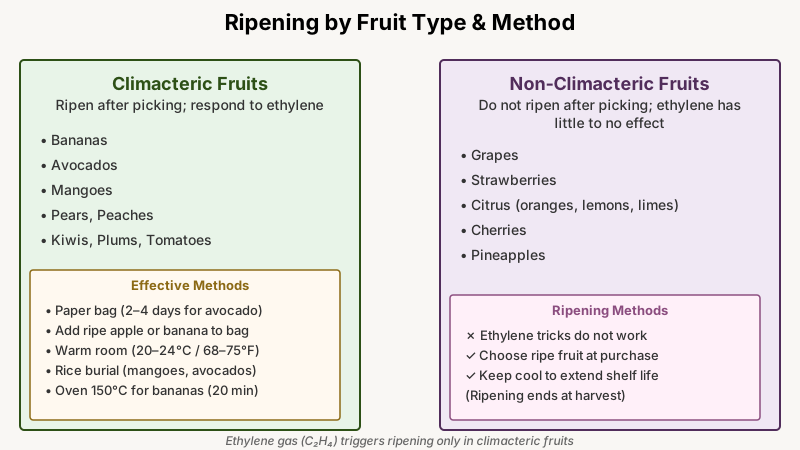
- Climacteric fruits ripen after they’re picked and respond strongly to ethylene: bananas, avocados, mangoes, pears, peaches, kiwis, tomatoes, and plums.
- Non-climacteric fruits don’t ripen much after harvest and won’t benefit significantly from ethylene tricks: grapes, strawberries, citrus, cherries, and pineapples.
Knowing which category your fruit falls into will save you from wasted effort.

For another food science breakdown of a slow chemical transformation in the kitchen, check out How to Caramelize Onions Properly: A No-Shortcut Guide.
7 Methods to Ripen Fruit Faster
1. The Paper Bag Trick (Most Reliable for Most Fruits)
Place the fruit in a brown paper bag, fold it closed loosely, and leave it at room temperature. The paper traps ethylene gas near the fruit while still allowing some air circulation (preventing rot). This is the most consistent method for avocados, bananas, peaches, pears, and mangoes.
Timing: Avocados typically go from rock-hard to ready in 2–4 days. Pears can be softened in as little as 1–2 days.
To speed it up further: Add a ripe apple or banana to the bag. Both are prolific ethylene producers, so you’re flooding the microenvironment with the gas.
2. Apple or Banana as a Ripening Companion
This works on the same principle as the paper bag but is useful even without one. Place your unripe fruit in a bowl alongside a ripe apple or banana. The results are slower than the sealed bag approach, but measurable. A ripe apple gives off enough ethylene to noticeably accelerate ripening in nearby pears or avocados within 48–72 hours.
Apples are particularly potent ethylene producers—a single ripe apple in an enclosed space like a fruit bowl or a bag can ripen bananas days ahead of their natural schedule.
3. Warmth (and Why Your Counter Matters)
Ethylene reactions are temperature-dependent. Enzymatic activity that drives ripening slows dramatically in the refrigerator, which is exactly why you store ripe fruit in the fridge to extend its life. Conversely, a warm kitchen counter—around 20–24°C (68–75°F)—keeps those processes running at a normal pace.
If your kitchen runs cold (a common situation in winter), try placing fruit in a slightly warmer spot: near a sunny window, on top of the refrigerator (which emits some warmth), or near a heating vent. Avoid temperatures above 30°C (86°F), though—excessive heat can lead to uneven ripening and mushy texture rather than a well-ripened fruit.
Don’t refrigerate unripe climacteric fruits. Cold temperatures stall ethylene activity and can cause chilling injury in tropical fruits like mangoes and avocados, resulting in blackened or stringy flesh.
4. Oven-Ripening for Bananas (Emergency Method)
If you need ripe bananas quickly for baking—banana bread, muffins, pancakes—the oven method can simulate overripeness in 20–30 minutes. Place unpeeled bananas on a lined baking sheet and bake at 150°C (300°F) until the skins turn fully black, usually 15–20 minutes. Let them cool completely before peeling.
The texture will be soft and the sugars caramelized, which works beautifully in baked goods. It won’t give you a naturally ripened banana for eating fresh—the flavor is slightly cooked rather than fully developed—but for recipes that call for overripe bananas, it’s a reliable shortcut.
5. Submerging in Rice (Mango and Avocado-Specific)
In parts of South and Southeast Asia, burying mangoes in a container of uncooked rice is a traditional method for speeding ripening. The rice acts similarly to a paper bag: it traps ethylene near the fruit and regulates moisture.
This does work, though the paper bag method is more controllable. If you try it, use a sealed container and check the fruit daily. It can also be applied to avocados, though avocados are a bit more forgiving with the standard bag method.
If avocados are your main concern, our deep dive on How to Pick and Ripen Avocados at Exactly the Right Time covers timing tricks specific to that fruit.
6. Ethylene-Producing Gas (Commercial Context)
It’s worth knowing that commercial fruit distributors routinely use controlled ethylene gas to ripen fruit in large ripening chambers after transport. Bananas and avocados are typically shipped green and firm (to withstand transit), then exposed to ethylene in a controlled atmosphere of around 100–150 ppm before reaching stores.
At home, you can’t replicate this exactly, but understanding it reinforces why the paper bag trick works—you’re doing the same thing on a small scale with naturally produced ethylene.
7. Score or Pierce the Fruit (Works for Specific Cases)
This is a niche technique, but it applies to kiwifruit. Lightly scoring the skin of an unripe kiwi and placing it in a bag with an ethylene producer can speed ripening slightly, as gas penetrates the skin more easily. Don’t cut all the way through—just a few shallow scoring lines.
For other fruits with thick skins like mangoes, this technique risks spoilage rather than accelerated ripening and isn’t recommended.

Fruit-by-Fruit Quick Reference
Here’s how to apply these methods to the fruits you’re most likely dealing with:
Avocado: Paper bag alone (2–4 days) or paper bag + apple (1–2 days). Never refrigerate an unripe avocado. Once ripe, it can be refrigerated for 2–3 days.
Bananas: Leave at room temperature on the counter—they’ll ripen naturally faster than most people expect. For urgency, use a sealed paper bag. For baking use only, try the oven method.
Mango: Paper bag at room temperature. If the mango is close to ripe, 1–2 days is usually enough. Rock-hard mangoes may need 3–5 days.
Pear: This is where the paper bag + apple combination truly shines. Pears can go from hard to perfectly butter-soft in 24–48 hours at room temperature in a bag with a ripe apple.
Peach and Nectarine: Place stem-side down at room temperature. A paper bag helps. Don’t stack them—contact points can cause soft spots.
Kiwi: Leave in a bowl with ripe apples or bananas. Kiwis typically take 3–7 days to ripen at room temperature.
Tomatoes (yes, botanically a fruit): Counter at room temperature, never the refrigerator. A paper bag with a ripe banana nearby can accelerate ripening by a day or two. Refrigerating an unripe tomato is one of the most common kitchen mistakes—it permanently damages flavor development.
What Doesn’t Work (and Why)
Microwave Ripening
Microwaving softens fruit but doesn’t replicate ripening. Heat denatures the enzymes and doesn’t trigger the same sugar conversion or aroma development that ethylene does. You end up with mushy, warm fruit that hasn’t truly ripened—it’s just been heat-damaged.
Refrigerating to Speed Things Up
Some sources suggest refrigerating fruit to “shock” it into ripening faster. This is false. Cold consistently slows ethylene activity and enzymatic processes. Refrigeration preserves ripe fruit; it does not accelerate ripening.
Sunlight Alone
Leaving fruit in direct sunlight can raise its surface temperature, which may seem helpful. But uneven heat distribution from direct sun often leads to discoloration, dehydration, and uneven softening rather than proper ripening. Indirect warmth (a warm room) is more effective and gentler.

Storing Ripe Fruit So It Doesn’t Overripen Immediately
Once your fruit hits peak ripeness, act quickly or refrigerate it. Most climacteric fruits, once ripe, will hold in the refrigerator for 2–5 days depending on the variety. Bananas are the exception—the cold turns their skin black (though the flesh inside remains fine for another day or two).
For cut fruit, store in an airtight container in the refrigerator and consume within 2 days. A squeeze of lemon or lime juice slows oxidation and browning in avocados and some stone fruits.
Conclusion
Ripening fruit faster isn’t complicated once you understand the ethylene principle. The paper bag method is the most reliable all-purpose tool in your kitchen—practical, free, and based on real plant science. Adding a high-ethylene companion like a ripe apple or banana gives it an extra push. Warmth helps; cold stalls. And knowing which fruits can and can’t ripen after harvest saves you from trying to soften a punnet of strawberries that simply won’t cooperate.
The next time you’re staring at a rock-hard avocado the night before taco night, you’ll know exactly what to do.