How to Pick and Ripen Avocados at Exactly the Right Time

Avocados are one of the few fruits where timing is almost everything. Buy one too early and you’re hacking at something that tastes like green wax. Wait a day too long and you’re spooning out brown mush. Getting it right isn’t complicated, but it does require knowing what to look for — and what to do once you get the fruit home.
How to Select a Ripe Avocado at the Store
The most reliable indicator of ripeness is feel, not color. Color gets a lot of attention, but it’s an unreliable guide on its own. Hass avocados (the bumpy-skinned, most common variety) do darken as they ripen — moving from bright green through purple-black — but lighting in produce sections is inconsistent, and individual fruits ripen unevenly.
Instead, pick up the avocado and apply gentle pressure with your whole hand, not your fingertips. Fingertip pressure creates bruising even on firm fruit. What you’re feeling for:
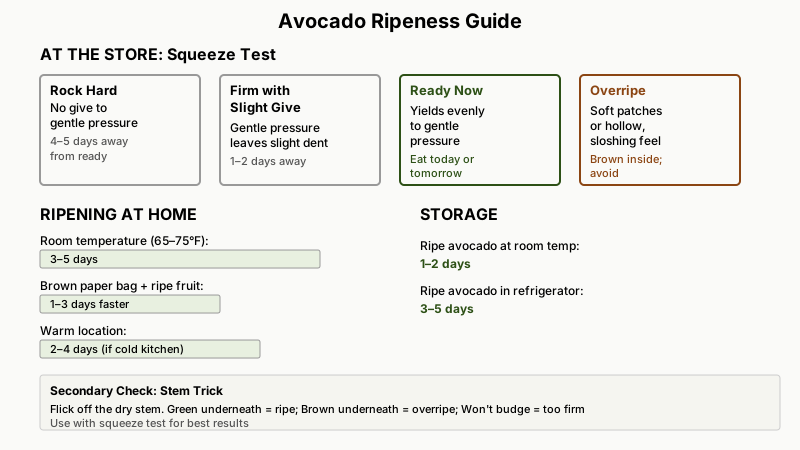
- Rock hard: At least 4–5 days from being ready. The flesh hasn’t started converting starches to fats yet.
- Firm with slight give: 1–2 days away. Good to buy if you’re planning ahead.
- Yields evenly to gentle pressure: Ready to eat today or tomorrow.
- Soft patches or a hollow, sloshing feel: Overripe. The flesh has oxidized internally, and you’ll find brown stringy sections inside.
The Stem Trick
There’s a secondary check that works well when you’re unsure. Flick off the small dry stem nub at the top:
- Green underneath: The flesh is likely to be green and ripe.
- Brown underneath: Likely overripe or already browning inside.
- Stem won’t budge: Still too firm to eat soon.
This method isn’t infallible — a fruit can look perfect at the stem and still have a bruised side — but combined with the squeeze test it narrows things down considerably.
Variety Makes a Difference
Hass avocados are the benchmark most guides are written around. But if you’re shopping at a Latin American market or in Florida, you may encounter:
- Florida avocados (Lula, Monroe, Choquette): Much larger, smoother, green skin that stays green even when ripe. Judge entirely by feel, never color.
- Reed avocados: Round, thicker skin, stay green when ripe, have a butterier flavor with less fiber. They take longer to ripen.
- Fuerte: Pear-shaped, thin-skinned. A gentler squeeze is needed since the skin gives more easily.

Ripening Avocados at Home: Reliable Methods
Bought avocados that are too hard? You have options, and some work much faster than others.
Room Temperature (The Standard Method)
Leave unripe avocados at room temperature on the counter, away from direct sunlight. At around 65–75°F (18–24°C), a firm avocado typically ripens in 3–5 days. Don’t put them in the refrigerator if they’re still hard — cold halts the ripening process by suppressing ethylene activity and enzymatic softening.
The Brown Paper Bag Method
Put your avocados in a brown paper bag with a ripe banana or apple and fold the top closed. Bananas and apples are high ethylene emitters; avocados respond to ethylene gas by accelerating their own ripening. The bag traps the gas around the fruit. This typically shaves 1–2 days off the standard room-temperature timeline.
A plastic bag is less effective because it restricts airflow and can trap moisture, encouraging mold. Paper breathes.
If you’re curious why this trick works so well, How to Ripen Fruit Faster: The Science Behind Ethylene Gas explains the ethylene gas science behind it.
The Warm Spot Method
If your kitchen runs cold (under 65°F/18°C), find a warmer microclimate — on top of the refrigerator, near a (not on) oven vent, or in a pantry that traps ambient heat. Avocados ripen via enzymatic activity, and warmth speeds enzymes up.
What Doesn’t Work
A few popular claims deserve skepticism:
- Microwaving to “ripen.” Microwaving softens the cell structure through heat and moisture, but it doesn’t trigger the actual ripening chemistry. You get hot, soft avocado that still tastes underripe. Skip it.
- Wrapping in foil and baking. Same problem — heat softens without ripening. The flavor won’t develop.
- Refrigerating to speed things up. Cold does the opposite; it slows ripening. The fridge is for already ripe avocados to pause the process.

Storing Ripe Avocados the Right Way
Once an avocado yields to gentle pressure, it has a narrow window — roughly 1–2 days at room temperature before it goes over. If you’re not eating it immediately, move it to the refrigerator. Cold arrests the ripening enzymes and typically extends a ripe avocado by another 3–5 days.
Cut Avocados
Once cut, avocado flesh starts browning quickly because an enzyme called polyphenol oxidase reacts with oxygen. Strategies to slow this:
- Keep the pit in the half you’re not using. The pit limits the surface area exposed to air — it’s a modest effect, but real.
- Brush or spritz with lime or lemon juice. Acid lowers the surface pH and inhibits the oxidase reaction. This is the most reliable method.
- Wrap tightly with plastic wrap pressed directly against the flesh, eliminating air pockets. Don’t just tent the wrap over the top.
- Store cut side down in a container with a thin layer of water or a sliced onion below the avocado. Onion compounds appear to have some antioxidant effect on avocado flesh, though this is anecdotal rather than rigorously studied.
For guacamole, press plastic wrap directly onto the surface of the dip before refrigerating. This slows browning for several hours, though a thin brown layer may still form on top by the next day — just stir it in or scrape it off; it’s safe to eat.
Once you’ve sliced into your perfectly ripe avocado, keeping the leftover half from turning brown is its own challenge, which How to Keep Avocados From Browning: 7 Fixes Ranked, Best To Worst tackles in detail.
When Is It Past Saving?
A slightly brown interior is fine — oxidation is a cosmetic issue, not a safety one. Flavors degrade with advanced browning, but eating it won’t hurt you. What does warrant tossing an avocado:
- Widespread dark strings or fibers running through the flesh (vascular browning — a physiological disorder, not ripeness)
- Sour, fermented, or rancid smell
- Visible mold on the flesh (mold on the skin alone is more borderline — inspect the inside)
- Hollow, water-logged texture with dark liquid pooling

Matching Ripeness to the Recipe
How soft you want your avocado depends entirely on how you’re using it.
Slightly firm (just barely yields to pressure):
- Avocado toast where you want clean slices
- Salads and grain bowls — slices hold their shape
- Sushi rolls
- Ceviche topping
Fully ripe and soft:
- Guacamole — you need it mashable
- Avocado crema or dressings
- Smoothies
- Avocado chocolate mousse
Overripe (but not rancid):
- Baking — avocado as a butter substitute in brownies or muffins. The slightly fermented edge is masked by sugar and cocoa.
- Smoothies where it gets blended aggressively.
For most table uses, aiming for the “just soft” window is the sweet spot: the buttery fat has fully developed, the flavor is rich and grassy, and the texture is still stable enough to handle.
A Practical Shopping Strategy
If you eat avocados regularly, the easiest approach is to buy in staggered ripeness:
- One or two ripe avocados for use within a day.
- One or two slightly firm avocados for use in 2–3 days.
- One or two hard avocados with the bag-and-banana trick ready to go for later in the week.
This small habit eliminates the feast-or-famine cycle where everything ripens at once.
Avocados reward a little attention. Once you’ve squeezed a few dozen and started noticing the difference between firm-with-give and soft-with-patches, the tactile read becomes second nature — and the perfectly creamy half you slice open becomes a lot more predictable.