How to Bake Cookies That Stay Soft: The Science Of Chewy Batches

Soft, pillowy cookies have a short window. Bake a batch on Monday and by Wednesday they can feel like hockey pucks. The good news is that keeping cookies soft isn’t luck — it’s chemistry, and once you understand what’s actually happening in the dough and after the oven, you can engineer the result you want every time.
This guide covers the real reasons cookies go hard, the ingredient choices that matter most, and the storage habits that make the difference between a three-day cookie and a week-long one.
Why Cookies Go Hard in the First Place
Cookies harden for two main reasons: moisture loss and starch retrogradation.
When a cookie bakes, steam escapes and the starches in the flour gelatinize. Once the cookie cools, those starches start to crystallize again — a process called retrogradation. At the same time, the cookie is slowly losing residual moisture to the dry air around it. The result is a dense, crunchy texture where you once had something chewy and soft.
High sugar content slows retrogradation (sugar is hygroscopic — it attracts and holds water molecules). Fats coat the starch granules and keep the crumb tender. Understanding this is why certain ingredient swaps work and others don’t.
Ingredients That Keep Cookies Soft
1. Brown Sugar Over White Sugar
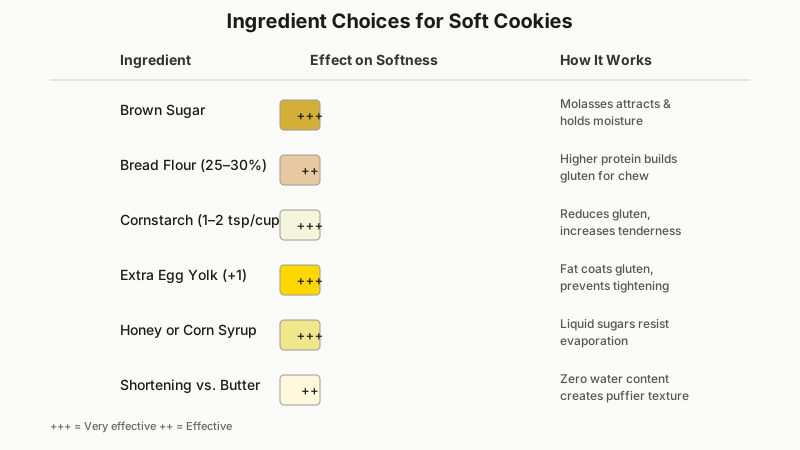
Brown sugar contains molasses, which is hygroscopic. It actively pulls moisture from the air and holds it inside the cookie. A recipe using mostly brown sugar will produce a chewier, softer cookie than one using mostly white sugar. A common ratio worth trying: two parts brown sugar to one part white.
If your current recipe calls for equal amounts of both, try shifting the balance. You’ll notice the difference within 24 hours of baking.
2. Bread Flour for Chew, Cake Flour for Tenderness
All-purpose flour is the middle ground. If you want extra chew (think bakery-style), substitute 25–30% of the all-purpose flour with bread flour — its higher protein content builds more gluten structure. For a softer, more tender crumb, swap in cake flour, which has less protein and produces a finer, more delicate texture.
Neither substitution requires a full recipe rewrite. Start with a partial swap and adjust to your preference.
3. Cornstarch — A Small Addition with a Real Effect
Adding one to two teaspoons of cornstarch per cup of flour is a reliable trick. Cornstarch dilutes the protein content of the flour and interferes with gluten formation. The result is a more tender, thicker cookie that doesn’t spread as aggressively. This is one of the most consistent tweaks in soft-cookie baking.
4. An Extra Egg Yolk
Whole eggs add structure and moisture; yolks add fat and richness without the extra protein from whites. Adding one extra egg yolk (beyond what the recipe already calls for) makes cookies noticeably softer and richer. The fat in the yolk coats gluten strands and keeps the texture from tightening up.
5. Fat Choice: Butter vs. Shortening vs. Brown Butter
Butter (with its water content, usually around 15–20%) produces spread and crisp edges. Shortening has zero water and creates a softer, puffier cookie. Many professional bakers use a blend — two-thirds butter for flavor, one-third shortening for texture.
Brown butter is worth mentioning separately: the water cooks off during browning, which reduces spread and concentrates the fat, producing a slightly chewier, nuttier cookie. It won’t give you the same softness as creamed butter, but the flavor payoff is significant.
6. Honey, Corn Syrup, or Molasses
Replacing a tablespoon or two of sugar with honey or light corn syrup introduces liquid sugars that are even more hygroscopic than brown sugar. They actively resist drying out. Be cautious with proportions — too much will make your dough sticky and affect the bake time — but even a small amount makes a meaningful difference in how the cookie holds up over days.

Technique: How You Bake Matters as Much as What You Bake
For another example of how patience and precise technique transform a bake, see How to Bake Sourdough Bread from Scratch: One Living Starter, No Yeast.
7. Pull Them Out Early
This is probably the single most impactful technique tip. Cookies continue to cook on the hot pan after you pull them from the oven — sometimes for three to five minutes. If you wait until they look done in the oven, they will be overbaked by the time they cool.
For most drop cookies, pull the pan when the edges look just set and the center still looks underdone and slightly glossy. The center will firm up as the cookie rests. Once you do this a few times, you’ll calibrate to your specific oven and pan.
8. Don’t Overbake — Watch Temperature, Not Just Time
Oven temperatures vary. A recipe that says “bake 10–12 minutes at 350°F (175°C)” is giving you an approximation. An oven that runs 25°F hot will overbake your cookies even if you stick to the timer.
Use an oven thermometer — they cost very little and will improve everything you bake, not just cookies. Bake cookies at the lower end of the temperature range for a longer time rather than cranking the heat for speed. Lower, slower baking preserves moisture.
9. Chill the Dough
Refrigerating cookie dough for at least 30 minutes — or overnight — does several things: it solidifies the fat so cookies spread less, concentrates flavors through enzyme activity, and reduces excess moisture. Less spreading means a thicker cookie. A thicker cookie retains moisture longer after baking. Chilling is particularly important with butter-heavy doughs.
For convenience, you can also portion chilled dough into balls and freeze them. Bake from frozen (add two to three minutes to the bake time) so you always have freshly baked cookies instead of storing them at room temperature for days.

Storage: The Part Most Bakers Get Wrong
Even perfectly baked cookies will go hard if you store them badly. Here’s what actually works:
Airtight is non-negotiable. Air is the enemy. A loosely closed bag or a tin with a poor seal lets moisture escape quickly. Use a zipper-lock bag with as much air squeezed out as possible, or a truly airtight container.
Add a slice of bread. This sounds odd, but it works. Place a slice of white bread in the container with your cookies. The cookies will draw moisture from the bread to maintain their softness. Check after 24 hours — the bread will be hard, your cookies will still be soft. Replace the bread slice as needed.
Don’t refrigerate unless you must. Refrigerators are dehumidifiers. Storing cookies in the fridge accelerates starch retrogradation and dries them out faster than room-temperature storage. At room temperature in an airtight container, most soft cookies will stay fresh for four to five days. Freeze for longer storage.
Freeze properly. Layer cookies in an airtight container with parchment paper between layers. They will keep well for up to three months. Thaw at room temperature, still in the sealed container, so condensation forms on the outside of the container rather than on the cookies.
Refresh stale cookies. If you have a cookie that has hardened, a 10-second burst in the microwave (with a small cup of water beside it to add steam) will restore most of the softness. It won’t last — eat them immediately — but it works.
If your baking troubles extend beyond cookies, Fix Common Cake Baking Mistakes Before They Ruin Your Bake walks through the most common pitfalls that keep cakes from turning out right.
A Note on Cookie Type
Not every cookie is meant to be soft. Thin and crispy is its own category — those rely on a high white-sugar ratio, lower moisture, and often a longer bake. When adapting a recipe to be softer, be aware you’re moving it in a different direction from what it was designed to do. Chocolate chip cookies, snickerdoodles, and sugar cookies respond well to all the techniques above. Biscotti, tuiles, and lace cookies do not — their crunch is the point.

Putting It Together
You don’t need to apply every one of these tips at once. Start with the two highest-impact changes: pull the cookies out earlier than you think and store them in a truly airtight container with a slice of bread. Those two alone will noticeably extend the softness of almost any drop cookie.
From there, experiment with brown sugar ratios, an extra yolk, or a teaspoon of cornstarch. Keep notes on what you change — baking rewards the methodical approach, and once you dial in a recipe for your oven and your climate, you’ll have it for life.
Soft cookies aren’t mysterious. They’re just a matter of knowing what’s actually happening inside that dough.