How to Remove Scuff Marks from Walls: Erase Streaks Without Repainting

Scuff marks on walls are one of those small annoyances that somehow make an entire room look neglected. Whether it’s a shoe heel dragging against the hallway baseboard, a furniture leg bumping a freshly painted surface, or a doorknob that swings a little too freely, the result is the same — a dull, streaky smear that won’t respond to a dry cloth.
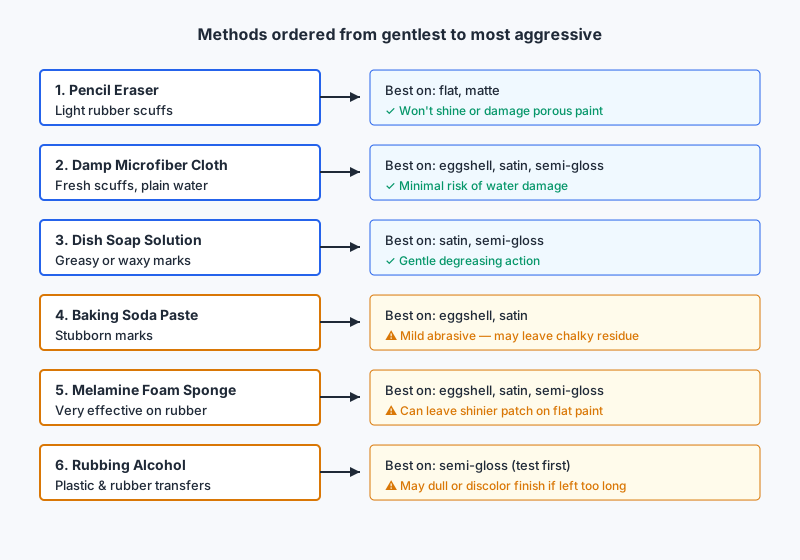
The good news: most scuff marks can be erased in minutes with household items you already own. Here’s a practical rundown of the most effective methods, ordered roughly from gentlest to more aggressive, so you don’t reach for sandpaper when a pencil eraser would do the job.
Why Scuff Marks Happen (and Why They’re Stubborn)
A scuff mark is usually a transfer of material — rubber, leather, plastic, or even fabric — deposited on your wall’s paint film under friction. Unlike a true stain (which soaks into a surface), a scuff sits mostly on top of the paint. That’s why some cleaning methods that work on stains actually make scuffs worse: they push the transferred material into the paint’s texture rather than lifting it off.
The type of finish matters enormously. Flat or matte paint is porous and unforgiving — aggressive scrubbing removes the paint itself alongside the scuff. Eggshell, satin, and semi-gloss finishes are more durable and easier to clean without visible damage.

7 Methods That Actually Work
1. Pencil Eraser
For fresh, light scuffs — especially thin rubber marks — a clean white vinyl eraser (the kind sold for drafting) is remarkably effective. Rub gently in one direction rather than back and forth, and wipe away the residue with a barely damp cloth. This works particularly well on flat paint where you can’t introduce moisture without risking a shiny patch.
Best for: Light rubber scuffs on flat or matte walls.
2. Damp Microfiber Cloth
Before you reach for any cleaning product, try plain warm water on a microfiber cloth. Microfiber’s woven structure creates a mild mechanical action that lifts surface-level deposits without chemicals. Wring the cloth until it’s just barely damp, then wipe in slow, firm circles.
If the mark partially lifts, stop — you’ve confirmed it’s a surface deposit, and a second pass with a slightly more absorbent cloth will often finish the job.
Best for: Fresh scuffs on eggshell, satin, or semi-gloss paint.
3. Dish Soap Solution
A drop of dish soap in warm water creates a gentle degreasing solution that handles scuffs caused by oily or waxy materials. Apply with a soft sponge, work in gentle circles from the outside of the mark inward, and rinse by wiping with a clean damp cloth. Always dry the area immediately — letting soapy water sit can leave its own watermark on flat paint.
Best for: Greasy or waxy scuffs; satin or semi-gloss finishes.
4. Baking Soda Paste
Mix two tablespoons of baking soda with enough water to form a thick paste — roughly the consistency of toothpaste. Apply it to the scuff with a soft cloth or sponge and rub gently. Baking soda is a very mild abrasive (about 2.5 on the Mohs hardness scale compared to paint’s roughly 3–4, depending on formulation), which gives it just enough grit to dislodge stubborn transfers without cutting into the paint beneath.
Wipe away the paste thoroughly and dry the wall. Check in natural light — residue left behind can look chalky.
Best for: Stubborn marks on eggshell or satin finishes.
Baking soda is also a star ingredient for unclogging drains naturally, so if you have a slow sink to deal with next, check out How to Unclog a Drain Naturally: Baking Soda Beats Harsh Chemicals.
5. Melamine Foam Sponge (Magic Eraser–Type)
Melamine foam works by acting as an ultra-fine abrasive — the foam’s open-cell structure essentially sands the surface at a microscopic level. It’s extraordinarily effective at lifting scuff marks, but that abrasive quality comes with a trade-off: on flat paint, it almost always leaves a shinier patch where the paint’s surface texture has been partially abraded away. On a semi-gloss wall, this is barely noticeable. On a matte wall in a high-traffic area, it can be more conspicuous than the original scuff.
Use a barely damp piece (not soaking wet), apply light pressure, and stop as soon as the mark is gone. Don’t scrub.
Best for: Eggshell, satin, and semi-gloss finishes; hallways, kitchens, and bathrooms.

Note: Melamine foam products are widely available in hardware stores and online. No affiliation implied.
6. Rubbing Alcohol or Hand Sanitizer
Isopropyl alcohol (70% concentration, the kind sold as a first-aid product) dissolves many rubber and plastic-based transfers effectively. Apply a small amount to a cotton ball or cloth, dab — don’t rub — onto the scuff, and let it sit for about thirty seconds before wiping away. Alcohol evaporates quickly, which reduces the risk of water damage on porous finishes.
Test in an inconspicuous spot first. On some painted surfaces, alcohol can slightly dull or discolor the finish if left in contact too long.
Best for: Rubber-based scuffs; semi-gloss finishes; marks near switch plates or door frames where other methods would leave too much moisture.
7. Touch-Up Paint
When a scuff has been there long enough that multiple cleaning attempts have left the area looking worse than the original mark, touch-up paint is the cleanest solution. Keep a small, sealed jar of your wall color on hand specifically for this purpose — most paint stores will supply touch-up quantities, and many paint manufacturers sell their products in small sample sizes.
Apply with a small artist’s brush or a mini foam roller. A foam roller gives a texture that’s much closer to the original rolled surface than a brush. Feather the edges so the patch blends rather than sitting as a visible square.
Best for: Marks that cleaning has failed to resolve; walls in high-visibility areas.
Matching Your Method to Your Wall Finish
Getting the method wrong for your paint finish is the most common mistake people make when cleaning walls. Here’s a quick reference:
| Paint Finish | Recommended Methods | Avoid |
|---|---|---|
| Flat / Matte | Eraser, barely-damp cloth | Melamine foam, alcohol, vigorous scrubbing |
| Eggshell | Damp cloth, dish soap, baking soda paste | Heavy scrubbing |
| Satin | Any method above | Excessive water |
| Semi-Gloss / Gloss | Any method, including melamine foam and alcohol | Nothing specifically — most durable |
If you’re not sure what finish you have, look at the wall in raking (side) light. Flat paint shows almost no sheen. Eggshell has a very faint glow. Satin is noticeably shiny. Semi-gloss reflects objects clearly.
Preventing Scuff Marks Before They Start
A few structural fixes dramatically reduce the frequency of scuff marks:
- Furniture bumpers: Small felt or rubber pads stuck to the corners of chairs, tables, and bed frames stop the most common source of recurring scuffs.
- Doorstops: A floor-mounted or wall-mounted door stop costs very little and prevents the doorknob-shaped circle of scuffs that appears behind interior doors.
- Scrubbable paint: If you’re repainting, choose a washable or scrubbable formulation. These are typically eggshell or satin in finish with a higher resin content — they hold up to repeated cleaning far better than budget flat paints.
- Chair rails in high-traffic hallways: A classic solution for a real problem. A chair rail at roughly 90 cm (about 36 inches) from the floor protects the most-scuffed zone of any hallway wall.
- Clear wall guard panels: Acrylic or polycarbonate panels can be applied behind furniture in specific spots without being obvious from across the room.

If you’re already thinking about protecting your walls long-term, our guide on How to Make Your Home More Energy Efficient: Seal, Insulate, Save covers other simple upgrades that keep your home in better shape overall.
A Few Common Mistakes to Skip
Don’t use neat bleach. It lightens the paint itself and leaves a discolored patch that’s harder to fix than the original scuff.
Don’t scrub flat paint with anything abrasive. Even a slightly rough sponge can create a shiny burnished patch on matte paint that looks worse in certain lighting than the scuff did.
Don’t flood the area with water. Moisture can raise the wall’s substrate (especially on older drywall), bubble or peel paint around the edges, and leave tidal-ring marks when it dries.
Don’t skip the test patch. Every cleaning method should be tested in a hidden spot — behind a door or along the bottom of the wall near the floor — before working in a visible area.
Conclusion
Most scuff marks don’t need special products or professional help. Work from the gentlest method first — a dry eraser or damp microfiber cloth handles a surprising proportion of everyday wall scuffs — and escalate only if the mark persists. Match your approach to your paint finish, keep a sealed jar of touch-up paint for stubborn cases, and add a few preventive fixtures to stop the problem before it starts.
With a bit of patience and the right technique for your wall, those marks disappear quickly and cleanly — and the room looks the way it should.