Deep Clean Upholstered Furniture Without Professional Help

Upholstered furniture collects more than you’d expect — skin cells, pet dander, food particles, dust mites, and the slow accumulation of everyday odors. A professional cleaning costs anywhere from $80 to $300+ per piece, depending on fabric and size. The good news: with the right approach, you can get results close to professional quality without the bill or the scheduling hassle.
This guide walks through the full process — from reading fabric codes to handling stubborn stains — so you can deep clean a sofa, armchair, or upholstered ottoman yourself with confidence.
Start Here: Decode the Fabric Tag
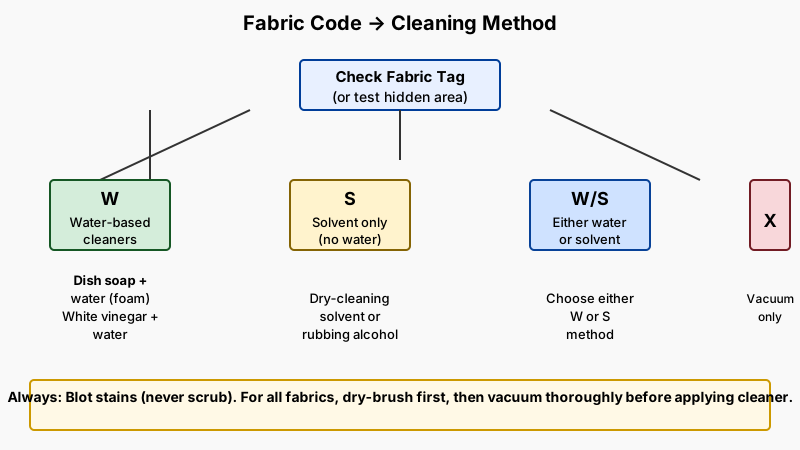
Before you touch a single cleaning product, locate the manufacturer’s care tag — usually tucked under a cushion or attached to the furniture frame. The tag carries a cleaning code that tells you exactly what’s safe to use.
- W — Water-based cleaners are safe. This is the most forgiving code.
- S — Solvent-only cleaners. Water can cause shrinkage, water rings, or mildew. Use dry-cleaning solvents instead.
- W/S — Either water or solvent cleaners are acceptable.
- X — Vacuum only. No liquid of any kind. Professional cleaning is usually the right call here.
If the tag is missing (common with older or secondhand pieces), test any product you plan to use on a hidden area — typically behind a back cushion or under the skirt — and wait 10 minutes before proceeding.

What You’ll Need Before You Start
Gathering everything upfront saves interruptions mid-clean:
- Stiff-bristle upholstery brush (or a clean dry scrub brush)
- Vacuum with an upholstery attachment and crevice tool
- Mild dish soap (for W-coded fabrics)
- White wine vinegar (deodorizer and mild cleaner)
- Baking soda (odor absorber)
- Dry-cleaning solvent or rubbing alcohol (for S-coded fabrics or tough grease stains)
- Two microfiber cloths — one for applying, one for blotting
- A spray bottle
- Warm water
- A fan or open windows for drying
Skip the dish soap if your fabric is coded S. Skip the solvents if it’s coded W. When in doubt, water and white vinegar in a 1:1 ratio is a gentle starting point for W-coded fabrics.
Step-by-Step Deep Cleaning Process
Step 1 — Remove All Cushions and Dry-Brush
Pull off every removable cushion and set them aside. Use your upholstery brush to loosen embedded dirt, hair, and crumbs from the main frame and the crevices where cushions sit. Brush in short strokes, working against the fabric nap.
This step is skipped by almost everyone and it makes a real difference. Vacuuming over embedded debris doesn’t remove it — loosening it first does.
Step 2 — Vacuum Thoroughly
Use the upholstery attachment to vacuum the entire piece — seat surfaces, back panels, arm panels, and sides. Switch to the crevice tool for the seams and the gap between the seat and the back frame. Don’t rush this; that crease is where most of the accumulated grime hides.
For the cushions, vacuum both sides, including the sides and any welting.
Step 3 — Pre-Treat Visible Stains
Deal with specific stains before any overall cleaning solution goes on. The key rule: always blot, never scrub. Scrubbing spreads the stain and pushes it deeper into the fibers.
For food and drink stains (W-coded fabric): Mix one teaspoon of mild dish soap with two cups of warm water. Dampen — don’t soak — a microfiber cloth and blot the stain from the outside edge inward. Rinse the cloth and blot with plain water to remove soap residue.
For grease or oil stains: Sprinkle a small amount of baking soda or cornstarch directly on the stain. Let it sit for 15–20 minutes to absorb the oil, then brush off and vacuum. Follow with a small amount of rubbing alcohol on a cloth for any remaining residue.
For pet urine: Blot up as much liquid as possible first. Apply a solution of equal parts white vinegar and water, let it sit for five minutes, then blot dry. Baking soda left on the damp area overnight will absorb residual odor; vacuum it off in the morning.
For ink: Rubbing alcohol on a cotton ball works on most fabric types. Blot — don’t rub — and change the cotton frequently so you’re not reapplying the ink.
Step 4 — Overall Surface Clean
For W-coded fabrics: Mix one teaspoon of dish soap with one cup of warm water and agitate to create suds. Apply only the foam — not the liquid — using a soft cloth or sponge. The foam cleans without over-wetting the fabric, which reduces drying time and prevents water rings.
Work in sections, one panel or cushion side at a time. Use light circular motions, then follow immediately with a clean damp cloth to lift the soap. Finish each section by blotting with a dry towel.
For S-coded fabrics: Use a dry-cleaning solvent available at hardware or grocery stores. Apply per the product instructions — typically a small amount on a cloth, worked in with light strokes in the direction of the fabric nap. Ventilate the room well; these solvents have strong fumes.

Step 5 — Deodorize with Baking Soda
Once the fabric is surface-cleaned and mostly dry (not wet), sprinkle a light, even layer of baking soda over the entire piece. Let it sit for at least 30 minutes — ideally two to three hours for a deeper odor treatment.
Baking soda neutralizes acidic odor molecules rather than masking them. For heavy pet odors, leave it overnight.
Vacuum thoroughly to remove all the powder.
If you love this odor-busting trick, you’ll also find it front and center in How to Clean Grout Between Tiles: Matching Grime Level To Method, where the same pantry staple tackles grimy tile lines.
Step 6 — Clean and Treat Cushions
If your cushion covers are zippered and the tag indicates machine-washable fabric, remove the covers and wash on a gentle cycle in cold water. Zip the cover before washing to prevent the zipper from snagging. Air dry — never machine dry, which can shrink or distort the fabric.
For non-removable cushion covers or foam inserts, spot clean and deodorize as described above, then stand the cushions on their edges with a fan aimed at them to speed drying.
Step 7 — Dry Completely Before Reassembly
This is the step most people rush, and it leads to mildew. Upholstered furniture needs to be fully dry before you put cushions back and certainly before anyone sits on it. Residual moisture in foam or batting is the primary cause of musty-smelling furniture.
Ideally, do this cleaning on a low-humidity day with windows open. Point a box fan at the furniture and give it at least four to six hours. In humid climates, a dehumidifier in the room helps significantly.
Dealing with Specific Fabrics
Microfiber
Microfiber is durable but tricky — it water-stains easily, which is why most microfiber sofas are coded S or W/S. Rubbing alcohol works particularly well on microfiber: it cleans, dries quickly, and doesn’t leave water rings. Apply with a white sponge (colored sponges can transfer dye), scrub lightly, and use a dry brush to restore the nap while the fabric dries.
Velvet and Chenille
These fabrics have a directional pile that flattens with pressure and moisture. Brush gently in the direction of the pile and avoid over-wetting. A fabric steamer on a low setting, held several inches from the surface, can help lift crushed pile without the risks of liquid cleaners.
Linen and Cotton
Generally W-coded, but prone to shrinkage and water marks. Use minimal moisture and dry quickly. A hairdryer on a cool setting (not warm) can speed drying and prevent water rings from setting.
Leather and Faux Leather
Leather isn’t upholstered fabric in the traditional sense, but it’s worth noting: don’t use vinegar on real leather — it degrades the finish. Use a dedicated leather cleaner and conditioner. Faux leather can tolerate mild soap and water.

How Often Should You Deep Clean?
For most households, twice a year is the baseline. Increase the frequency to four times a year if you have pets, young children, or anyone with allergies or asthma. A light maintenance vacuum once a week prevents the buildup that makes deep cleaning harder.
Rotating and flipping cushions every month (where possible) distributes wear evenly and reduces the compressed, flattened look that heavy-use furniture develops.
While you’re on a cleaning roll, consider extending it to the room’s trim, since How to Deep Clean Baseboards and Trim: A Room-by-Room Guide offers a similar room-by-room schedule to keep dust and grime from building up.
What Not to Do
- Don’t use hot water — it can set protein-based stains (blood, dairy, egg) permanently and cause some fabrics to shrink.
- Don’t drench the fabric — over-wetting leads to mildew in the foam or batting, which is very difficult to reverse.
- Don’t use bleach on colored fabric — bleach doesn’t just remove stains; it removes dye.
- Don’t skip the rinse — soap residue left in the fabric attracts dirt faster, meaning the sofa looks dirty again within weeks.
- Don’t use a steam cleaner on S-coded fabrics — steam introduces moisture that these fabrics aren’t designed to handle.
Conclusion
Deep cleaning upholstered furniture yourself isn’t complicated, but it does require patience — especially the drying stage. The biggest mistakes people make are skipping the care tag, over-wetting the fabric, and reassembling too soon. Get those three things right and you’ll extend the life of your furniture, reduce allergens in your home, and save a meaningful amount of money in the process.
For genuinely delicate or antique pieces, or anything coded X, professional cleaning remains the smarter call. For everything else, this process is well within reach of a careful DIY approach.