How to Prevent Fruit Flies in Your Kitchen Naturally

Why Your Kitchen Keeps Attracting Fruit Flies
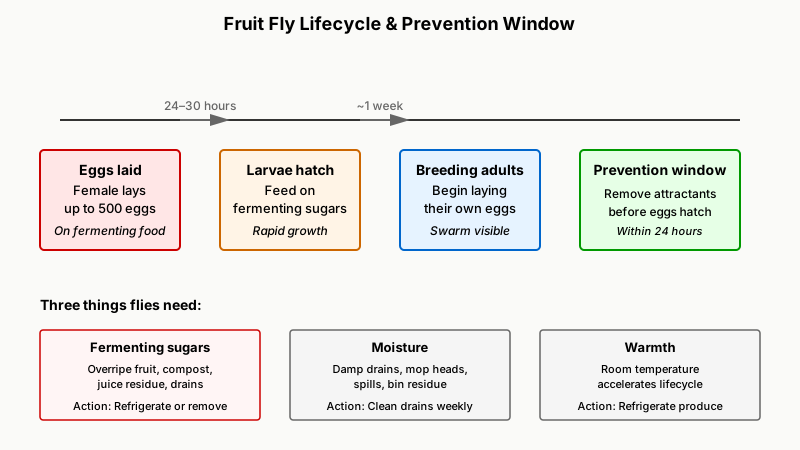
Fruit flies (Drosophila melanogaster) don’t arrive randomly. They’re drawn by three things: fermenting sugars, moisture, and warmth — all of which a typical kitchen supplies in abundance. A single overripe banana on the counter, a damp mop head in the corner, or a film of juice residue inside a recycling bin is enough to trigger an infestation.
What surprises most people is the speed. A female fruit fly can lay up to 500 eggs in her short lifetime, and those eggs hatch within 24 to 30 hours under warm conditions. The larvae then develop into breeding adults in as little as a week. This means a minor nuisance can become a visible swarm faster than almost any other kitchen pest.
The good news: the same biology that makes them multiply fast makes them straightforward to prevent. Cut off their food and breeding sources, and they have nowhere to go.

The Core Prevention Strategy: Remove What Attracts Them
Every natural prevention method comes back to one principle — eliminate the attractants before flies find them. This isn’t about deep-cleaning your kitchen once a month; it’s about a handful of low-effort habits applied consistently.
Store Fruit Differently
Ripe and overripe fruit left at room temperature is the single biggest draw. Once stone fruit, bananas, tomatoes, or berries reach peak ripeness, move them to the refrigerator. Yes, some fruits soften faster in cold storage, but that trade-off is far better than a week-long fly problem.
For fruit you prefer at room temperature, a mesh fruit bowl or a dome cover creates a physical barrier. Keeping produce elevated also helps — flies prefer to land and feed close to floor level where air is still and smells concentrate.
Deal With Produce That’s Past Its Prime Immediately
A soft spot on a peach or a shriveled berry isn’t just food waste — it’s an active fermentation site. Don’t leave questionable produce sitting while you decide what to do with it. Compost it, freeze it, or cook it the same day you notice it going soft.
If you keep a countertop compost container, empty it daily during warm months and rinse it with a diluted white vinegar solution every few days. Vinegar cuts through the fermented residue that builds up on the inside walls and that residue is precisely what draws flies in.
Clean Drains and Garbage Disposal Regularly
Drains are an overlooked breeding site. The organic film that accumulates on the inner walls of kitchen drains — a mix of food particles, grease, and moisture — is ideal for fruit fly larvae. If you notice flies congregating near your sink even when the counter is clean, the drain is likely the culprit.
To clean naturally: pour a kettle of boiling water down the drain, followed by half a cup of baking soda, then a cup of white vinegar. Let it foam for 10–15 minutes, then flush with hot water. Do this once a week during peak season (late summer and early autumn, when outdoor fly populations peak and more produce ripens quickly).
For a garbage disposal, drop in a few ice cubes and a handful of coarse salt, run it briefly, then flush with water. The salt and ice scrub the blades and inner walls without harsh chemicals.
If lingering food odors in general are part of the problem, How to Deodorize a Kitchen Smelling of Fish or Onions offers targeted tips for neutralizing those smells at the source.
Manage Bins and Recycling
Recycling bins — especially glass bottles, juice cartons, and aluminum cans — hold residue that ferments quickly. Rinse every container before it goes in the bin. Keep your kitchen bin tightly lidded and line it with a bag; even a small gap around an ill-fitting lid is enough for flies to enter and lay eggs.
If possible, store your recycling bin outside or in a garage rather than under the kitchen sink.

Natural Repellents and Deterrents Worth Using
Once you’ve removed the primary attractants, you can reinforce your kitchen with a few natural deterrents. These won’t eliminate an active infestation on their own, but they do make the environment less inviting.
Herbs and Essential Oils
Basil, lavender, and mint are often cited as natural fruit fly repellents. The evidence here is mostly observational rather than robust scientific study, so treat them as a supplement to good habits, not a replacement. That said, a pot of fresh basil on the windowsill near your fruit bowl is a low-cost, pleasant-smelling experiment worth running.
A few drops of eucalyptus or peppermint essential oil on a cotton ball placed near problem areas may also help deter flies. The compounds in these oils (particularly linalool and cineole) have shown some insect-repellent activity in laboratory conditions, though results in real kitchens vary considerably.
Keep Surfaces Dry
Moisture matters as much as food. Fruit flies need wet organic matter to lay eggs. Wiping down counters after food prep, not leaving damp dishcloths balled up on the counter, and fixing any slow drips under the sink will all reduce the conditions they need to reproduce. A dry counter with no food residue is far less attractive than a clean-looking surface with a faint sticky film.
White Vinegar as a Cleaning Agent
White vinegar pulls double duty: its acetic acid content cuts through organic residue on surfaces, and its smell — while attractive to flies in a trap — at normal cleaning concentrations tends to discourage them from lingering. Use it diluted (roughly 1 part vinegar to 4 parts water) to wipe down bin lids, the inside of the recycling area, and the rubber seal on your refrigerator’s vegetable drawer, where small amounts of moisture and produce residue accumulate.
If Flies Are Already Present: Natural Traps That Work
Prevention is the goal, but if you’re already seeing flies, a simple apple cider vinegar trap handles the population while you address the root cause.
Apple cider vinegar trap: Pour about an inch of apple cider vinegar into a glass or jar. Add a drop of dish soap (this breaks the surface tension so flies sink rather than escape). Cover the top with plastic wrap and poke several small holes with a toothpick. The smell draws flies in; the soap ensures they don’t get back out. Empty and refresh every two to three days.
This method won’t end an infestation on its own if the breeding source is still active — it only catches adults. The real fix is always finding and eliminating where they’re reproducing.
A piece of very ripe or rotting fruit inside a paper funnel placed over a jar works on the same principle and needs no vinegar. Both approaches are widely used and genuinely effective at reducing visible populations.
Seasonal Patterns and When to Be Most Vigilant
Fruit fly populations outdoors peak in late summer and early autumn, when fallen fruit ferments in orchards and gardens. This is when your kitchen is most likely to receive incoming flies through open windows, doors, and any small gaps around pipes or vents.
During these months, window screens become genuinely useful. Check that yours fit flush and have no tears. The flies themselves are small enough — typically 3 to 4 mm — to pass through some coarser mesh types, so fine-weave insect screens (mesh size 16 or finer) are worth specifying if you’re replacing screens.
In warm climates or heated homes, fruit flies can breed year-round, so the habits described here aren’t seasonal precautions so much as permanent ones.
Frequently Asked Questions
Can fruit flies breed in my refrigerator?
Unlikely. Fruit flies need warmth to develop — typical refrigerator temperatures (around 4°C / 39°F) suppress reproduction almost entirely. However, the vegetable drawer can accumulate moisture and residue over time, so clean it monthly regardless.
Do fruit flies come up through sink drains?
They breed in drains rather than traveling up through the water system. The inner walls of a drain pipe hold a layer of organic film that stays damp — an ideal egg-laying site. Regular drain cleaning (see above) addresses this directly.
How long does it take to get rid of fruit flies naturally?
This depends on how quickly you remove the breeding source. If you identify and eliminate the source on day one, adult fly numbers typically drop noticeably within a few days as the existing population dies off (adults live roughly two to four weeks). If the source remains active, the cycle continues indefinitely.
Is there a difference between fruit flies and fungus gnats?
Yes, and the distinction matters for treatment. Fungus gnats are slightly darker, slightly larger, and breed in damp potting soil rather than fermenting food. If your fly problem is concentrated around houseplants rather than the counter or bin, you’re likely dealing with fungus gnats, which require a different approach (letting soil dry out between waterings, and sometimes adding a layer of sand on top of the soil).
Do store-bought fly sprays work better than natural methods?
For immediate knockdown of adult flies, chemical sprays work faster. But they don’t address the breeding source, and applying insecticides near food prep surfaces carries obvious risks. Natural prevention — removing attractants, cleaning thoroughly, using traps — deals with both the symptom and the cause without introducing chemicals into the kitchen environment.
The Simplest Summary
Fruit flies are opportunists. They’re not a sign of a dirty kitchen so much as a sign that there’s something ripe, fermenting, or wet that they can use. Fix those three things — store ripe produce properly, keep drains and bins clean, and eliminate standing moisture — and the kitchen stops being attractive to them.
These aren’t complicated changes, but they do need to be consistent. A single forgotten overripe plum can restart the cycle. Make the habits routine rather than reactive, and you’ll rarely need to deal with a visible problem at all.
For a broader daily routine that keeps these fruit fly triggers from building up in the first place, check out 10 Tips for Keeping a Clean Kitchen Every Day.