How to Make Your Home Smell Fresh Naturally: Absorb, Don't Mask

A stale or musty home doesn’t announce itself all at once — you notice it when a guest walks in and you suddenly smell what you’ve stopped smelling. The good news is that you don’t need synthetic sprays or plug-in air fresheners loaded with phthalates and artificial fragrance to fix it. Natural approaches not only work better long-term, they address the source of odors rather than masking them.
Here’s what actually makes a difference.
Why Your Home Smells the Way It Does
Before reaching for a solution, it helps to understand the culprits. Most indoor odors come from one of four sources:
- Microbial activity — mold, mildew, and bacteria thrive in damp or poorly ventilated spots like bathrooms, basements, and the back of kitchen cabinets.
- Volatile organic compounds (VOCs) — off-gassing from furniture, carpets, and cleaning products.
- Cooking residue — grease particles and food smells that cling to fabrics, walls, and soft furnishings.
- Trapped moisture — damp towels, pet bedding, and laundry left in the machine.
No amount of scented candle will fix a mildew problem behind your shower tiles. Identifying the real source is step one.

The Foundation: Ventilation and Moisture Control
Open Windows Strategically
Cross-ventilation — opening windows on opposite sides of the home — flushes stale air far more efficiently than a single open window. Even 10 minutes of cross-ventilation in the morning can drop indoor humidity and remove accumulated VOCs. In humid climates, do this early morning before outdoor humidity peaks.
Use Exhaust Fans Properly
Bathroom fans should run for at least 20 minutes after a shower, not just during. Most people switch them off the moment they step out, leaving residual moisture to settle on grout and ceiling corners. Set a simple timer switch if you keep forgetting.
Target Humidity Levels
The EPA recommends keeping indoor relative humidity between 30–50% to inhibit mold and dust mites. A basic hygrometer (available for under $15) tells you where you stand. In damp rooms, a small dehumidifier or even a bowl of silica gel packets can make a measurable difference without introducing any fragrance at all.
Natural Odor Absorbers That Actually Work
Baking Soda
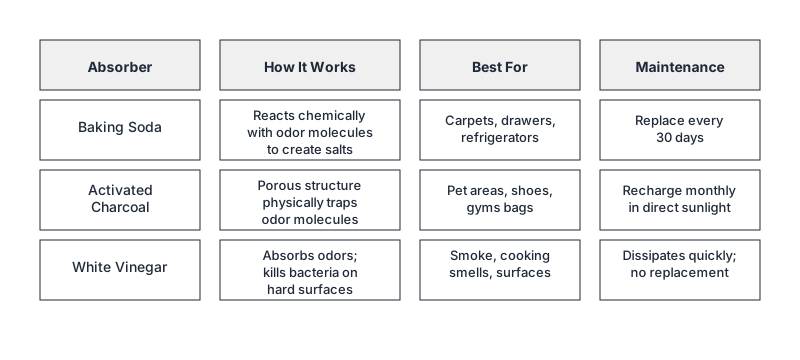
Sodium bicarbonate is one of the most effective natural odor neutralizers available. It works by reacting chemically with both acidic and basic odor molecules, converting them to odorless salts. Sprinkle it on carpets, let it sit for 15–30 minutes, then vacuum. Place an open box in the refrigerator or a small dish in a musty cupboard. Replace every 30 days.
Activated Charcoal
Activated charcoal (also sold as activated carbon) has a porous structure that traps odor molecules through adsorption. Unlike baking soda, it doesn’t react chemically — it physically captures molecules in its vast surface area. Bamboo charcoal bags are a popular form: place them near pet areas, shoe racks, or gym bags. Recharge them monthly by leaving them in direct sunlight for two hours, which releases trapped molecules and restores their capacity.
White Vinegar
A small bowl of white vinegar left in a room overnight absorbs many odors — particularly smoke and cooking smells. The vinegar smell itself dissipates quickly once you remove the bowl. You can also wipe down hard surfaces with a diluted vinegar solution (1:1 with water) to kill odor-causing bacteria on contact.
Salt
Coarse salt is often overlooked, but it’s mildly hygroscopic and can absorb moisture in small, enclosed spaces like wardrobes and shoe cupboards. Combine it with dried herbs for a simple, pleasant sachet.
Plant-Based and Botanical Fixes
Houseplants for Air Quality
NASA’s Clean Air Study, though conducted in sealed chambers, put houseplants on the map as air purifiers. The real-world effect is modest — you’d need dozens of plants per room to match a HEPA filter — but plants do contribute to fresher air in other ways. They raise humidity slightly (helpful in winter), and some release fragrant compounds naturally. Peace lilies, lavender (if you can get enough light), and gardenia all add gentle scent without artificial additives.
Simmer Pots
A simmer pot is one of the fastest ways to make a home smell genuinely inviting. Add water to a small pot, toss in a combination of aromatics, and let it heat on the lowest flame. Classic combinations include:
- Sliced orange + cinnamon stick + cloves + a few drops of vanilla extract
- Rosemary + lemon slices + a bay leaf
- Apple slices + cardamom pods + star anise
Keep an eye on the water level and top it up every 30 minutes. The steam carries scent throughout a floor in about 20 minutes.

Dried Herbs and Sachets
Homemade sachets take about five minutes to make. Fill a small muslin or cloth bag with dried lavender, cedar shavings, dried rose petals, or cloves. Place them in drawers, wardrobes, or pillowcases. Cedar in particular is a time-tested moth deterrent and has a clean, woody scent that’s never cloying.
Essential Oil Diffusers
Cold-water ultrasonic diffusers disperse essential oil molecules without heat, which means you get the full aromatic profile of the oil. A few drops of eucalyptus, tea tree, or peppermint oil can make a bathroom smell genuinely clean. Lavender works well in bedrooms. For a kitchen, citrus oils (lemon, bergamot, grapefruit) cut through cooking smells effectively.
One caution: essential oils are not pet-safe across the board. Tea tree, eucalyptus, and many citrus oils are toxic to cats if inhaled in concentrated quantities or applied to skin. Keep diffusers in rooms your pets don’t frequent, or stick to pet-safe options like cedarwood (for dogs only) or check with your vet.
Room-by-Room Strategies
Kitchen
The kitchen generates more odors than any other room. Targeted habits make the biggest difference:
- Empty the bin every 2–3 days, not weekly. Line it with newspaper to absorb moisture.
- Clean the drain weekly with a mixture of baking soda followed by white vinegar, then flush with hot water. This breaks up the biofilm that causes that persistent drain smell.
- Wipe down your microwave after each use — splattered food goes rancid quickly in a warm, enclosed space.
- Keep a small dish of coffee grounds on the counter. Coffee is an excellent odor absorber and doesn’t leave a lingering smell of its own after an hour or two.
For a deeper dive into tackling cooking smells at the source, check out How to Deodorize a Kitchen Naturally (No Commercial Products).
Bathroom
- Keep surfaces dry between uses.
- Replace bath mats frequently — they stay damp and are a breeding ground for mildew.
- Hang a small bundle of dried eucalyptus from the showerhead. Steam from the shower activates the oils and makes the room smell like a spa.
Living Room and Bedrooms
- Vacuum upholstery monthly. Sofas absorb body oils, pet dander, and food odors relentlessly.
- Wash curtains and cushion covers every 2–3 months. Fabric holds odor far longer than hard surfaces.
- Spritz a DIY linen spray on soft furnishings: mix 1 cup of distilled water, 2 tablespoons of isopropyl alcohol (or witch hazel), and 20 drops of your preferred essential oil in a spray bottle. Shake before each use.
Since mattresses trap odors that are easy to overlook, our guide to How to Clean a Mattress at Home: Beyond Just Changing Sheets is worth a read too.
Pet Areas
- Wash pet bedding weekly in hot water.
- Sprinkle baking soda on the pet bed before washing and on the carpet around the bed between washes.
- Activated charcoal bags near litter boxes make a noticeable difference.
- Enzymatic cleaners — rather than standard soap — break down urine proteins at the molecular level, which is the only way to permanently remove that odor rather than cover it.

Habits That Sustain a Fresh Home
Products and techniques only get you so far. The homes that consistently smell fresh have routines behind them:
- Take shoes off at the door. Shoes track in outdoor bacteria, soil compounds, and pollutants that become embedded in carpets and hard floors.
- Don’t leave wet laundry in the machine. Even two hours is enough for mildew to begin forming in a damp drum.
- Clean the washing machine monthly — run an empty hot cycle with a cup of white vinegar or a proprietary washing machine cleaner.
- Groom pets regularly. Most pet odor comes from skin oils and dander, not the fur itself. Regular grooming dramatically reduces how much oil is deposited on your furniture.
- Declutter soft goods. Every cushion, throw, rug, and curtain is an odor sponge. Fewer soft surfaces means easier maintenance.
What to Skip
A few popular “natural” remedies are worth questioning:
- Scented candles marketed as natural — Many contain paraffin wax (a petroleum byproduct) and synthetic fragrance even when labeled “aromatherapy.” If you want candles, look for 100% beeswax or soy wax with essential oil fragrance and a cotton wick.
- Fabric softener sheets in vents — This is a Pinterest perennial. Dryer sheets placed over air vents don’t purify air; they just add synthetic fragrance to your HVAC airflow and can reduce airflow efficiency.
- Plug-in synthetic air fresheners — Analyses of consumer-product emissions have found that many common air fresheners emit VOCs including formaldehyde and acetaldehyde, compounds classified as carcinogens. They replace one air quality problem with another.
Conclusion
Making your home smell naturally fresh isn’t about adding scent — it’s about removing what shouldn’t be there. Good ventilation, moisture control, and a handful of natural absorbers do more than any spray ever could. Layer on botanical touches like simmer pots, dried sachets, or a diffuser if you want an active scent, and build the habits that keep odors from accumulating in the first place.
Start with the room that bothers you most. Fix the source, absorb what remains, then add fragrance if you want to. That order matters.