How to Deodorize a Kitchen Naturally (No Commercial Products)

A kitchen that smells bad is rarely a mystery — it’s almost always a combination of grease buildup, a forgotten drain, aging produce, or the ghost of last Tuesday’s fish. The good news is that most kitchens can be freshened up entirely with things already in the pantry or cleaning cupboard. No spray cans, no synthetic fragrance, no special trips to the store.
This guide walks through every source of kitchen odor, what actually neutralizes it at a chemical level, and the natural methods that hold up over time.
Why Kitchen Odors Linger (and Why Masking Doesn’t Work)
Most commercial air fresheners work by either masking a smell with a stronger fragrance or temporarily numbing your olfactory receptors with chemicals like cyclodextrin. The underlying odor is still there. Natural deodorizing works differently: it either neutralizes the odor molecules chemically (as baking soda does with acidic and basic compounds) or absorbs volatile organic compounds from the air (as activated charcoal and coffee grounds do).
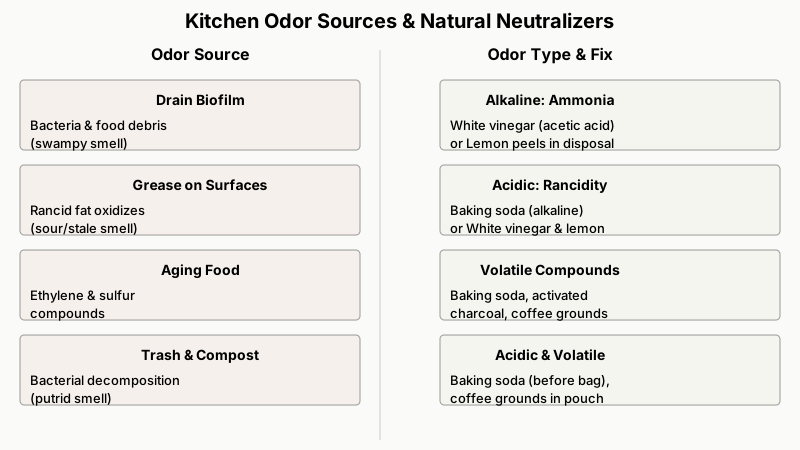
Kitchen odors have a few consistent culprits:
- Drain biofilm — a slick layer of bacteria and food debris inside your sink drain
- Grease on surfaces — rancid fat oxidizes and smells sour or stale
- Refrigerator off-gassing — aging food releases ethylene and sulfur compounds
- Trash and compost bins — obvious, but often undertreated
- Soft furnishings — curtains and chair cushions absorb cooking fumes over time
Once you know the source, the fix is usually simple.
Natural Odor Neutralizers You Probably Already Own
Baking Soda
Sodium bicarbonate sits at a pH of around 8.3, which makes it mildly alkaline. Most kitchen smells — spoiled food, sour drain odors, rancid fat — are acidic. Baking soda reacts with these acid molecules and converts them into neutral salts that don’t smell. It doesn’t just cover the odor; it removes the compound producing it.
How to use it:
- Place an open shallow dish of baking soda inside the fridge (replace every 4–6 weeks).
- Sprinkle a tablespoon directly into the trash bin before adding a bag.
- Make a paste with a little water and scrub the inside of food storage containers.
- Pour half a cup down the drain followed by hot water; let it sit 10 minutes before flushing.
If your main problem is a specific lingering smell like fish or onions rather than general staleness, How to Deodorize a Kitchen Smelling of Fish or Onions offers more targeted fixes.
White Vinegar
Acetic acid in white vinegar is effective against alkaline odors — particularly ammonia-based smells from proteins and certain bacteria. It also cuts grease, which removes one of the main odor reservoirs on kitchen surfaces.
How to use it:
- Wipe down stovetop surfaces, counters, and cabinet fronts with undiluted white vinegar.
- Simmer a small pot of equal parts water and white vinegar for 10–15 minutes — the steam carries acetic acid through the air and neutralizes ambient odors. The vinegar smell itself dissipates within 30 minutes of finishing.
- Add a cup to your dishwasher’s rinse cycle to eliminate that damp, stale smell some dishwashers develop.
Lemon and Citrus
Citric acid cuts grease and the d-limonene in citrus peel is a natural solvent. The smell is also genuinely pleasant — not a chemical approximation of it.
How to use it:
- Rub cut lemon halves over a wooden cutting board after washing; let it sit 5 minutes before rinsing. This lifts embedded food oils and neutralizes the board.
- Drop lemon peels and a few cups of water into a small pot; simmer for 15 minutes.
- Freeze lemon or orange peels and run them through the garbage disposal with cold water to break up biofilm and leave a clean scent.

Salt
Coarse salt is an abrasive and a natural desiccant. Combined with lemon, it’s one of the oldest methods for cleaning wooden boards and bowls. Bacteria that cause odors need moisture — salt removes it.
How to use it:
- Sprinkle coarse salt generously over a wet wooden cutting board; scrub with a lemon half, then rinse and dry immediately.
Coffee Grounds
Spent coffee grounds are a surprisingly effective odor absorber. The porous carbon structure adsorbs (rather than absorbs) volatile molecules. They work particularly well in enclosed spaces.
How to use it:
- Dry used coffee grounds on a baking sheet, then place in a small bowl inside the fridge or a closed cabinet that smells musty.
- A small muslin bag of dry coffee grounds in the trash cabinet significantly reduces ambient odors.
Tackling the Drain — The Most Overlooked Odor Source
If your kitchen smells vaguely swampy even after cleaning, the drain is the likely culprit. Biofilm inside kitchen drains is a layered community of bacteria feeding on fat, food particles, and soap scum. It produces hydrogen sulfide and organic acids — both of which smell bad.
The baking soda and vinegar flush:
- Boil a full kettle of water. Pour it slowly down the drain.
- Immediately follow with half a cup of baking soda. Let it sit for 5 minutes.
- Pour in one cup of white vinegar. It will foam — that’s the acid-base reaction breaking up the biofilm.
- After 10 minutes, flush again with another kettle of boiling water.
Do this once a week and you’ll rarely have drain odor. For stubborn cases, a long-handled drain brush (not a chemical drain cleaner) physically removes the biofilm that chemicals leave behind.
Citrus and salt scrub for the drain rim: The rubber flap and the drain rim itself are often coated in grease. Scrub these with a cut lemon dipped in salt before your vinegar flush.

The Fridge: Keeping It Honest
Fridges are sealed environments where ethylene gas from fruit accelerates ripening and decay, and sulfur compounds from certain vegetables accumulate. A few strategies work together:
Active odor absorption:
- Keep an open box or shallow bowl of baking soda on the middle shelf. Label it with the date so you actually replace it.
- A small piece of activated charcoal (sold as aquarium or water filter charcoal) works even better than baking soda for strong odors — it adsorbs a wider range of compounds without any chemical reaction.
Preventing the problem:
- Store strong-smelling foods (fish, blue cheese, cut onion) in airtight glass containers rather than plastic wrap, which is gas-permeable.
- Wipe the fridge interior monthly with a solution of one tablespoon baking soda per cup of warm water.
- Keep a single activated charcoal sachet in the crisper drawer where moisture and ethylene concentrate.
Bins, Compost, and the Trash Cabinet
A trash bin is unavoidably smelly, but there are three natural approaches that stack well together:
- Layer baking soda at the bottom of the bin before adding a bag. Refresh with each new bag.
- Dry the bin completely after washing — bacteria thrive in residual moisture more than in the garbage itself.
- Freeze food scraps that go in compost (fish bones, meat scraps, citrus peels) in a small container until collection day. This is one of the most effective single changes you can make.
For the cabinet under the sink or a trash enclosure that smells musty: a small bowl of dry coffee grounds, or a few pieces of activated charcoal in a mesh bag, lasts two to three weeks before needing replacement.
Since food waste is also a magnet for uninvited insects, How to Prevent Fruit Flies in Your Kitchen Naturally pairs well with a cleaner-smelling bin routine.
Soft Surfaces and Air Quality
Curtains, upholstered chair cushions, and even dish towels hold cooking fumes surprisingly well. Grease particles deposit on fabric fibers and oxidize over weeks.
- Baking soda dry treatment: Sprinkle lightly over fabric surfaces, leave for 30 minutes, then vacuum. Works for chair cushions and fabric lamp shades.
- Vodka spray: Plain, cheap vodka in a spray bottle is an old theatrical trick — the alcohol denatures odor-causing proteins on fabric without leaving a scent of its own once dry. It is genuinely effective and worth knowing.
- Ventilation first: When cooking anything particularly aromatic (fish, onions, spices), run the range hood exhaust fan at full power from the start, not once the smell is already in the room. Opening two windows to create cross-ventilation takes 10 minutes to clear a kitchen in a way that no odor absorber can replicate.

Simmer Pots — Natural Fragrance Without Synthetic Additives
Once the underlying odors are neutralized, a simmer pot adds a genuinely pleasant ambient scent without any synthetic fragrance compounds. This is not masking — by the time you use a simmer pot, the odor source should already be handled.
A reliable combination:
- 1 sliced lemon or orange
- 2 cinnamon sticks or 1 teaspoon of ground cinnamon
- A thumb of fresh ginger, sliced
- A few cloves
- Enough water to fill the pot halfway
Simmer on the lowest heat, adding water as needed. The warm citrus and spice release into the air for 45 minutes to an hour. Strain and discard when done; the liquid doesn’t keep.
Variations to consider: rosemary with lemon; apple scraps with star anise; cedar chips with dried orange peel. All of these use real plant compounds rather than synthetic approximations.
A Practical Weekly Routine
The most effective kitchen deodorizing strategy is maintenance rather than reaction. A short weekly routine prevents any single odor from establishing itself:
| Task | Method | Frequency |
|---|---|---|
| Drain flush | Baking soda + vinegar + boiling water | Weekly |
| Fridge wipe | Baking soda solution | Monthly |
| Cutting board | Lemon + coarse salt scrub | After each fish or onion use |
| Bin base layer | Fresh baking soda | With each new bag |
| Surfaces | White vinegar wipe | Weekly |
| Soft furnishings | Baking soda + vacuum | Monthly |
If you want to extend these same absorb-don’t-mask principles to the rest of your house, How to Make Your Home Smell Fresh Naturally: Absorb, Don’t Mask is a great next read.
Conclusion
Natural kitchen deodorizing works because it addresses the chemistry of odor molecules directly — baking soda neutralizing acids, vinegar neutralizing alkaline compounds, charcoal adsorbing volatiles, salt desiccating bacterial environments. The methods above have been used in kitchens for generations precisely because they’re effective, not just traditional.
The key shift in thinking: stop reaching for something to spray and start asking where the smell is actually coming from. Usually it’s the drain, the bin, or a neglected surface that needs a physical clean more than an air freshener. Once you track down the source, the fix takes less than five minutes and costs almost nothing.