How to Plan Balanced Meals Around Pantry Staples

Why Your Pantry Is the Best Meal-Planning Tool You Have
Most people treat their pantry as a backup — the place you raid when you forget to shop or when the fridge is nearly empty. That’s exactly backwards. A well-stocked pantry is where consistent, affordable, nutritious eating actually starts. Ingredient for ingredient, shelf-stable staples are cheaper, less wasteful, and more versatile than fresh foods that spoil mid-week.
The trick isn’t having a perfectly curated collection of exotic grains. It’s knowing how to read what you already own and build a nutritionally complete plate around it. This guide walks through that process — from understanding what makes a meal balanced, to mapping specific pantry categories to nutrients, to building real weeknight dinners without relying on a grocery run.

For more inspiration on cooking creatively from what’s already on your shelves, check out Cook With What You Have: A Practical Pantry Guide.
What Makes a Meal Nutritionally Balanced?
Before mapping pantry staples to any framework, it helps to agree on what “balanced” actually means. Dietitians typically describe a balanced plate as one that includes:
- A complex carbohydrate — for sustained energy (whole grains, legumes, root vegetables)
- A quality protein source — for satiety and tissue repair (legumes, eggs, canned fish, dairy, nuts)
- Healthy fats — for fat-soluble vitamin absorption (olive oil, nuts, seeds, canned fish)
- Fiber and micronutrients — from vegetables and fruit, fresh or canned
No single meal needs to hit every micronutrient target, but across a day’s eating, hitting these four pillars reliably keeps energy steady and nutritional gaps small.
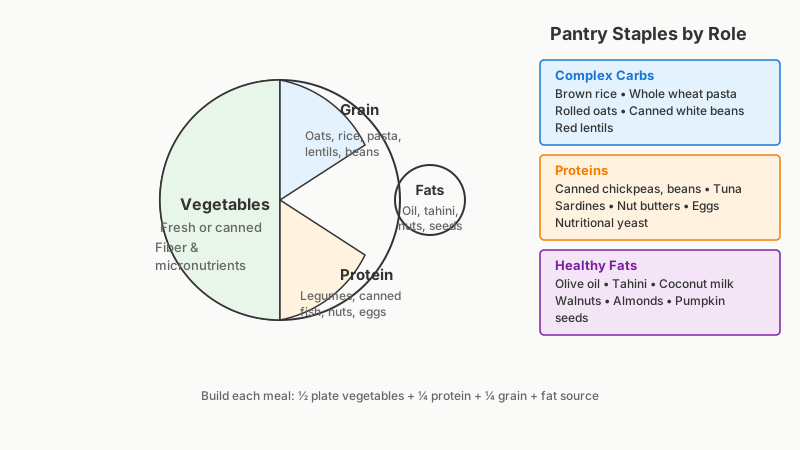
A practical shorthand: half your plate vegetables, a quarter protein, a quarter grain or starchy carb, plus a fat source. This rough division comes from Harvard’s Healthy Eating Plate model and works for most adults without counting a single calorie.
Mapping Pantry Staples to the Four Pillars
Here’s where the practical work happens. Most well-stocked pantries already contain representatives from every pillar — they just don’t look that way until you sort them by function rather than by ingredient type.
Complex Carbohydrates: The Pantry’s Core
This is the category pantries do best. Common options and how they compare:
- Rolled oats — Fast-cooking, high in soluble fiber (beta-glucan), dirt cheap. Beyond breakfast porridge, they bulk up savory patties and meatloaf.
- Brown rice — Longer cooking time, but nutrient-dense. A 1-cup cooked serving provides about 3.5g of fiber and meaningful amounts of magnesium.
- Canned or dried lentils — Technically a legume, but they fill the carb role on a plate too, while doubling as protein. Red lentils cook in 15 minutes without soaking.
- Dried pasta (whole wheat) — Whole-wheat pasta has roughly double the fiber of white pasta. It pairs with nearly any pantry protein.
- Canned white beans — High in resistant starch, which feeds gut bacteria and slows glucose absorption.
Protein Sources: More Than You Think
People often assume protein requires refrigeration. It doesn’t:
- Canned chickpeas, black beans, kidney beans — A 400g can of chickpeas delivers roughly 19g of protein and costs under $2 in most markets. Rinse them to reduce sodium by about 40%.
- Canned tuna, sardines, salmon — Sardines in particular are high in omega-3 fatty acids and calcium (when eaten with bones). A 100g tin can provide 200–300mg of calcium.
- Eggs — Not technically pantry, but fridge-stable for weeks. Versatile enough to build a meal around in under 10 minutes.
- Natural peanut butter / almond butter — Two tablespoons provide 7–8g of protein alongside healthy fats. Stir into sauces, soups, or noodle dishes beyond just spreading on toast.
- Shelf-stable tofu (aseptic packaged) — Available in many Asian grocers; keeps at room temperature unopened.
- Nutritional yeast — Cheesy-flavored flakes that are a surprisingly complete protein source and naturally high in B-vitamins when unfortified varieties are used.
Fats: Small Volume, Big Impact
- Extra-virgin olive oil — Rich in oleic acid and polyphenols. A drizzle of 1–2 tablespoons finishes a dish and significantly boosts fat-soluble vitamin absorption from any vegetables alongside it.
- Tahini (sesame paste) — A jar in the pantry unlocks dozens of sauces and dressings. Two tablespoons contain about 5g of protein and healthy unsaturated fats.
- Canned coconut milk — Useful for curries and soups; higher in saturated fat than olive oil, but brings richness and works well in plant-based cooking.
- Walnuts, almonds, pumpkin seeds — Snack-level fats that punch up salads, grain bowls, and oatmeal.
Vegetables and Micronutrients: Fresh Isn’t Your Only Option
This is the area where pantry-first cooking gets underestimated. Consider:
- Canned tomatoes (whole, crushed, diced) — Cooked tomatoes contain more bioavailable lycopene than fresh ones. A can of diced tomatoes is a complete sauce base.
- Canned pumpkin — Pure canned pumpkin (not pie filling) is loaded with beta-carotene and fiber. Stir into oatmeal, soups, or pasta sauce.
- Sundried tomatoes — Concentrated flavor, vitamin C, potassium, iron.
- Dried mushrooms (porcini, shiitake) — Rehydrate in 20 minutes; they provide glutamates for savory depth and some B-vitamins including B2 and D (if sun-dried).
- Jarred roasted red peppers — Ready to eat, high in vitamin C.
- Frozen vegetables — Not shelf-stable in the traditional sense, but worth mentioning because frozen spinach, peas, and corn are nutritionally comparable to fresh and require no prep.

A Practical System: The Pantry Meal Formula
Once you understand the pillars, you can slot any combination of staples into a reliable framework. Call it the Grain + Legume/Protein + Fat + Vegetable formula:
Step 1: Pick your grain base. Rice, pasta, lentils, or oats.
Step 2: Pick your protein. Canned beans, canned fish, eggs, nut butter, or tofu.
Step 3: Pick your fat/flavor vehicle. Olive oil, tahini, coconut milk, or crushed nuts.
Step 4: Add vegetable volume and flavor. Canned tomatoes, frozen peas, jarred peppers, dried mushrooms.
Step 5: Season with pantry aromatics. Garlic (jarred works), dried herbs, spice blends like cumin + coriander, smoked paprika, or miso paste.
Five Real Meals Built from the Formula
1. Red Lentil Dal Base: red lentils. Protein: lentils themselves. Fat: olive oil + coconut milk. Veg: canned tomatoes, frozen spinach. Season: cumin, turmeric, garlic. Ready in 30 minutes, complete protein profile when served with rice.
2. Tuna and White Bean Salad Base: canned white beans. Protein: canned tuna. Fat: olive oil + tahini dressing. Veg: jarred roasted peppers, sundried tomatoes. Season: lemon juice (bottled is fine), black pepper, dried oregano. No cooking required.
3. Peanut Noodles with Frozen Edamame Base: whole-wheat spaghetti. Protein: peanut butter + edamame. Fat: sesame oil + peanut butter. Veg: frozen edamame, jarred mushrooms. Season: soy sauce, rice vinegar, chili flakes. 20 minutes, high in plant protein.
4. Chickpea and Tomato Shakshuka Base: canned chickpeas. Protein: chickpeas + eggs (two per person). Fat: olive oil. Veg: canned tomatoes, jarred peppers. Season: smoked paprika, cumin, garlic. A one-pan dinner that feels substantial and cooks in 25 minutes.
5. Oat and Sardine Savory Bowl (yes, this works) Base: steel-cut oats cooked savory. Protein: sardines. Fat: olive oil, sardine oil. Veg: canned pumpkin stirred into oats, scallions (if available). Season: miso, black pepper. Unusual but genuinely filling and rich in omega-3s and calcium.
Meal Planning Across a Week Without Repeated Meals
The goal of pantry-first planning is variety, not monotony. A few principles that help:
Rotate your grain base. If Monday is lentil-based, make Wednesday pasta and Friday oats or rice. This automatically changes the flavor profile without much creative effort.
Use one can in two ways. Open a 400g can of chickpeas; use half for a quick hummus (blended with tahini and lemon), and the other half in a curry. The single purchase does double duty.
Batch-cook the slowest element. Dried beans take 60–90 minutes. Cook a large pot on a Sunday and refrigerate portions. The rest of the week’s legume meals become 15-minute assemblies.
Keep a rotation of three sauces. If you can make a tomato base, a peanut/tahini sauce, and a spiced coconut broth from pantry staples, you have three completely different meal flavors to rotate your proteins and grains through. The formula stays the same; the taste doesn’t.
Audit before you shop. Actually look at what’s on the shelf. Most people have enough for 3–4 meals already. Buy fresh produce to fill the vegetable gap, rather than replacing ingredients you already own.

If you want to extend this approach beyond a single week, How to Meal Plan a Full Month Without Repetition shows how to keep variety going for a full month.
If you want a more structured framework for stringing these meals together across seven days, our guide Beginner Guide to Meal Planning: Start By Auditing Your Week covers the step-by-step process.
Nutritional Pitfalls to Watch and How to Avoid Them
Pantry eating is genuinely healthy, but a few blind spots are worth knowing:
Sodium — Canned beans and canned tomatoes are often high in added salt. Rinsing beans reduces sodium significantly. Look for “no added salt” varieties if you eat canned goods daily.
Calcium and vitamin D — If you’re avoiding dairy, canned sardines with bones are one of the best non-dairy calcium sources available. Fortified plant milks (shelf-stable versions exist) and nutritional yeast with added B12 help cover gaps.
Iron absorption — Plant-based iron (non-heme iron from lentils and beans) is less bioavailable than heme iron. Pairing iron-rich foods with a vitamin C source — canned tomatoes, jarred peppers, bottled lemon juice — meaningfully improves absorption.
Variety fatigue — Eating beans every day without varying preparation gets old fast. Changing the cuisine framing (Mexican spices one night, Indian the next, Mediterranean after that) makes the same staples feel completely different.
Frequently Asked Questions
Can you get enough protein from pantry staples alone?
Yes, comfortably. A meal combining a cup of cooked lentils (~18g protein) with a serving of canned tuna (~25g) or two eggs (~12g) easily meets the protein needs of most adults for a sitting. Vary sources across the day and the gaps fill themselves.
How do I avoid meals that taste flat when cooking from the pantry?
Flavor in pantry cooking comes primarily from fat (olive oil, tahini), acid (vinegar, bottled lemon juice, canned tomatoes), and aromatics (garlic powder, dried herbs, spice blends). Build each meal with at least one element from each of those three categories and the dish will rarely taste thin.
Is canned food as nutritious as fresh?
For most staples, yes — sometimes more so. The canning process can reduce heat-sensitive vitamins like vitamin C slightly, but it makes lycopene in tomatoes more bioavailable and preserves fiber and minerals well. Reviews comparing preservation methods have found that canned fruits and vegetables often match or exceed fresh equivalents in key nutrient retention.
What’s the cheapest balanced meal you can build from a typical pantry?
A red lentil soup with canned tomatoes, garlic, cumin, and olive oil served over rice is arguably the most cost-effective balanced meal most pantries can produce. Depending on local prices, the cost per serving can fall below $1.50 with high fiber, protein, and micronutrient content.
How long do pantry staples actually last?
Dried legumes and white rice are stable for 2–5 years when stored in airtight containers away from light and heat. Canned goods are typically best within 2–5 years of their production date, though the food safety organization USDA notes that most canned foods remain safe indefinitely as long as the can is undamaged and properly sealed. Oils and nut butters have shorter windows — roughly 1–2 years unopened.
Putting It All Together
Balanced pantry-based eating doesn’t require a specific method or a shopping list of trendy ingredients. It requires knowing what each item on your shelf contributes nutritionally and having a mental template for assembling those contributions into a complete plate.
Grain plus legume or canned protein, a fat vehicle, some kind of vegetable, and aromatic seasoning. That five-element formula works for breakfast, lunch, or dinner, in cuisines from Southeast Asia to the Mediterranean to Central America. The pantry doesn’t limit you — it focuses you, which for most busy households is exactly what practical meal planning needs.
Start this week by opening every cupboard and sorting what you see into the four pillars. You’ll likely find you’re already three-quarters of the way toward a week’s worth of balanced meals.