How to Meal Plan a Full Month Without Repetition

Planning meals for an entire month sounds like a logistical nightmare — until you have a system. Most people who try it once and give up do so because they picked random recipes, ran out of ideas by week two, and ended up eating the same Tuesday pasta every week. This guide fixes that by giving you an actual framework: how to build variety, how to stock a pantry that makes it possible, and how to think about a month of food without losing your mind.
Start With a Category Grid, Not a Recipe List
The biggest mistake in monthly meal planning is starting with specific recipes. You open a cookbook or a food blog, save thirty dishes, and then realize half of them use the same protein and three require an ingredient you can only find at one specialty shop.
Instead, build a category grid first. Divide your dinners (or whatever meal you’re planning) into buckets:
- Protein type: chicken, beef, pork, fish, shellfish, legumes, eggs, tofu
- Cuisine style: Italian, Mexican, Asian, Middle Eastern, American comfort, Mediterranean
- Cooking method: sheet pan, stovetop skillet, slow cooker, soup/stew, salad-based, grain bowl
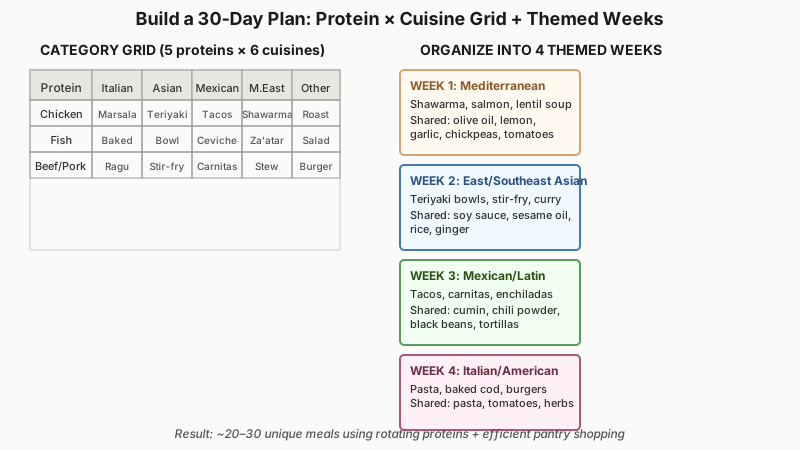
For a 30-day plan, you have roughly 30 dinners. If you rotate through 5 proteins × 6 cuisine styles, every combination is unique. You don’t need 30 completely different cooking methods — three or four is fine — but varying protein and cuisine alone breaks the repetition cycle most households fall into.
Build a simple grid on paper or in a spreadsheet. Columns are cuisine styles; rows are proteins. Fill in the boxes with one dish each. You’ll end up with a map of 20–30 meals before you’ve even named a single recipe.

If you’re still working out the fundamentals before diving into a full month, Beginner Guide to Meal Planning: Start By Auditing Your Week is a useful starting point for auditing your current habits.
Build Your Meal Rotation in Themed Weeks
Once you have your category grid, organize the month into four themed weeks. This isn’t just aesthetically pleasing — it has a practical payoff. Themed weeks let you batch-buy ingredients efficiently and reduce food waste because similar cuisines share pantry staples.
Week 1 — Mediterranean/Middle Eastern focus: Think roasted chicken shawarma, lentil soup, baked salmon with za’atar, shrimp with garlic and orzo, a chickpea stew. Shared pantry items: olive oil, lemons, garlic, canned tomatoes, chickpeas.
Week 2 — East and Southeast Asian focus: Teriyaki salmon bowls, tofu stir-fry with bok choy, beef and broccoli, Thai green curry with shrimp, egg fried rice with leftover vegetables. Shared items: soy sauce, sesame oil, rice, fresh ginger.
Week 3 — Mexican and Latin American focus: Chicken tacos, black bean enchiladas, shrimp fajitas, pork carnitas (slow cooker), stuffed bell peppers with ground beef and rice. Shared items: cumin, chili powder, canned black beans, tortillas.
Week 4 — Italian and American comfort focus: Pasta with turkey Bolognese, baked cod with potatoes, chicken marsala, white bean and kale soup, beef burger bowls with roasted vegetables. Shared items: pasta, canned tomatoes again, parmesan, dried herbs.
The point isn’t to eat authentically regional food every night — it’s to use theming as a memory and shopping shortcut. You buy za’atar once in Week 1 and use it across three meals rather than buying five different spice blends for five unrelated dishes.
The No-Repetition Rule in Practice
Complete, never-repeating variety over 30 days is both achievable and slightly overrated as a goal. Here’s what actually matters:
Same protein, different form: Chicken thighs roasted whole (Week 1) and shredded chicken in tacos (Week 3) feel like completely different meals. Salmon on a sheet pan (Week 1) and salmon in a rice bowl (Week 2) are distinct eating experiences. Don’t ban ingredients — just change how you use them.
Different side dishes transform the main: Ground beef in enchiladas, ground beef in stuffed peppers, and ground beef in a burger bowl are not the same meal if the surrounding flavors are distinct. The side and the sauce create the experience.
Lunch vs. dinner asymmetry: Many meal planners obsess over dinner variety but accept that lunches will be repetitive — and that’s fine. A good rule: plan 4–5 rotating lunch formats (grain bowl, wrap, soup, leftovers, salad) rather than 20 unique lunch recipes. Save the creative energy for dinners.
Leave a few flex nights: Don’t schedule all 30 nights. Leave 4–5 as flex nights — pizza, takeout, or whatever’s in the fridge. A rigid 30-for-30 plan will break the moment someone gets sick or you have an unexpected dinner invitation.

Pantry Architecture: What You Need Before You Shop
Monthly meal planning only works if your pantry can support it. Buying every ingredient fresh for every meal means weekly grocery runs and decision fatigue. The pantry backbone you need:
Grains and starches (shelf-stable for months): basmati rice, short-grain rice, dried pasta in two shapes, quinoa, red lentils, canned chickpeas, canned black beans, dried farro.
Canned goods: crushed tomatoes, diced tomatoes, coconut milk, chicken broth (cartons or cans), canned tuna and salmon.
Oils and acids: extra-virgin olive oil, neutral oil (avocado or vegetable), sesame oil, rice vinegar, apple cider vinegar, soy sauce or tamari, fish sauce.
Dried spices by cuisine zone: keep them grouped. Mediterranean zone: za’atar, cumin, smoked paprika, dried oregano, turmeric. Asian zone: five-spice powder, white pepper, ground ginger, chili flakes. Mexican zone: chili powder, cumin (shared), dried chipotle, coriander.
Freezer staples: shrimp (frozen, peeled), ground beef or turkey in 1-lb portions, chicken thighs, edamame, frozen corn, frozen peas. A well-stocked freezer means that even when Week 3 turns chaotic, dinner is still possible.
The practical test: if your pantry can produce a complete meal with nothing but what’s on those shelves plus one or two fresh vegetables, it’s well-stocked enough for monthly planning.
For the actual cooking side of things, Easy Meal Prep Ideas for the Week: Build Blocks, Not Full Dishes explains how to prep versatile components instead of committing to whole dishes ahead of time.
How to Actually Write Out the Plan
Sit down once — ideally on a weekend — and map out the full month before you grocery shop. Here’s the sequence:
-
Fill the category grid (15–20 minutes). Don’t look for recipes yet. Just name a dish for each box: “chicken, Thai” = green curry. “Fish, Italian” = baked cod with capers.
-
Assign meals to a calendar (10 minutes). Roughly match cooking effort to the day. Sheet pan meals on busy weeknights. Slow cooker meals on days you’ll be out all day. More involved cooking for weekend evenings.
-
Look up recipes only after the calendar is filled (20–30 minutes). Find one reliable recipe per dish. Save or print it. Don’t browse — you’ll just add more tabs and create more confusion.
-
Generate a master shopping list broken into four weekly grocery orders (15 minutes). Buy pantry staples once at the start of the month. Buy fresh produce and protein weekly.
-
Prep what you can each Sunday: cook a pot of grains, wash and chop vegetables, marinate proteins. You don’t need to fully batch-cook everything — just reduce the friction of weeknight cooking.
The total planning time is usually under two hours. The payoff is not having to decide what’s for dinner for thirty nights, not wasting food, and eating more varied meals than you would through spontaneous grocery shopping.
Handling Dietary Constraints Without Losing Variety
If you’re planning for a household with dietary restrictions — vegetarian family members, gluten intolerance, someone who doesn’t eat pork — the category grid method still works. You simply remove the unavailable rows and expand the others.
A fully vegetarian month is easier than most people think. The protein row expands to: lentils, chickpeas, tofu, tempeh, eggs, cheese-based dishes, white beans, black beans. That’s eight protein sources before you’ve even considered ingredient combinations. An all-legume week (lentil soup, chickpea curry, white bean stew, tofu stir-fry, black bean tacos) can taste wildly different night to night.
For gluten-free households, the main adaptation is swapping pasta for rice, using tamari instead of soy sauce, and checking that spice blends don’t contain wheat-based fillers. The rest of the structure holds.

When the Plan Falls Apart (And It Will)
Every monthly plan hits turbulence around week two. Someone comes home late, the fish you were going to use smells off, or everyone wants comfort food on a rainy Wednesday when the plan says grain bowl.
The fix is a swap rule: treat the plan as a list of this month’s meals in any order, not a rigid schedule. If Wednesday’s planned teriyaki salmon becomes Sunday’s, that’s fine. You still have the ingredients (or they’re in the freezer). You’re not failing the plan — you’re using it as a menu rather than a mandate.
Also: plan for at least one deliberately easy week. Week 4 in any household tends to be the most chaotic. Put your simplest meals there — egg fried rice, pasta with marinara, a big frittata — so the bar for success stays low when energy is lowest.
Conclusion
A no-repetition monthly meal plan isn’t about cuisine perfectionism or cooking elaborate meals. It’s a structural decision: build a category grid, theme your weeks, stock your pantry to support those themes, and write the plan before you shop — not while you shop.
The variety comes naturally when you’ve diversified by protein, cuisine, and method. You don’t need 30 wildly original recipes. You need a smart framework and the discipline to plan for twenty minutes instead of deciding at 6pm every night.
Do it once, refine it, and the second month takes half the time. By month three, you’ll have a personal recipe library organized by category, a pantry that practically restocks itself, and genuinely less food waste. That’s the actual payoff.