How to Make a Smoothie Without Yogurt: 9 Creamy Swaps

Yogurt shows up in smoothie recipes so often that it can feel like a requirement. It isn’t. Whether you’re dairy-free, out of yogurt, or just tired of the tang, there are at least nine substitutes that produce a genuinely thick, satisfying drink — some of which work even better than yogurt for certain flavor profiles.
This guide covers each substitute, how much to use, and when each one makes the most sense.
Why People Use Yogurt in Smoothies (and What to Replace)
Yogurt does three specific things:
- Adds creaminess and body — its thick, semi-solid texture prevents a watery result.
- Contributes protein — Greek yogurt in particular can add 10–17 grams per half-cup.
- Provides a mild tang — which balances sweet fruit.
Knowing which of those functions matters most to you will help you pick the right swap. If you mostly want creaminess, frozen banana is your fastest fix. If you need protein, silken tofu or hemp seeds make more sense. If you want that tangy edge, a splash of lemon juice or kefir can replicate it.

9 Substitutes That Actually Work
1. Frozen Banana
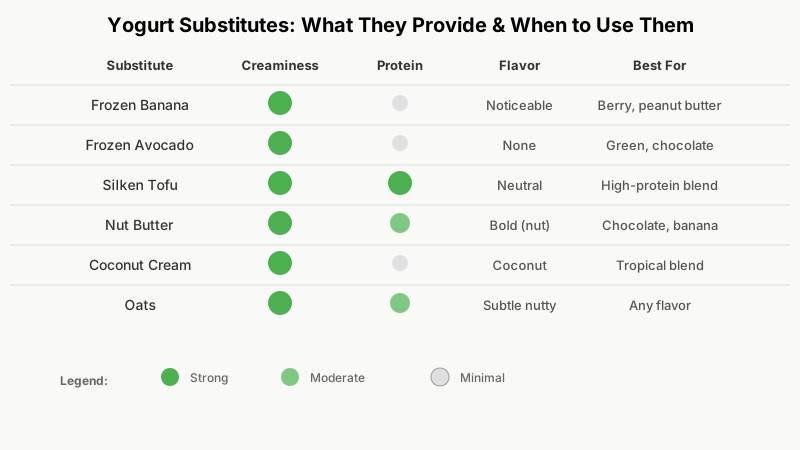
This is the simplest, cheapest option. A frozen ripe banana blended into a smoothie produces a thick, almost milkshake-like consistency. The riper the banana before freezing, the sweeter and creamier the result.
How to use it: Start with one medium frozen banana per serving. Peel and slice bananas before freezing — don’t freeze them whole in the peel, or you’ll be wrestling with ice at 7 a.m.
Best for: Berry smoothies, peanut butter smoothies, or any recipe where a mild sweetness fits.
Heads-up: Banana flavor is noticeable. If your recipe already uses banana, great. If you wanted a purely tropical or citrus flavor, another option might serve you better.
2. Frozen Avocado
Avocado creates a luxuriously smooth texture with almost no flavor intrusion. It also adds heart-healthy monounsaturated fats, which slow sugar absorption and keep you fuller longer.
How to use it: About a quarter of a ripe avocado per serving, ideally frozen beforehand. Fresh avocado works too, but frozen avocado chunks are now sold pre-packed in many grocery stores if you don’t want to waste a whole fruit.
Best for: Green smoothies, chocolate smoothies (avocado + cacao powder is a legitimate combination), or anything where you want richness without sweetness.
3. Silken Tofu
Silken tofu is almost tasteless on its own, which makes it one of the most versatile yogurt replacements. It blends seamlessly, adds serious protein (roughly 8 grams per 100g), and produces a creamy consistency close to Greek yogurt’s.
How to use it: About ¼ to ½ cup per serving. Use silken or soft tofu — firm tofu doesn’t blend smoothly and can leave a gritty texture.
Best for: High-protein smoothies, vanilla or berry flavors, meal-replacement drinks.
4. Nut Butter (Almond, Cashew, or Peanut)
A spoonful of nut butter thickens a smoothie and adds healthy fats plus some protein. Cashew butter is the mildest and creamiest; almond butter adds a subtle nuttiness; peanut butter is the boldest flavor.
How to use it: One to two tablespoons per serving. Add it directly — no prep needed. Blend thoroughly, since nut butter can clump if the blender only runs briefly.
Best for: Chocolate smoothies, banana smoothies, coffee-based smoothies. Less ideal for purely fruit-forward flavors where the nut taste competes.
For maximum control over flavor and cost, check out How to Make Homemade Nut Butter: From Whole Nuts To Creamy Spread to make your own creamy spoonful from scratch.
5. Coconut Cream or Full-Fat Coconut Milk
Coconut cream is the thick layer that rises to the top of a refrigerated can of full-fat coconut milk. It’s high in fat, which creates a noticeably rich mouthfeel — closer to a tropical dessert than a health drink, depending on your other ingredients.
How to use it: Two to four tablespoons of coconut cream, or a quarter cup of full-fat coconut milk. Canned light coconut milk works but is noticeably thinner.
Best for: Tropical smoothies (mango, pineapple, passion fruit), piña colada-style blends, anything where a coconut note is welcome.

6. Oats (Rolled or Quick-Cook)
Raw oats blended into a smoothie add thickness, fiber, and a subtly nutty, neutral flavor. They also slow down how quickly the drink digests, which means more sustained energy rather than a quick spike.
How to use it: Two to four tablespoons of rolled or quick oats per serving. Add them dry, directly to the blender. Old-fashioned rolled oats work fine in a high-powered blender; if yours is less powerful, quick oats blend more smoothly.
Best for: Breakfast smoothies, peanut butter or banana combinations, anything where you want a porridge-like heartiness.
Note: This slightly changes texture — oat smoothies are thicker and less silky than those made with tofu or avocado. That’s a feature for some people, less appealing for others.
7. Hemp Seeds
Hemp seeds (also sold as hemp hearts) are small, soft, and almost tasteless. Blend them in and they virtually disappear — leaving behind about 10 grams of complete protein and 3 grams of omega-3 fatty acids per three tablespoons. They also add a subtle creaminess that thickens a smoothie slightly.
How to use it: Two to three tablespoons per serving. No soaking required. They blend well in any standard blender.
Best for: Any smoothie where you want a protein boost without changing the flavor. This is probably the most “invisible” substitution on this list.
8. Cashew Milk or Oat Milk (as a richer liquid base)
Most smoothie recipes call for some kind of liquid — water, juice, or milk. Swapping thin liquids for a creamier plant-based milk like oat milk or cashew milk contributes body that partially compensates for the absence of yogurt. Neither will fully replace yogurt’s thickness, but combined with frozen fruit, the result is noticeably more satisfying.
How to use it: Use as the primary liquid in your recipe, typically half a cup to one cup. Full-fat oat milk or barista-edition oat milks are richer than standard versions.
Best for: Any smoothie — this is a baseline upgrade rather than a dedicated swap. Especially good when combined with another thickener from this list.
9. Cauliflower (Frozen)
This one surprises people. Frozen cauliflower florets blend into a smooth, neutral base that contributes creaminess without taste. The result is similar to using frozen banana in texture, but without any sweetness or dominant flavor — and with fewer calories and more fiber.
How to use it: About half a cup of frozen cauliflower florets per serving. Use it frozen; fresh cauliflower doesn’t work nearly as well. A powerful blender helps here — a cheap personal blender may leave small chunks.
Best for: Berry smoothies, green smoothies, or anywhere you want thickness without adding calories, fat, or strong flavors. Good choice for low-sugar diets.
How to Build a Smoothie Without Yogurt (A Simple Framework)
Once you’ve picked your substitute, the structure of a good smoothie stays consistent:
Start with a liquid base: ½ to 1 cup. Options include oat milk, almond milk, cashew milk, coconut milk, or even cold brew coffee.
Add your thickener/yogurt substitute: Choose one or two from the list above based on your goals.
Add frozen fruit: At least one cup. Frozen fruit does double duty — it flavors the smoothie and chills it without diluting it the way ice does. Mango, mixed berries, pineapple, and cherries all work well.
Add extras if needed: A tablespoon of nut butter, a scoop of protein powder, a handful of spinach (you won’t taste it in a berry smoothie), a teaspoon of vanilla extract, or a pinch of cinnamon.
Blend, taste, adjust: If it’s too thick, add a splash more liquid. If it’s too thin, add more frozen fruit or a spoonful of nut butter.

If you want an even thicker, spoonable result, our guide to How to Make a Smoothie Bowl at Home: The Thick Base Secret shows how to nail that consistency every time.
A Few Recipes to Try Right Now
Peanut Butter Banana (No Yogurt)
- 1 frozen banana
- 1 tbsp peanut butter
- ¾ cup oat milk
- 1 tsp honey (optional)
- Small handful of oats
Blend until smooth. Thick, naturally sweet, and filling.
Tropical Mango Smoothie (Dairy-Free)
- 1 cup frozen mango chunks
- ¼ avocado (or frozen)
- ½ cup full-fat coconut milk
- ½ cup pineapple juice or water
- Squeeze of lime
Blend and serve immediately. Rich, citrusy, and reminiscent of a mango lassi without any dairy.
High-Protein Berry Smoothie
- 1 cup frozen mixed berries
- ½ cup silken tofu
- ¾ cup cashew milk
- 2 tbsp hemp seeds
- 1 tsp vanilla extract
Blend until completely smooth. Around 15–18 grams of protein depending on exact portions.
Practical Tips for Better Results
Always use frozen fruit over ice. Ice waters down flavor as it melts; frozen fruit keeps the smoothie cold and thick without dilution.
Add liquid first. Pour your liquid into the blender before the solid ingredients. This prevents ingredients from jamming under the blade and protects your blender motor.
Don’t over-blend. Ten to thirty seconds is usually enough. Over-blending heats the smoothie and can make it foamy.
Taste before you sweeten. Ripe frozen fruit is often sweet enough without added honey or syrup. You can always add sweetness; you can’t take it away.
Conclusion
Yogurt is a useful ingredient, not an irreplaceable one. Frozen banana and avocado give you creaminess fast. Silken tofu and hemp seeds cover protein needs quietly. Coconut cream suits tropical flavors. Oats and cauliflower add body without much caloric impact. Pick what matches your flavor goals, your nutritional needs, and whatever’s actually in your freezer right now — and skip the trip to the store.
The best smoothie is usually the one you can make with what you already have.