How to Keep Houseplants Alive While Traveling: Wick Jars And Timers

Leaving home for a week — or a month — shouldn’t mean coming back to a shelf of crispy, yellowed plants. With the right prep, most houseplants can survive your absence without any help at all. Some can handle two or three weeks on their own; others need a simple system. Here’s how to set things up before you leave, so you return to green.
Before You Leave: The First 48 Hours Matter Most
The work you do in the two days before departure makes the biggest difference. Rushing out the door without prepping your plants is the most common reason they die while you’re gone.
Water Deeply, Then Stop
Give every plant a thorough, slow drink the day before you leave — water until it drains freely from the bottom of the pot. This saturates the root zone rather than just wetting the surface. Then stop. Do not water again the morning of your departure. Wet soil sitting in a cool, dim apartment breeds rot and fungus gnats; you want moist, not waterlogged.
The one exception: succulents and cacti. Water them about five days before you leave, not the night before. They store moisture in their tissues and sitting in fresh wet soil while you’re away is more likely to kill them than drought.
Move Plants Away from Direct Sun
Sunlight drives transpiration — the faster a plant loses water through its leaves, the sooner it dries out. Before you leave, shift plants that normally sit in a south- or west-facing window to a spot with bright indirect light. A few feet back from the glass, or near a north-facing window, cuts water loss dramatically without starving the plant of light entirely.
For trips under 10 days, this single move often makes watering systems unnecessary for most drought-tolerant species.
Group Plants Together
Plants transpire continuously, and when you cluster them tightly, they raise the ambient humidity around each other. A tight group of six plants holds more moisture in the air than the same six plants spread across three windowsills. This isn’t dramatic — you won’t notice it in a dry climate on a month-long trip — but for a two-week absence, grouping can buy you a few extra days of viability.
Place them on a tray with a shallow layer of pebbles and water (below the pot bottoms, not touching the drainage holes). As the water evaporates, it adds moisture around the leaves.

Watering Systems That Actually Work
For trips longer than 10 days, passive watering systems are your best option. They range from free DIY setups to inexpensive off-the-shelf products.
The Wick Method
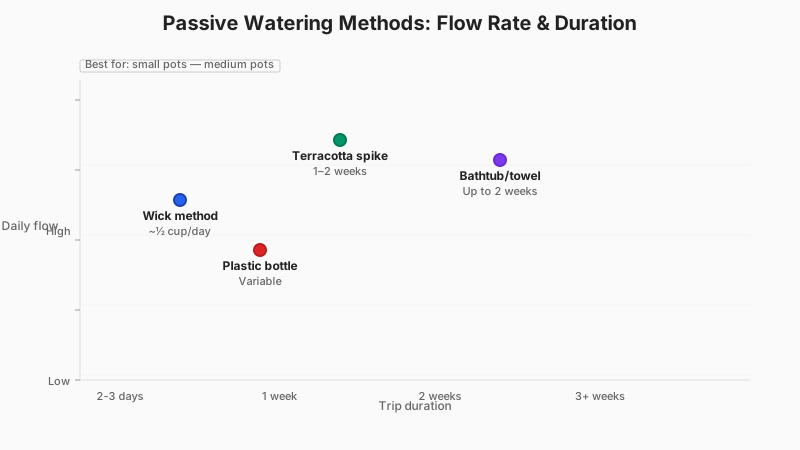
Cut a length of cotton rope or thick cotton shoelace — synthetic materials don’t wick reliably — and insert one end into the soil about two inches deep, near the root zone. Drape the other end into a container of water sitting at the same height or slightly above the pot. The cotton draws water slowly by capillary action.
One wick per small pot is usually enough. For a six-inch pot, a single thick shoelace can reliably move about half a cup of water per day in normal room conditions. Test it for 48 hours before you leave to make sure the flow rate is right for that particular plant.
Self-Watering Globes and Spikes
Terracotta or ceramic watering spikes — sometimes called aqua globes or plant stakes — work on a similar principle. Fill the globe with water, push the pointed spike into the soil, and the terracotta releases moisture as the surrounding soil dries. A standard terracotta spike holds enough water for roughly one to two weeks for a small-to-medium pot, depending on the plant’s thirst and the ambient temperature.
Glass globes (the bulb-shaped ones you’ve probably seen at garden centers) are less reliable. The release rate is harder to control and can flood or dry out unexpectedly. Terracotta spikes are cheaper and more consistent.
Plastic Bottle Drip
A clean plastic water bottle can do the same job for free. Punch two or three small holes in the cap with a pin or thumbtack, fill the bottle with water, invert it, and push the neck directly into the soil. Surface tension and soil resistance control the drip rate. The narrower the holes and the denser the soil, the slower the release.
This works best for medium-thirst plants like pothos, peace lilies, and ferns. For very dry-preferring plants, skip it entirely.
The Bathtub Method
For a collection of many plants — particularly tropical varieties that like consistent moisture — the bathtub or shower tray is an underrated option. Lay an old towel in the bottom of the tub, soak it thoroughly, and set your pots on it. Make sure each pot has drainage holes and is sitting directly on the wet towel, not on a saucer. The plants wick water upward through the drainage holes as they need it.
This works well for up to two weeks for moisture-loving plants and requires no equipment. It doesn’t work for succulents, cacti, snake plants, or anything that dislikes wet roots.

Tools and Tech for Longer Trips
If you travel frequently or for extended periods, some low-cost tools are worth owning permanently.
Moisture Meters
A basic soil moisture meter (they cost under $15 at most garden centers) removes the guesswork from knowing whether your soil is ready to be watered before you leave or whether a DIY drip system is delivering too much. They’re not precision instruments, but they give you a reliable relative reading — wet, moist, or dry — across the root zone, not just the surface.
Automatic Drip Systems
Battery-powered drip irrigation kits designed for indoor or balcony plants can run for weeks on a single set of batteries. You set a schedule — say, 30 seconds of drip every two days — and a small pump delivers water from a reservoir through thin tubing to individual pots. Brands like Claber and Blumat offer reasonably well-reviewed systems. Expect to spend $20–$60 depending on how many plants you’re covering.
The limitation: you need to calibrate these carefully before you leave. Run the system for at least three days while you’re still home and observe how the soil responds. A drip schedule that works for a fern will oversaturate a ZZ plant.
Smart Sensors and Remote Monitoring
Some plant sensors (Xiaomi’s Mi Flora / Flower Care sensor is a widely available example) measure soil moisture, light, temperature, and fertility, then push readings to your phone via Bluetooth or a hub. If you have a neighbor or house-sitter, you can check readings remotely and ask them to water specific plants that show low moisture, rather than asking them to guess or water everything on a fixed schedule.
This is genuinely useful if you have a mix of plants with very different needs — the sensor lets you be specific rather than issuing general instructions.
Asking Someone Else to Help
A plant-sitter is still the most reliable option for any trip over two weeks, especially for a large or varied collection. But how you brief them matters a lot.
Leave Plant-Specific Instructions, Not General Ones
Don’t say “water the plants when they look dry.” Write a simple list: the plant’s name (or a sticky label on the pot), how often to water it, and how much. “The snake plant in the bedroom — water only if you’re gone more than 3 weeks; give it one cup.” “The pothos on the kitchen shelf — water when the top inch of soil feels dry, about once a week.”
If possible, take 60 seconds to show them in person rather than leaving a written note alone.
Don’t Ask Them to Fertilize
Fertilizer applied incorrectly to stressed or dry roots causes chemical burn. Tell your plant-sitter to skip fertilizing entirely while you’re away. You can catch up when you return.

Which Plants Survive Best on Their Own
Some species are genuinely travel-proof for short-to-medium absences. If your collection skews toward these, a two-week trip often needs no system at all, just a good pre-departure water and a move away from the sunny window.
Easiest to leave (10–21 days without watering):
- Snake plant (Sansevieria trifasciata) — stores water in its thick leaves
- ZZ plant (Zamioculcas zamiifolia) — the rhizomes hold significant water reserves
- Cast iron plant (Aspidistra elatior) — lives up to its name
- Pothos (Epipremnum aureum) — wilts dramatically but recovers fast once watered
- Spider plant (Chlorophytum comosum) — tolerates dry periods well
Needs a system for anything over 7 days:
- Peace lily (Spathiphyllum)
- Boston fern (Nephrolepis exaltata)
- Maidenhair fern (Adiantum)
- African violet (Saintpaulia)
- Calathea / Maranta species
Knowing your collection’s drought tolerance is arguably the single most useful thing you can learn as a plant owner who travels.
If you’re choosing which species to travel-proof your collection with, How to Care for Indoor Succulents: Why Overwatering Kills Them Faster explains why succulents tend to handle neglect so well.
When You Return: Don’t Overcompensate
Coming home to wilted plants triggers the instinct to water everything immediately and heavily. Resist it. Check the soil moisture first — if a drip system ran the whole time you were gone, the soil may still be wet. Overwatering a plant that’s already stressed is one of the fastest ways to kill it.
Give each pot the finger test: push your finger about an inch into the soil. Water only if it feels dry at that depth. For succulents and cacti, go two inches down.
If a plant dropped some leaves or wilted significantly, move it somewhere stable (consistent indirect light, no drafts) and wait a few days before doing anything drastic. Most houseplants recover from a difficult week or two if you don’t compound the stress.
A Practical Pre-Travel Checklist
- Water deeply 24 hours before departure (succulents: 5 days before)
- Move plants back from direct sun
- Group plants on a pebble tray
- Set up wick, spike, or drip systems for moisture-loving plants
- Remove any dead or dying leaves (rotting material spreads problems)
- Turn off forced air heating or cooling near plants if possible
- Leave specific written instructions for any plant-sitter
- Check that all pots have working drainage
With a bit of planning spread across one afternoon, most collections handle a trip of two weeks or more without major losses. The plants that die while you’re away usually die because of something that was already wrong — a pot with blocked drainage, a plant sitting in full sun all day, a species that simply wasn’t right for your home. Fixing those issues before you travel pays dividends whether you’re away for a weekend or a month.
For a broader foundation on picking low-maintenance houseplants in the first place, check out Best Houseplants for Beginners: 12 Picks That Actually Survive.