How to Care for Indoor Succulents: Why Overwatering Kills Them Faster

Growing succulents indoors sounds simple — small plants, minimal fuss, practically indestructible. That reputation is half true. Succulents are forgiving compared to a fiddle-leaf fig, but they do have specific needs, and the most common reason they die indoors isn’t neglect — it’s too much kindness. Too much water, too little light, and the wrong pot will kill a succulent faster than forgetting it exists.
This guide cuts through the generic advice to give you a practical, honest framework for keeping indoor succulents genuinely healthy — not just alive, but actively growing and looking good.
1. Light: The Non-Negotiable
Most succulents evolved in high-light environments — deserts, rocky hillsides, and open scrublands. Indoors, the challenge is that even a bright-looking room is dramatically darker than direct outdoor sun.
For the best results:
- South- or east-facing windowsills are your first choice. South-facing windows in the Northern Hemisphere deliver the longest daily light exposure.
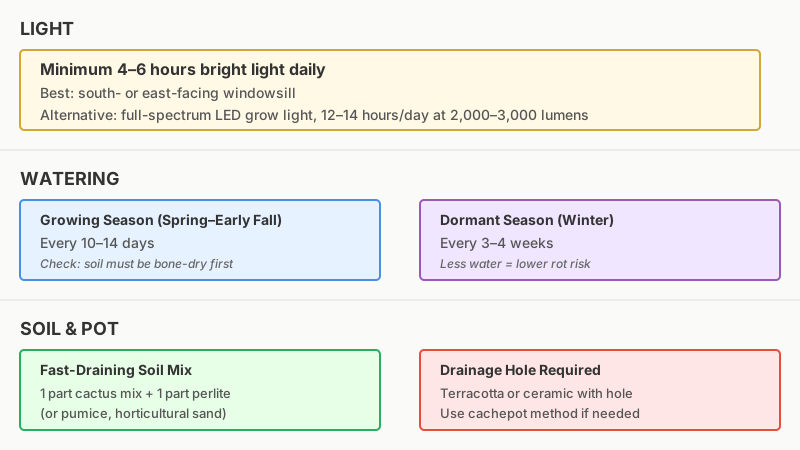
- Aim for at least 4–6 hours of bright, indirect or direct light per day. Some species (Echeveria, Sedum, Aloe) will accept indirect light; others (Crassula, Haworthia) can handle lower light but still benefit from bright spots.
- If your plant starts etiolating — stretching toward the light with unusually long gaps between leaves — it’s telling you it needs more. This is a clear, visible signal.
- Grow lights work well. A full-spectrum LED grow light placed 6–12 inches above the plant for 12–14 hours a day can fully compensate for a dim apartment. Look for fixtures rated at 2,000–3,000 lumens for a small collection.
One common mistake: rotating the plant away from the window every week to “even growth” when the plant is already light-starved. Pick the brightest spot you have and commit to it.

2. Watering: Less Than You Think, But Done Right
Overwatering is the leading cause of indoor succulent death, and it’s almost always caused by a schedule rather than observation. A fixed watering schedule ignores what actually matters: whether the soil is dry.
The soak-and-dry method is the most reliable approach:
- Water thoroughly until water drains freely from the bottom of the pot.
- Wait until the soil is completely dry — bone dry — before watering again.
- In practice, this means watering roughly every 10–14 days in summer and every 3–4 weeks in winter, but always check the soil first.
How to check: push your finger an inch into the soil, or use a chopstick — if any soil clings to it, wait a few more days.
Seasonal adjustment matters. Most succulents have a growth period (typically spring through early autumn) and a rest period (winter). During dormancy, they need even less water. Overwatering in winter, when the plant isn’t actively absorbing moisture, is especially risky.
Signs of overwatering: mushy, translucent leaves; stems that feel soft at the base; leaves dropping off with the lightest touch.
Signs of underwatering: wrinkled or shriveled leaves; dry, papery texture at the edges. Underwatered succulents usually recover quickly once watered; overwatered ones often don’t.
3. Soil and Drainage: The Foundation
Succulents need soil that drains fast and doesn’t hold moisture against the roots. Standard potting mix — the dense, peat-heavy kind — retains too much water and will lead to rot.
Your options:
- Commercial cactus and succulent mix is a decent starting point, but many formulas are still too water-retentive on their own.
- Improve it by mixing roughly 50–70% inorganic material into standard cactus mix. Perlite, coarse horticultural sand (not beach sand — too fine), or pumice all work. Pumice is particularly effective because it improves aeration while retaining just enough mineral nutrients.
- Avoid peat-heavy mixes, moisture-retaining “water-saving” potting soils, and anything labeled for tropical plants.
A simple DIY mix that works well for most indoor succulents: 1 part commercial cactus mix + 1 part perlite. It drains fast, resists compaction, and keeps roots aerated.
4. Pots: Drainage Holes Are Non-Negotiable
Terracotta or ceramic, big or small — what matters more than material is whether the pot has a drainage hole. A succulent planted in a hole-less decorative pot will sit in water every time you water it, and root rot will follow.
If you love a particular decorative pot that has no hole:
- Use it as a cachepot — plant the succulent in a slightly smaller plastic or terracotta nursery pot with drainage, then set that inside the decorative one. Remove the inner pot to water it, let it drain completely, then return it.
- Or drill a drainage hole using a masonry or diamond-tip drill bit (works on ceramic and terracotta).
Pot size matters too. A pot that’s significantly larger than the plant’s root ball holds more soil, which holds more moisture, which increases rot risk. Go for a pot only 1–2 inches wider in diameter than the plant itself.
Terracotta vs. plastic/ceramic: Terracotta is porous and allows the soil to dry faster, which suits most succulents. Glazed ceramic and plastic dry more slowly. In a bright, warm, dry indoor environment, either works — but if your home is cool and humid, lean toward terracotta.

5. Temperature and Humidity
Most indoor succulents do well in the same temperature range comfortable for people: roughly 60–80°F (15–27°C). Where people go wrong is two specific scenarios:
- Cold windowsills in winter. Glass conducts cold efficiently. If your windowsill drops below 50°F (10°C) at night, move the plants a few inches back from the glass during cold months.
- Air conditioning and heating vents. Succulents don’t love blasting drafts of hot or cold air. Keep them away from direct airflow from HVAC systems.
On humidity: most homes are actually fine for succulents. Standard indoor humidity levels (30–50%) are perfectly acceptable. If you live somewhere very humid — a coastal climate or a frequently rain-drenched region — you may notice succulents struggling more with rot; extra drainage and terracotta pots help mitigate this.
Don’t mist succulents. Misting leaves them damp without actually delivering water to the roots, and moisture sitting in the rosette of leaves like Echeveria can cause rot at the crown.
6. Fertilizing: Optional, But Useful
Succulents are not heavy feeders, and they don’t need fertilizer to survive. But during their active growing season, a light feed supports new growth and more vibrant color.
Practical approach:
- Use a balanced or low-nitrogen liquid fertilizer — look for formulations marketed for cactus and succulents, which typically have an NPK ratio like 2-7-7 or 5-10-10. High nitrogen encourages soft, leggy growth that’s more susceptible to rot.
- Fertilize once a month during the growing season (spring through early autumn), and not at all during winter dormancy.
- Dilute to half the recommended strength. More is not better here.
- Apply to damp soil, not dry — fertilizing dry soil can burn roots.
7. Recognizing and Fixing Common Problems
Root Rot
The most serious problem. Caused by prolonged wet soil — usually from overwatering or poor drainage. Signs include a mushy stem at the soil line and leaves that fall off with no resistance.
If caught early: unpot the plant, cut away all blackened or mushy roots with clean scissors, let the roots air-dry for 24–48 hours, then repot into fresh dry succulent mix. Don’t water for a week.
If the rot has reached the main stem of most of the plant, you may only be able to save a healthy section by propagating from it.
For a broader look at the mistakes that lead to this soggy, rotting mess in the first place, check out Beginner Tips for Indoor Gardening: Why Your Succulent Is Rotting.
Pests
The most common indoor succulent pests are mealybugs — small, white, cottony clusters hiding in leaf joints — and fungus gnats, which are attracted to consistently moist soil.
- For mealybugs: dab individual bugs with a cotton swab soaked in 70% isopropyl alcohol. For larger infestations, a neem oil spray works, though it needs repeat applications.
- For fungus gnats: let the soil dry out completely between waterings (this also prevents overwatering) and use sticky yellow traps to monitor populations. A top dressing of coarse sand reduces where gnats can lay eggs.
Etiolation (Stretching)
A light problem, not a pest or disease. The plant grows long and spindly toward a light source. The stretched growth won’t compact back — but you can behead the plant, let the cut dry, and replant the compact rosette or top portion. The remaining stump often produces new offsets.

Propagation: A Bonus Skill Worth Learning
Once your succulents are thriving, propagation is genuinely satisfying and low-cost. The two most common methods:
Leaf propagation: Gently twist a healthy leaf from the stem with a clean downward pull, ensuring the base is intact. Lay it on dry succulent mix in indirect light. After a few weeks, tiny pink roots and a miniature rosette will emerge. Don’t water until you can see roots; then mist lightly.
Stem cuttings: Use a clean sharp blade to cut a stem a few inches down. Let the cut end callous over for 1–2 days in open air, then plant in dry succulent mix. Wait a week before watering.
Both methods work best during the active growing season.
Once you’ve got new plantlets growing, you’ll also want a plan for keeping them watered correctly when you’re away, which is exactly what How to Keep Houseplants Alive While Traveling: Wick Jars And Timers covers.
Conclusion
Caring for indoor succulents comes down to respecting their natural origins: bright light, fast-draining soil, infrequent but thorough watering, and a pot that never keeps their roots wet. Get those fundamentals right and the plants will largely take care of themselves.
The species you choose matters too — Haworthia and Gasteria handle lower light better than most; Echeveria and Sedum want maximum brightness. Starting with a species suited to your actual conditions is half the battle.
Observation beats scheduling. Check your plants every week or two, read what the leaves are telling you, and adjust. Succulents are slow to grow but clear communicators — once you learn to read them, keeping them healthy indoors becomes genuinely straightforward.