How to Care for Houseplants in Winter: Why January Kills Your Plants

Winter is the season most houseplants quietly struggle through — and most owners don’t notice until spring arrives with yellowed leaves, rotted roots, or a plant that simply gave up somewhere in January. The good news is that keeping indoor plants healthy through the cold months isn’t complicated. It mostly requires paying attention to a few shifts in light, water, and temperature that you may not be making yet.
This guide covers everything from adjusting your watering schedule to handling heating-system damage, with specific advice for both tropical foliage plants and succulents.
Why Winter Is Hard on Houseplants
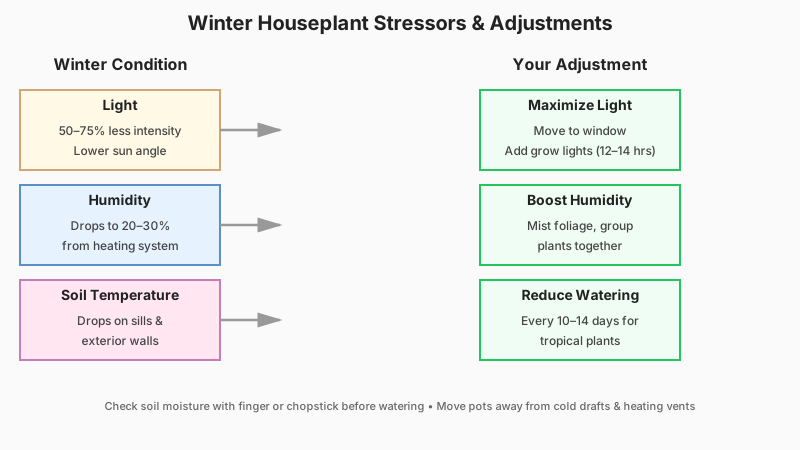
Most popular houseplants — pothos, monsteras, fiddle-leaf figs, peace lilies — originate from tropical or subtropical climates. They evolved to experience relatively stable light, warmth, and humidity year-round. A typical Northern Hemisphere winter throws all three of those conditions off at once:
- Light drops sharply. Even south-facing windows can receive 50–75% less light intensity in December than in June, because the sun sits lower in the sky and days are shorter.
- Humidity plummets. Central heating strips moisture from indoor air. While tropical forests hover around 60–90% relative humidity, a heated room often sits at 20–30% in winter.
- Root zones get cold. Pots sitting on windowsills or near exterior walls can experience soil temperatures well below the ambient air temperature — cold enough to slow or stop root activity.
Once you understand these three stressors, the care adjustments start to make intuitive sense.
1. Cut Back on Watering — But Don’t Abandon It
Overwatering in winter is by far the most common cause of houseplant death in cold months. With shorter days and lower light, plants photosynthesize less, grow more slowly, and absorb water at a fraction of their warm-season rate. Soil that would dry out in five days in summer may take two to three weeks to dry in winter.
The rule is simple: water when the top inch or two of soil is dry, not on a fixed schedule. For most tropical foliage plants, this might mean watering every 10–14 days. For succulents and cacti, once a month — or even less — is often enough.
Two practical checks:
- Lift the pot. A dry pot is noticeably lighter than a wet one. This becomes second nature after a few weeks.
- Use a moisture meter or a wooden chopstick pushed into the soil. If it comes out clean and dry, water. If it comes out with damp soil clinging to it, wait.
When you do water, use room-temperature water. Cold tap water shocks warm-season root systems and can cause leaf spotting on plants like African violets.

If winter travel is going to disrupt your reduced watering schedule, How to Keep Houseplants Alive While Traveling: Wick Jars And Timers has practical setups for keeping soil moisture steady while you’re away.
2. Maximize Every Available Lumen
Light is the most limiting factor in winter, and it’s the hardest to fix. Start with the obvious: move plants closer to the windows. A plant sitting three feet from a window receives roughly a quarter of the light that falls on the sill itself — the inverse-square law applies here, and it’s brutal.
Practical steps:
- Clean your windows. Grime reduces light transmission meaningfully, and it’s a five-minute task.
- Rotate plants. Give all sides even exposure so the plant doesn’t grow lopsided toward the light source.
- Remove obstacles. Sheer curtains, nearby furniture, and decorative items can block surprising amounts of light.
- Use a grow light if your space simply doesn’t have adequate natural light. Full-spectrum LED grow lights have become genuinely affordable and energy-efficient. A simple clip-on or bar light set to run 12–14 hours per day can make the difference between a struggling fern and a thriving one. Aim for lights positioned 6–12 inches above foliage for most tropical plants.
Note that some plants — certain snake plants, ZZ plants, and cast-iron plants — genuinely tolerate low winter light well. Reserve your brightest spots for the light-hungry ones: citrus, succulents, herbs, and fiddle-leaf figs.
3. Manage Temperature and Cold Drafts
Most tropical houseplants prefer temperatures between 60°F and 80°F (15°C–27°C). The danger zones in winter are:
- Cold drafts from windows. The air trapped between a plant’s leaves and a single-pane window can drop significantly below room temperature on cold nights. Move sensitive plants a few inches away from the glass after dark, or draw a curtain between the plant and window.
- Hot, dry air from heating vents. Forced-air heating is dehydrating and can reach temperatures damaging to foliage if a plant is sitting directly above a vent or baseboard heater. Keep a gap of at least 12 inches between any plant and a direct heat source.
- Cold windowsills. If a pot sits on a cold stone or tile sill, the root zone chills even if the room is warm. Place a cork mat, a piece of wood, or a folded cloth under the pot to insulate.
The plants most sensitive to cold drafts include: peace lilies, anthuriums, orchids, tradescantia, and most ferns. Snake plants and spider plants are more forgiving.
4. Raise the Humidity — Without Overdoing It
Low humidity causes brown, crispy leaf tips, leaf drop, and makes plants more vulnerable to spider mites (which thrive in dry conditions). There are a few reliable ways to address it:
Grouping plants together is underrated. Plants release moisture through their leaves (transpiration), so a cluster of plants creates a slightly more humid microclimate than isolated pots.
A cool-mist humidifier is the most effective solution. Place it near your main plant area and aim for 40–60% relative humidity — enough to benefit the plants without encouraging mold growth on walls and furniture.
Pebble trays (a tray filled with pebbles and water, with the pot sitting above the waterline) provide modest humidity directly around the pot. They don’t transform an entire room, but they help individual plants.
Misting is popular but limited. It raises humidity briefly and then evaporates. It can also encourage fungal issues on certain plants (begonias, succulents, cacti) if leaves stay damp. Use it sparingly if at all.

5. Skip the Fertilizer (Mostly)
Feeding plants through winter is one of those well-intentioned moves that backfires. When growth has slowed or stopped entirely, roots can’t absorb excess fertilizer salts — those salts accumulate in the soil and cause root burn, which shows up as yellowing leaves and tip die-back.
The general advice: stop fertilizing from late autumn until late winter or early spring, when you see new growth beginning. At that point, restart with a diluted, balanced fertilizer at half the recommended dose.
There are exceptions. If you have plants growing under supplemental lights and actively producing new leaves (some herbs, for example), they may still benefit from a light feed every four to six weeks.
6. Watch for Pests More Carefully
Winter doesn’t mean pest-free. In fact, the dry, warm indoor air of a centrally heated home is ideal for spider mites and fungus gnats. Spider mites love dry conditions; fungus gnats love soil that stays damp too long (which is easier to accidentally create when you’re already cutting back on watering vigilance).
Check the undersides of leaves weekly. Stippled, dull-looking foliage often signals spider mites. Fine webbing between stems is a definitive sign. A strong blast of water in the shower, followed by insecticidal soap spray, handles most light infestations.
For fungus gnats, the fix is almost always allowing the soil to dry more completely between waterings — the larvae need moist soil to survive. Sticky yellow traps catch the adults and help you monitor the scale of the problem.
7. Hold Off on Repotting
Repotting stresses any plant, and stressed plants in low winter light have limited ability to recover. Unless a plant is severely root-bound to the point where it’s drying out within a day of watering, or showing root rot that demands intervention, wait until spring.
Spring repotting — ideally when you see the first new leaf emerging — gives the plant a full growing season to establish in its new container.
8. Adapt Your Approach for Succulents and Cacti
Desert plants have their own winter rules. Many cacti and succulents actually benefit from a genuine winter rest: cooler temperatures (50–60°F / 10–15°C), very little water, and reduced light. This rest period often triggers better flowering in spring.
For succulents on a heated indoor windowsill, the main risk is still overwatering combined with low light — a combination that rots roots faster than almost anything else. Water only when the soil is bone dry, and resist the urge to add warmth or extra water to “help.” The plant doesn’t need it.

If succulents and cacti make up most of your winter collection, How to Care for Indoor Succulents: Why Overwatering Kills Them Faster goes deeper into the overwatering mistakes that show up most often in the cold months.
9. Handle Dormancy Without Panic
Some houseplants go semi-dormant in winter. Caladiums die back to their corms. Peace lilies may stop flowering entirely. Some deciduous tropical plants like elephant ears drop leaves. This is not failure — it’s the plant’s natural cycle.
Leave dormant corms in dry soil in a cool spot. Don’t water them into rot. When temperatures rise and light returns in late winter or early spring, begin watering gently and watch for new shoots.
For plants that simply slow down without going fully dormant (like most ferns and philodendrons), reduce care proportionally — less water, no fertilizer — but don’t treat them as dormant.
10. Keep Leaves Clean
Dusty leaves are an underappreciated problem. A fine layer of dust reduces a leaf’s ability to absorb light — the exact resource that’s already in shortest supply. Wipe large-leafed plants (rubber trees, monsteras, ficuses) with a damp cloth every few weeks. For smaller-leafed plants, a gentle rinse in the sink or shower works well and doubles as pest inspection time.
Avoid commercial leaf-shine products. They can clog stomata (the tiny pores through which leaves exchange gases) and don’t benefit the plant. A damp cloth is all you need.
Putting It Together: A Simple Winter Routine
Winter care doesn’t require a different set of products or elaborate systems. It requires recalibrating three things:
- Water less and check before you pour. In doubt, wait another few days.
- Get more light to your plants, either by repositioning or supplementing with a grow light.
- Protect them from temperature extremes — both cold drafts and scorching heat vents.
Everything else — holding fertilizer, raising humidity, checking for pests, cleaning leaves — follows naturally from those three priorities. The plants that survive winter well are almost always the ones whose owners stopped applying summer routines into December and paid attention to what the season actually demands.
Most houseplants are more resilient than their reputation suggests. Give them the right conditions, ease off on the interventions, and the majority will reward you with a vigorous burst of growth once the days start getting longer again.