How to Keep Black Clothes From Fading (7 Proven Methods)

Black clothes are the workhorse of any wardrobe — but they lose their depth faster than almost any other color. Within a handful of washes, that rich, flat black starts to look brown, gray, or streaky. The good news: most fading is caused by a small set of entirely preventable mistakes, and fixing them costs almost nothing.
Here is what actually works, broken down by fiber type and situation where it matters.
Why Black Clothes Fade in the First Place
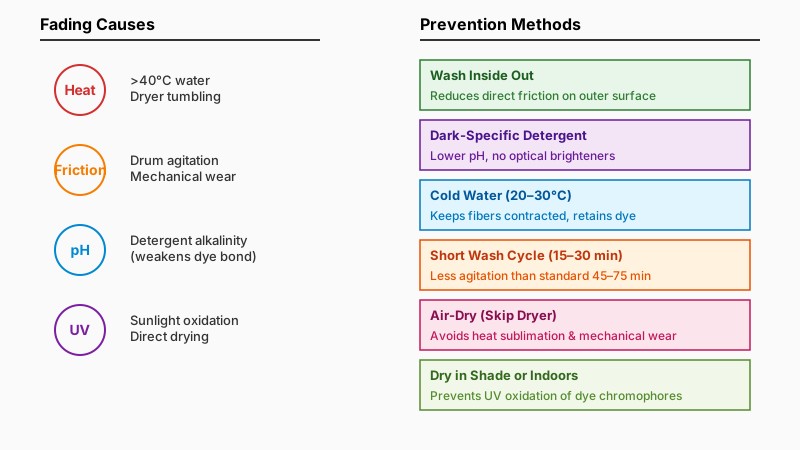
Black dye — particularly the reactive and vat dyes used on cotton, and the disperse dyes used on synthetics — breaks down through a combination of heat, friction, and alkaline chemistry. Tap water above roughly 40°C (104°F) accelerates dye release from cotton fibers. Standard laundry detergents are mildly alkaline (typically pH 9–11), which weakens the dye-fiber bond over repeated washes. Tumble dryers add mechanical abrasion on top of heat, grinding loose dye particles off the surface.
UV exposure is a separate but equally real problem: sunlight oxidizes the chromophores in black dye, lightening the color even without any washing at all. A black cotton shirt left folded on a sunny windowsill for several weeks will noticeably fade along the exposed edge.
Fiber type also determines how fast fading happens:
- Cotton and linen absorb dye deeply but release it readily in alkaline, hot water.
- Synthetic fabrics (polyester, nylon) hold disperse dyes more tenaciously but are especially vulnerable to heat in dryers.
- Wool and cashmere fade slowly if washed correctly, but hot water causes irreversible fiber damage that compounds the fading effect.
- Blends behave like whichever fiber is most sensitive.
7 Methods That Actually Prevent Fading
1. Wash Inside Out — Every Single Time
This is the simplest intervention and it works by reducing direct friction on the outer surface of the fabric. Agitation in the drum scours dye from fiber surfaces; turning garments inside out moves most of that abrasion to the interior, where it is invisible. For jeans, it also protects the selvedge.
Make it a reflex: inside-out goes in the hamper, not just in the machine.
2. Switch to a Detergent Designed for Darks
Detergents marketed for dark or black fabrics (Woolite Dark and Perwoll Black are two widely available options) are formulated with a lower pH and without optical brighteners. Standard detergents contain optical brighteners — fluorescent agents that reflect UV light to make whites appear whiter. On black fabric, those same agents create a dull, grayish film. Dark-specific detergents skip the brighteners and reduce the alkalinity that weakens dye bonds.
If you cannot find a specialist detergent, a small amount of distilled white vinegar (about 120 ml / half a cup) added to the rinse cycle can partially counteract alkaline residue, restoring a slightly lower pH to the rinse water. Results vary, but it is a low-cost hedge.
3. Use Cold Water, Always
Washing in cold water — ideally 20–30°C (68–86°F) — is one of the most consistently effective ways to slow dye loss in cotton and linen blacks. At higher temperatures, the cellulose fibers swell, loosening the dye-fiber bond and releasing more pigment into the water (which you can see when you wash a new black garment: the water turns dark). Cold water keeps the fibers more contracted, retaining dye longer.
For synthetic blacks, cold washing matters less for dye loss but still reduces pilling and heat stress.
4. Shorten the Wash Cycle
A standard wash cycle runs 45–75 minutes with significant agitation. A delicate or quick wash cycle (typically 15–30 minutes) achieves adequate cleaning for lightly soiled garments with far less mechanical abrasion. Unless your black jeans have visible mud on them, there is no cleaning benefit to the longer cycle — only additional wear.

5. Skip the Tumble Dryer When Possible
Dryer heat is hard on all dyes, but the combination of heat and mechanical tumbling is particularly destructive for black fabrics. Disperse dyes in synthetic fabrics are especially prone to sublimation — a process where heat causes dye molecules to literally evaporate off the fiber — at temperatures above roughly 60°C (140°F), which many dryers exceed on a standard cycle.
Air-drying on a flat rack or a hanger solves both problems. If you must use a dryer, set it to the lowest heat setting and remove items while they are still slightly damp. Over-drying causes extra abrasion as the fabric becomes brittle.
6. Dry Away From Direct Sunlight
UV degradation is real and cumulative. Drying black clothes on an outdoor line in direct sun will fade them noticeably faster than drying them in the shade or indoors. Shade or indoor drying takes longer but preserves dye far more effectively — and is worth the trade-off for any garment you care about keeping dark.
If outdoor drying is your main option, rotate garments so no single side faces the sun continuously, and bring them in as soon as they are dry rather than leaving them out for hours.

7. Store Correctly and Wash Less Frequently
Not every wear requires a wash. Jeans, structured jackets, and wool garments can be aired out and re-worn several times before washing — particularly for non-sweaty, low-contact wear. Each wash is a fading event; fewer washes over a garment’s life means noticeably more sustained color.
For storage, fold or hang in a cool, dark space. Avoid piling black clothes on an open shelf near a window. Cedar and lavender sachets keep moths away without any chemical contact that could affect dye.
Restoring Faded Black Clothes
If the damage is already done, you have a few realistic options — none of them are permanent fixes, but they can extend a garment’s useful life.
Fabric dye refreshers: Products like Rit Dye More (for synthetics) or Rit All-Purpose Black Dye (for natural fibers) can re-dye faded garments at home. The results depend heavily on the original dye chemistry, the fiber content, and how evenly you apply the dye. Expect a decent but not perfect result on most home attempts — professional dyers can do better.
Black dye pens and touch-up sticks: Useful for collar edges, cuffs, and seams that fade faster than the rest of the garment. A limited fix but useful for extending a near-fatigued piece.
Cold-water dye rinses: Some garment-care brands sell tinted rinses (often called “color refreshers”) that deposit a small amount of dye with each wash. The effect builds up gradually and can mask mild overall fading. They are not a substitute for a full re-dye but work well as ongoing maintenance.
Note: Re-dyeing works best on natural fibers. Polyester-heavy blends resist water-based dyes and often produce uneven, patchy results without a dedicated fiber-reactive dye and a mordant.

If your laundry troubles go beyond just color loss, our companion piece Fix Common Laundry Problems: Pilling, Fading & More tackles other common issues like bobbling fabric and stretched-out fibers.
Per-Fabric Quick Reference
Rather than one-size-fits-all advice, here is how the key variables shift by material:
Black cotton and linen Most vulnerable to alkaline detergent and hot water. Priority: cold wash, low pH detergent, no optical brighteners, air dry in shade.
Black denim High surface area from the twill weave means more friction per wash. Priority: inside out, cold water, minimal washing (spot-clean between washes), dry in the shade.
Black synthetics (polyester, nylon) Most vulnerable to dryer heat (sublimation). Priority: low-heat or no-heat drying, short cycles. Detergent pH matters less than for cotton.
Black wool and cashmere Fades slowly if handled well. Requires wool-specific detergent (neutral pH), cold or 30°C maximum, gentle cycle, flat drying to prevent stretch-induced fiber stress. Never tumble dry.
Black silk Most delicate. Hand wash in cool water with a pH-neutral silk-specific detergent. Roll in a towel to remove excess water; never wring. Air dry flat away from light.
Frequently Asked Questions
Does adding salt to the wash actually set black dye?
Salt is sometimes recommended as a dye-fixing agent, and it can help when initially rinsing a newly dyed garment (it encourages dye molecules to bond to fiber in the dyeing process). For already-finished garments in a regular wash, the evidence is much thinner. A salt rinse is unlikely to cause harm, but it is not a reliable ongoing fade-prevention strategy for finished clothes.
How often can I wash black clothes before they noticeably fade?
This varies a lot — fiber type, dye quality, water temperature, and detergent all affect the outcome. A well-dyed black cotton garment washed in cold water with a dark-specific detergent might hold its color for 30–50 washes. Washed in hot water with a standard detergent, the same garment may look dull after 10–15. Those ranges are rough guides, not guarantees.
Is it safe to add vinegar to every wash?
For most fabrics, yes — distilled white vinegar in the rinse cycle is not harmful in normal quantities and can reduce alkaline detergent residue. Avoid it on silk and delicate wool, where the acidity (even mild) can stress the fiber over time.
Why do black synthetics sometimes look shiny and faded at the same time?
That “shine” is usually caused by the outer fiber surface being flattened by heat or friction — often from a hot iron or an over-aggressive dryer. The fibers reflect light differently rather than absorbing it, making the fabric look both lighter and greasy. Steam (from a garment steamer at medium heat) can help slightly by relaxing the surface fibers, but severe cases are usually permanent.
Does dry cleaning preserve black better than machine washing?
For structured garments (blazers, trousers) and delicate fabrics (silk, embroidered pieces), yes — dry cleaning uses non-water solvents that do not cause the swelling and dye release of wet washing. For everyday cotton tees and denim, the difference is marginal and does not justify the cost. Reserve dry cleaning for pieces worth the investment.
The Core Takeaway
Black fabric fades because of chemistry and friction, not inevitable entropy. Most of it is preventable: cold water, a low-pH detergent without brighteners, inside-out washing, and staying away from the dryer are each individually effective — used together, they make a real difference. Pick whichever of these you are not currently doing and start there. You do not need to overhaul your whole laundry routine at once to see results.
The same principle of gentle, mindful care applies to other everyday items, as shown in Leather Wallet Care: 7 Proven Ways to Keep It Lasting.