How to Deep Clean Kitchen Appliances Step by Step

Kitchen appliances do a lot of heavy lifting — and they pay for it in grease, mineral deposits, food residue, and bacteria. A quick wipe-down keeps things presentable, but it doesn’t reach the mold growing inside your coffee maker’s reservoir or the carbonized drips baked onto your oven’s heating element. This guide works through each major appliance in turn, giving you exact methods and the right products for each surface so you get genuine results rather than a cosmetic clean.
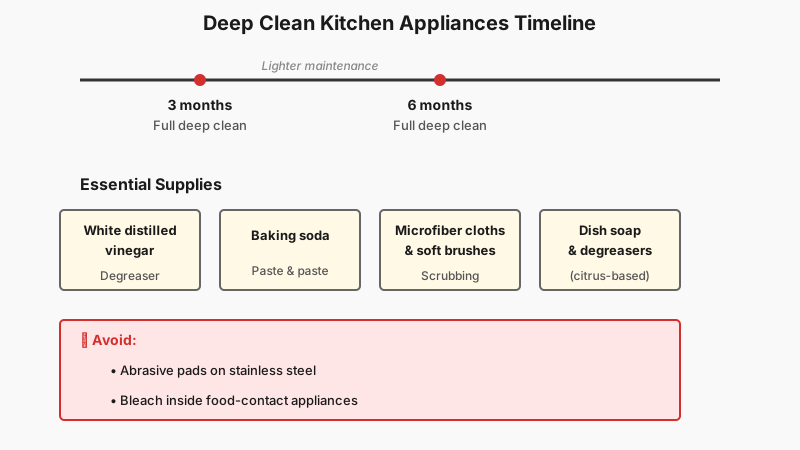
Plan on a full deep clean every three to six months, with lighter maintenance in between. Gather your supplies before you start: white distilled vinegar, baking soda, dish soap, microfiber cloths, a soft-bristle toothbrush, a non-scratch scrubber, and food-safe degreasers (citrus-based ones work well). Avoid abrasive pads on stainless steel and never use bleach inside appliances that contact food directly.

The Oven: Baked-On Grease and Carbon
Self-Cleaning Ovens
If your oven has a self-clean cycle, it works by heating the interior to around 900°F (480°C), incinerating residue to ash. Before running it:
- Remove oven racks — the extreme heat discolors and warps most racks and makes them hard to slide.
- Wipe out loose crumbs and debris with a damp cloth.
- Run the cycle (typically 2–4 hours). Keep your kitchen ventilated; the process produces fumes from burning residue.
- Once the oven cools completely, wipe out the white ash with a damp cloth.
Do the self-clean cycle when you know you’ll be home — not right before you leave the house.
Manual Oven Cleaning
- Make a paste of ½ cup baking soda mixed with enough water to reach a spreadable consistency.
- Coat the oven interior (walls, floor, ceiling, door glass) avoiding heating elements. Let it sit overnight — at minimum, four hours.
- Wipe out as much paste as possible with a damp cloth. For stuck-on patches, use a plastic scraper.
- Spray white vinegar over any baking soda residue; it will foam, which helps lift remaining grime. Wipe clean.
- For the door glass, apply the baking soda paste, let it sit 30 minutes, then scrub with a non-scratch pad in circular motions.
If you’d rather skip harsh commercial products altogether, How to Deep Clean Your Oven Naturally Without Chemicals offers a chemical-free approach worth trying.
Oven Racks
Fill a bathtub with hot water and a few squirts of dish soap. Submerge the racks and let them soak for two to three hours. Scrub with a non-scratch pad, rinse, and dry fully before reinstalling.
The Refrigerator: Cold Doesn’t Mean Clean
Bacteria like Listeria monocytogenes can survive and even multiply at refrigerator temperatures, so this appliance genuinely needs a thorough scrub — not just a surface wipe.
- Empty it entirely. Use a cooler with ice for perishables.
- Remove shelves and drawers. Let them come to room temperature before washing in hot soapy water. Cold glass shelves can crack in hot water.
- Wipe the interior with a solution of 1 tablespoon baking soda dissolved in 1 quart (1 liter) of warm water. This deodorizes and cleans without leaving a chemical smell that transfers to food.
- Address the door gaskets. Use an old toothbrush dipped in the baking soda solution to scrub the folds. Mold commonly hides here. Dry thoroughly afterward — moisture re-starts the mold cycle.
- Clean the drip pan. Most refrigerators have a drip pan underneath (or behind a lower panel) that collects condensation. Slide it out, empty it, and wash it with dish soap. Many people have never cleaned this — it is often full of mold.
- Vacuum the condenser coils. Located either beneath the fridge behind a kick plate or at the back, dusty coils make the compressor work harder and shorten the appliance’s life. Use a vacuum with a brush attachment or a long condenser brush.
- Wipe exterior surfaces with a microfiber cloth dampened in warm soapy water. For stainless steel, wipe with the grain and follow up with a few drops of mineral oil to prevent fingerprints.

The Dishwasher: The Appliance That Cleans Everything Except Itself
- Clear the filter. On most modern dishwashers the filter is a cylindrical screen at the bottom of the tub. Twist it out, rinse under running water, and scrub gently with a soft brush. A dirty filter is the number-one cause of a smelly dishwasher.
- Inspect and clean the spray arms. Remove them (usually they just unscrew or pop off), rinse under running water, and use a toothpick to clear any blocked jets.
- Wipe the door gasket and edges. The rubber seal around the door traps food particles and grows mold. Wipe with a cloth dipped in white vinegar.
- Run a hot cleaning cycle. Place a cup of white vinegar in a dishwasher-safe bowl on the top rack. Run the hottest cycle available. The vinegar breaks down grease and mineral deposits throughout the interior.
- Follow with a baking soda rinse. Sprinkle 1 cup of baking soda across the bottom of the tub and run a short hot cycle. This deodorizes and brightens the interior.
- Clean the exterior. Wipe with a damp cloth; for the control panel, use a barely damp cloth to avoid moisture damage.
The Microwave: Steam First, Scrub Second
Microwaves are typically easier to clean than ovens, but neglected interiors can harbor bacteria and odors that transfer to food.
- Steam loosening. Combine 1 cup of water and 1 tablespoon of white vinegar (or a few slices of lemon) in a microwave-safe bowl. Microwave on high for 5 minutes. The steam saturates the interior and softens splattered food.
- Wipe down. Carefully remove the bowl (it will be hot). Use a damp microfiber cloth to wipe every surface — ceiling, walls, floor, and door interior. Residue should wipe away easily.
- Clean the turntable. Remove the glass plate and wash it in the sink with dish soap and warm water, or put it in the dishwasher.
- Deodorize. If odors persist, mix 2 tablespoons of baking soda with a cup of water and microwave for 3 minutes, then wipe dry.
- Exterior and vents. Wipe the exterior with a damp cloth. Use a toothbrush or narrow brush to clear the ventilation grille slots of dust and grease.
For a deeper dive into this exact method, How to Deep Clean a Microwave: The Steam Trick For Baked-On Grime walks through the steam trick step by step.
The Coffee Maker: Hidden Mineral Scale
Mineral scale (limescale) from tap water builds up inside coffee makers and is invisible — but it slows brew cycles, affects temperature, and can eventually damage the heating element.
Drip Coffee Makers
- Empty and discard any old coffee grounds and filters.
- Fill the water reservoir with equal parts white vinegar and water.
- Run a half-brew cycle, then pause for 30 minutes to let the solution sit inside the machine.
- Complete the brew cycle. Discard the vinegar solution.
- Run two to three full cycles with plain fresh water to rinse out all vinegar residue.
- Wash the carafe, basket, and lid in warm soapy water.
Single-Serve Pod Machines
These machines have a descale mode or prompt you when it’s time. Follow the manufacturer’s instructions — most use a manufacturer-specific descaling solution or white vinegar. Run at least two water-only rinse cycles afterward.
Espresso Machines
Back-flush the group head weekly with plain water. Monthly, use a manufacturer-approved espresso machine cleaner. Descale with citric acid solution (1 teaspoon per liter of water) every one to three months depending on your water hardness. Wipe the steam wand after every use — dried milk is one of the most stubborn deposits to remove.
The Blender and Food Processor
These are simpler but often rushed. Rinsing a blender with water after use is not the same as cleaning it.
Blender:
- Add warm water and two drops of dish soap to the blender jar. Blend on high for 30 seconds.
- Rinse and air dry with the blade assembly removed.
- For a deep clean, disassemble the blade unit and scrub with a bottle brush. The rubber gasket at the base needs attention — it traps rancid residue.
Food processor:
- Hand-wash the blade in warm soapy water — never toss sharp blades loose into a dishwasher where you’ll reach in blindly.
- Scrub the bowl with a non-scratch sponge. Tomato-based stains respond to a soak in diluted white vinegar.
- Wipe the motor base with a barely damp cloth and dry immediately.
The Toaster and Toaster Oven

Toaster:
- Unplug first — always.
- Remove and empty the crumb tray over the trash. Wash it with dish soap and dry completely before reinserting.
- Turn the toaster upside down over a trash can and gently shake to dislodge interior crumbs.
- Wipe exterior with a damp cloth. Never submerge a toaster or spray water inside.
Toaster oven:
- Unplug and let it cool completely.
- Remove the crumb tray, racks, and baking pan. Wash with warm soapy water; for baked-on grease, soak in a baking soda and hot water solution for 30 minutes.
- Apply a baking soda paste to the interior walls and door. Let it sit 20 minutes, then wipe with a damp cloth.
- Clean the glass door with a non-scratch scrubber and glass cleaner or a vinegar-water solution.
- Wipe the exterior last.
Keeping Appliances Cleaner Between Deep Cleans
A few habits reduce how much work builds up:
- Microwave: Use a microwave-safe cover over bowls and plates. Thirty seconds of prevention saves thirty minutes of scrubbing.
- Oven: Place a silicone mat or sheet of foil on the oven floor to catch drips. Replace it when it gets dirty.
- Coffee maker: Use filtered water to reduce mineral scale.
- Refrigerator: Store leftovers in covered containers and check expiry dates weekly.
- Dishwasher: Run the garbage disposal before starting a cycle — they share a drain connection on most installations.
Frequently Asked Questions
How often should I deep clean my refrigerator?
Every three to four months is a practical target. More frequent cleaning (monthly) is worthwhile if you store a lot of raw meat, fish, or aromatic cheeses, or if anyone in your household has a weakened immune system.
Can I use bleach to clean my oven or microwave?
No. Bleach should not be used inside appliances that come into contact with food. It leaves residue that is difficult to fully rinse, and heating it (as in a microwave or oven) produces toxic chlorine fumes. Stick to baking soda and vinegar for food-contact surfaces.
Why does my dishwasher smell bad even after running it?
The most common culprit is a clogged or dirty filter. The second is a buildup of grease and biofilm on the door gasket and interior walls. Clean the filter first — many people don’t realize it needs regular removal and rinsing.
Is descaling a coffee maker really necessary if the machine still works?
Yes. Limescale insulates the heating element, which raises the energy required to heat water and eventually damages the element. Descaling every one to three months (depending on water hardness) extends the machine’s life and keeps brew temperature accurate.
Are commercial oven cleaners safe to use?
Products like Easy-Off contain sodium hydroxide (lye), which is highly effective but caustic. Wear rubber gloves and ensure good ventilation. Keep them away from heating elements, pilot lights, and the oven’s door gasket. They are generally not needed if you maintain a regular baking-soda cleaning routine — they’re best reserved for ovens that haven’t been cleaned in years.
Wrapping Up
Deep cleaning kitchen appliances is less about effort and more about sequence and the right chemistry. Baking soda and white vinegar handle the vast majority of tasks safely and cheaply. Letting solutions dwell — whether that’s an overnight baking soda paste in the oven or a five-minute vinegar steam in the microwave — does most of the actual work. Your main job is wiping away what’s already been loosened.
Work through each appliance methodically, and you’ll find the job is far less daunting than it looks from the outside. More importantly, your appliances will run more efficiently, last longer, and stop quietly contributing bacteria and odors to the food you cook in them.