How to Cook Rice Noodles Without Clumping: Cold Rinse Beats Clumps

Rice noodles are one of the trickiest pantry staples to get right. Done well, they’re silky, springy, and able to soak up a sauce or broth without turning to mush. Done badly, they collapse into a sticky, matted lump the moment you turn your back. The good news: clumping is almost always avoidable once you understand what’s actually causing it.
This article walks through every stage of cooking — from choosing the right noodle to plating — with specific, practical techniques rather than vague advice.
Why Rice Noodles Clump in the First Place
Rice noodles are made from rice flour and water, which gives them a naturally high starch content. When that starch is exposed to heat and then allowed to sit, the gelatinized starch granules bond with each other — a process food scientists call retrogradation. The result is the sticky, gummy mass you’re trying to avoid.
A few other culprits:
- Overcooking breaks down starch granules further, making noodles far more likely to bond together.
- Draining and leaving them in a colander for more than a minute or two lets them cool and stick as they cool.
- Insufficient rinsing leaves excess surface starch on the noodles, adding more bonding material.
- No fat or sauce contact immediately after cooking means there’s nothing separating the strands.
Knowing these four causes makes every tip below feel logical rather than arbitrary.

The same starch-and-heat dynamics are at play with grains too, as explained in How to Cook Perfect Rice Every Time: Why It Turns Mushy Or Crunchy.
Tip 1: Choose the Right Noodle for the Job
Not all rice noodles behave the same way, and picking the wrong width for your dish sets you up for trouble before you even touch a pot.
- Rice vermicelli (thin, 1–2 mm): These soften fast — often in just 3–5 minutes in boiling water, or even with a hot-water soak. They’re used in Vietnamese spring rolls, bún bowls, and Singapore noodles. Because they’re so delicate, they clump fastest and need to be dressed immediately.
- Flat rice noodles, medium (about 5 mm): Common in pad Thai. They can handle a slightly longer cook and a hot wok toss without disintegrating.
- Wide flat noodles (ho fun / kway teow, 10–15 mm): Used in beef chow fun and char kway teow. They’re the most forgiving in a wok but will clump in thick sheets if left undisturbed.
- Rice stick noodles: A general term often used for medium-width noodles; soaking time matters a lot here.
Always check the package. Different brands vary: some flat noodles say “boil 4 minutes,” others say “soak in hot water 8 minutes.” Follow the brand’s instruction as a starting point, then test a strand a minute early.
Tip 2: Soak Instead of Boil (When the Recipe Allows)
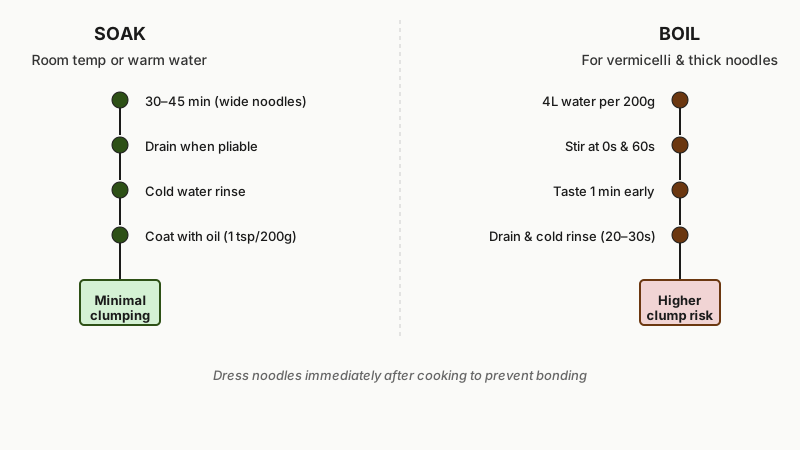
For most dried flat and medium rice noodles, soaking in room-temperature or warm water rather than boiling is the single most effective clumping prevention technique.
Here’s why it works: soaking gently hydrates the noodles without over-gelatinizing the exterior starch layer. Boiling, especially at a rolling boil, can make the outside of a noodle mushy while the center is still firm — then when you drain, the mushy surface starch glues strands together.
How to soak:
- Place noodles in a large bowl.
- Cover completely with room-temperature water for wider noodles (30–45 minutes), or pour just-boiled water over thinner noodles and soak for 5–8 minutes.
- Drain when the noodles are pliable but still slightly firm — they’ll finish cooking in the wok or broth.
- Rinse under cold water immediately and toss with a small drizzle of neutral oil (about 1 teaspoon per 200 g of noodles).
The oil coats each strand and physically prevents them from touching and bonding. This works equally well with sesame oil, vegetable oil, or even olive oil if that’s all you have.
Tip 3: If You Boil, Keep It Brief and Use Plenty of Water
Some noodles — particularly rice vermicelli and certain thick rice noodles — genuinely do need boiling. Keep these rules in mind:
- Use a large pot with at least 4 liters of water per 200–250 g of noodles. A crowded pot lowers the water temperature when you add the noodles, extends cooking time, and concentrates surface starch in the water — all clumping triggers.
- Keep the water at a gentle rolling boil, not a frantic bubble that slams noodles against each other.
- Stir within the first 30 seconds and again a minute in. This is the window when noodles are most likely to stick to each other or the pot.
- Taste-test a minute before the suggested time. You’re looking for noodles that are tender through but still have a faint firmness at the core.
- Drain immediately into a colander and rinse under cold running water for 20–30 seconds. This stops the cooking and washes off excess surface starch.

Tip 4: Rinse Cold, Then Oil Immediately
The post-drain window is where most people lose their noodles to clumping. Cold rinsing chills the exterior starch so it stops actively bonding. But it only buys you a couple of minutes.
As soon as you rinse, drain the noodles thoroughly — shake the colander, don’t let them sit in residual water — then transfer to a bowl and toss with a neutral oil. Use your hands or tongs to ensure every strand is lightly coated.
If you’re prepping noodles ahead of time (batch cooking, or making spring rolls for a crowd), you can keep oiled, rinsed noodles in the refrigerator in an airtight container for up to 24 hours without major clumping. A quick toss before use usually separates them.
Tip 5: Work Fast in the Wok
Stir-fried noodle dishes like pad Thai and chow fun depend on high heat and constant movement. If you add noodles to a wok that isn’t hot enough, or if you let them sit still, they’ll bond to each other and to the wok surface.
A few practical points:
- Preheat your wok until it smokes before adding oil. A properly heated wok creates a near non-stick surface and sears the noodles rather than steaming them.
- Add sauce or liquid to the wok before adding the noodles. A splash of soy sauce, fish sauce, or stock creates a vapor layer that separates strands.
- Add noodles in a single loose layer where possible — don’t dump the whole batch in a pile. Spread them, then toss.
- If noodles start sticking to the wok, add a small splash (1–2 tablespoons) of water or stock around the edge. The steam will loosen them without making the dish watery.
- Keep the toss going. Chow fun noodles are especially wide and will stick to themselves if left sitting for more than 10–15 seconds.
Tip 6: For Soups and Broths, Add Noodles Last
If you’re making a broth-based dish — pho, laksa, a simple rice noodle soup — the temptation is to cook the noodles in the broth. Resist it. Cooking noodles directly in broth makes the broth murky (starch clouds it) and the noodles starchy and gummy.
Instead:
- Cook or soak noodles separately as above.
- Rinse and drain them.
- Place them directly in the serving bowl.
- Pour your hot broth over the noodles just before serving.
The hot broth reheats the noodles immediately without overcooking them. This is exactly how pho vendors in Vietnam handle the dish — noodles go in the bowl, never into the stock pot.
For meal prep, store noodles and broth separately. Combining them too early lets the noodles soak up all the liquid and turn mushy.

Tip 7: Adjust Your Timing for Fresh vs. Dried Noodles
Fresh rice noodles (the soft, slightly translucent sheets sold in Asian grocery refrigerator sections) behave very differently from dried ones.
- They’re already cooked and just need reheating. Running them under warm water for 30 seconds is often enough to make them pliable without any boiling at all.
- They clump more aggressively because there’s no drying stage to reduce surface starch. Toss them with oil the moment you separate the strands.
- They don’t hold well. Unlike dried noodles that can be re-oiled and refrigerated, fresh noodles turn hard and chalky in the fridge. Use them the day of purchase.
- If your fresh noodles have been refrigerated and are stiff, microwave them for 30–45 seconds wrapped in a damp paper towel, then separate gently with your fingers before tossing into the wok.
A Quick Troubleshooting Reference
| Problem | Likely Cause | Fix |
|---|---|---|
| Noodles clumped in the colander | Drained and left too long | Rinse cold, oil immediately |
| Mushy, gummy texture | Overcooked | Reduce boil/soak time; soak instead of boil |
| Sticking to wok | Wok not hot enough | Preheat until smoking; add liquid first |
| Broth turned cloudy | Noodles cooked in stock | Cook separately; add to bowl |
| Fresh noodles tearing | Straight from fridge | Warm briefly before separating |
If you end up with extra cooked noodles or rice on hand, Best Ways to Use Leftover Rice: 12 Practical Ideas has plenty of ideas for putting them to good use.
Conclusion
Most rice noodle disasters share a root cause: starch that’s had too much time to set without anything separating the strands. Once you internalize that idea — cook briefly, rinse cold, oil immediately, move quickly — the individual tips fall into place naturally.
The single change that makes the biggest difference for most home cooks? Soaking instead of boiling flat and medium noodles, then oiling them the moment they’re drained. That one habit alone will eliminate 80% of the clumping problems you’re likely to encounter.
Everything else — the hot wok, the last-minute broth addition, the quick handling of fresh noodles — is a refinement on top of that foundation. Get the basics right and rice noodles become one of the easiest and fastest ingredients you can cook with.