Best Ways to Use Leftover Rice: 12 Practical Ideas

Leftover rice sits in most fridges at least once a week. You cooked too much, or planned to reheat it and forgot. Either way, that cold clump of grains is not a problem — it’s actually more useful than freshly cooked rice for a surprising number of dishes. Cold rice has dried out slightly and lost surface moisture, which makes it behave better in high-heat cooking, absorb sauces more evenly, and hold its shape instead of turning to mush.
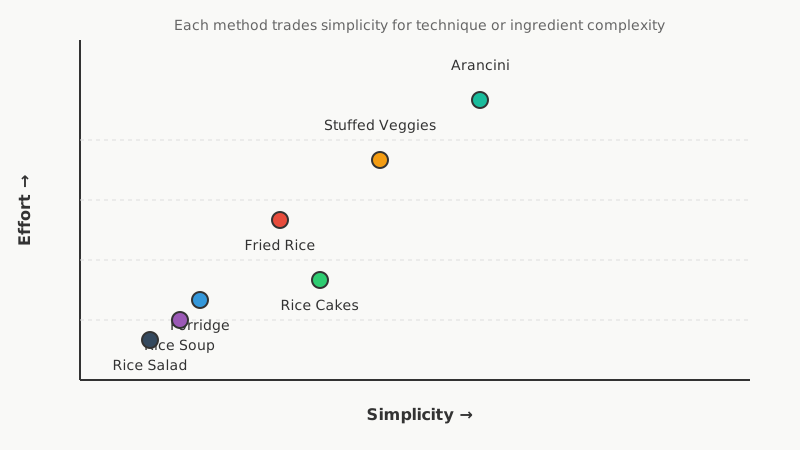
Here are twelve genuinely practical ways to turn leftover rice into something worth eating, organized from the simplest to the slightly more involved.
1. Fried Rice — The Gold Standard
Fried rice is the most obvious answer, but it’s worth getting right. The single biggest mistake is using warm, freshly cooked rice. It steams and clumps in the wok. Cold, day-old rice — ideally refrigerated overnight and broken apart with your fingers before it hits the pan — fries properly, with each grain staying separate.
The Method
- Heat a wok or heavy skillet over the highest heat your stove allows.
- Add a neutral oil with a high smoke point (peanut, avocado, or refined sunflower).
- Fry whatever aromatics you have — garlic, ginger, green onion — for 30 seconds.
- Add the rice and press it flat against the hot surface. Let it sit undisturbed for 60–90 seconds so it crisps. Then stir.
- Push the rice to one side, scramble an egg or two in the gap, then fold everything together.
- Season with soy sauce, a few drops of sesame oil, and white pepper.
You can add virtually anything here: frozen peas, diced leftover chicken, shrimp, or just scallions and egg. The technique matters more than the ingredients.

2. Rice Porridge (Congee or Jook)
Congee — or jook in Cantonese — is the opposite approach: instead of keeping the grains intact, you simmer the rice with a lot of water or stock until it breaks down into a thick, silky porridge. Leftover rice cuts the cooking time dramatically compared to raw rice. Starting from cooked rice, you can have congee ready in 20–30 minutes instead of an hour.
Use roughly 1 cup of leftover rice to 4–5 cups of chicken or vegetable stock. Simmer, stir occasionally, and season with salt, soy sauce, or a small knob of ginger. Top it with a soft-boiled egg, sliced scallions, a drizzle of chili oil, or whatever you have around. It’s one of the most soothing, economical meals you can make.
3. Rice Cakes or Patties
If your leftover rice is on the stickier side — jasmine or short-grain varieties work best — you can press it into patties and pan-fry them until they’re golden and slightly crisp on the outside.
Mix the rice with a beaten egg, a pinch of salt, and any additions you like: shredded cheese, chopped herbs, finely diced vegetables, or a spoonful of miso paste. Shape into rounds about 1 cm thick and fry in a little oil over medium heat for 3–4 minutes per side. Serve with a dipping sauce, alongside a salad, or as a base for a fried egg.
4. Rice Soup
This is different from congee — the grains stay intact. Leftover rice added to a simmering broth about 10 minutes before serving thickens the soup slightly and turns it into a complete meal. This works especially well with chicken soup, minestrone, or a simple miso broth.
Avoid adding rice too early in soup-making; it will absorb liquid aggressively and can turn the broth starchy. Add it toward the end, and if you’re storing leftover soup, consider keeping the rice separate and combining them when reheating.
5. Stuffed Peppers or Vegetables
Rice is one of the best fillings for stuffed vegetables because it absorbs the flavors around it and adds bulk without heaviness. Hollow out bell peppers, large tomatoes, zucchini, or portobello mushrooms. Mix leftover rice with sautéed onion and garlic, a can of diced tomatoes, cooked ground meat or beans, fresh herbs, and seasoning. Fill the vegetables, top with cheese if you like, and bake at 190°C (375°F) for about 30–35 minutes.

This is an efficient use of leftovers across the board — the filling can incorporate whatever odds and ends are in the fridge.
6. Arancini (Italian Rice Balls)
Arancini are a Sicilian street food traditionally made with leftover risotto, but plain leftover rice works too, especially if you mix it with a little beaten egg and Parmesan to help it bind. The concept: shape cold rice into balls around a small cube of mozzarella (or a spoonful of ragù), coat in breadcrumbs, and deep-fry or bake until golden.
Baking works reasonably well at 200°C (400°F) for 20–25 minutes if you want to avoid deep-frying. They don’t get quite as uniformly crispy, but they’re easier and produce less mess.
7. Rice Salad
Cold rice makes an excellent salad base — think of it as a grain salad in the same family as tabbouleh or farro salad. The key is dressing it while the rice is still slightly warm (or rewarm it briefly), since warm grains absorb dressing better than cold ones.
A simple combination: leftover rice, cherry tomatoes, cucumber, olives, fresh herbs, feta, and a lemon-olive oil dressing. Or go an Asian direction with edamame, shredded carrot, sesame dressing, and toasted sesame seeds. Rice salad keeps well in the fridge for a day or two, making it a good lunch-prep option.
8. Baked Rice Pudding
Moving into the sweet category — leftover rice is ideal for rice pudding because the grains are already cooked and just need to absorb the custard. Combine the rice with whole milk or a mixture of milk and cream, sugar, vanilla, and a pinch of salt. Bake in a low oven (around 150°C / 300°F) for 45–60 minutes, stirring once or twice, until thick and creamy.
A grating of nutmeg on top before baking is the traditional British approach. You can also stir in cinnamon, cardamom, or a spoonful of jam once it’s out of the oven. This turns a half-forgotten container of rice into an actual dessert.
9. Rice Fritters or Flour-Free Pancakes
Blend leftover rice with eggs, milk, and a little baking powder, and you get a batter that fries into thick, slightly chewy fritters. They’re gluten-free, genuinely filling, and work for breakfast or a savory snack.
For a savory version, add grated zucchini or corn, scallions, and chili flakes. For a sweeter version, add a mashed banana and a pinch of cinnamon, and serve with honey. The ratio: roughly 1 cup cooked rice to 2 eggs and a splash of milk.

10. Burrito or Rice Bowl
This one barely needs explanation, but it’s worth emphasizing: cold leftover rice microwaved with a splash of water (cover loosely, 1–2 minutes) comes back to life well enough for a quick rice bowl or burrito. Load it with whatever protein you have — leftover roasted chicken, canned black beans, a fried egg — plus avocado, salsa, and hot sauce. It’s a 10-minute meal that feels intentional rather than improvised.
11. Rice-Thickened Sauces and Gravies
This is an underused technique: blend a small amount of cooked rice into a sauce or soup to thicken it without flour or cornstarch. It gives body and a slightly creamy texture without altering the flavor significantly. A handful of rice blended into a tomato sauce, a vegetable bisque, or even a curry base works well. Start with a small amount — 2–3 tablespoons blended per 2 cups of liquid — and adjust.
12. Fermented Rice Drinks and Sides
This is more of an advanced option for adventurous cooks: cooked rice is the base for fermented preparations like sake (Japanese rice wine), amazake (a sweet, lightly fermented rice drink), and sikhye (a Korean rice punch). These require specific starter cultures (koji mold for sake and amazake, or barley malt for sikhye), but amazake in particular can be made at home with rice koji and takes only 8–12 hours with a yogurt maker or a warm oven.
It’s a rabbit hole worth exploring if you end up with rice frequently and want to go beyond fried rice.
Getting the Storage Right
None of this works if you store leftover rice carelessly. Cooked rice can harbor Bacillus cereus spores that survive cooking — the bacteria multiply when rice is left at room temperature for more than two hours. Refrigerate it promptly in an airtight container, and use it within three to four days. You can also freeze cooked rice in flat-ish bags for up to a month; it defrosts quickly and works for most of the methods above.
If your fridge and pantry chaos is part of the problem, How to Organize a Pantry: 9 Practical Steps That Last can help you set up a system that keeps leftovers visible and used in time.
A Few Principles Worth Keeping in Mind
Across all these uses, a few patterns emerge:
- Moisture control matters. High-heat applications (fried rice, patties, fritters) want dry, cold rice. Low-and-slow applications (congee, pudding) want to add moisture back in.
- Seasoning from scratch. Leftover rice is usually lightly seasoned. Treat it as a neutral base and season the finished dish assertively.
- One egg can fix a lot. Adding an egg helps leftover rice bind into patties, fritters, or arancini, and enriches the flavor at the same time.
The goal isn’t just to avoid waste — it’s to recognize that a container of leftover rice is closer to a cooked ingredient than a finished dish, which means it has serious potential in the right hands.
For more inspiration beyond rice, Use Up Leftover Cooked Grains All Week Long offers a broader look at turning yesterday’s grains into tonight’s dinner.