Homemade Mayonnaise & Emulsified Sauces From Scratch

Making your own mayonnaise takes about three minutes and tastes nothing like the jar version. That gap in flavor — brighter, richer, with a clean finish — is usually enough to convert anyone who tries it once. But mayo is just one member of a larger family: emulsified sauces, where fat and water are coaxed into a stable, creamy union by an emulsifier. Once you understand the mechanics, you can make aioli, hollandaise, béarnaise, Caesar dressing, and remoulade with the same underlying logic.
This guide covers the science, the method, and the specific techniques for each sauce — so you’re not just following steps but understanding why they work.
The Science Behind Emulsification
Oil and water don’t mix on their own; oil molecules are nonpolar and water molecules are polar, so they separate. An emulsifier bridges that gap. Its molecules have a hydrophilic (water-loving) end and a hydrophobic (oil-loving) end, so they sit at the boundary between the two phases and hold them together.
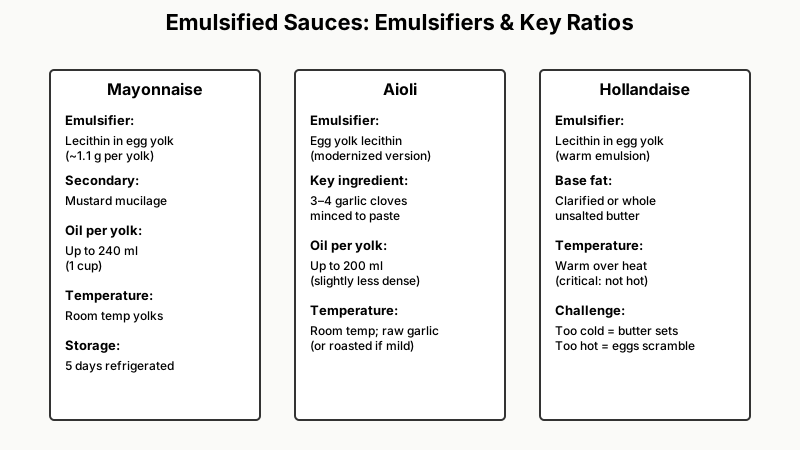
In mayonnaise, the emulsifier is lecithin, a phospholipid found in egg yolk. One large egg yolk contains roughly 1.1 grams of lecithin — more than enough to emulsify up to a cup of oil. Mustard adds secondary emulsification through mucilage compounds in the mustard seed.
The key variable is the ratio of dispersed phase to continuous phase. In a standard mayo, oil (dispersed) is broken into tiny droplets and suspended in the water phase (yolk, lemon juice, vinegar). Add oil too fast and the droplets can’t be coated quickly enough — they coalesce and the sauce breaks. That’s why you drizzle oil slowly, especially at the start.
Temperature matters too. Cold eggs straight from the fridge resist emulsification because the lecithin is less fluid. Room-temperature yolks work noticeably better.

Classic Homemade Mayonnaise
Ingredients
- 2 large egg yolks, at room temperature
- 1 tsp Dijon mustard
- 1 tbsp fresh lemon juice (plus more to taste)
- 1 tsp white wine vinegar
- ½ tsp fine salt
- 240 ml (1 cup) neutral oil — grapeseed, sunflower, or light olive oil
Avoid extra-virgin olive oil for the full volume; its bitterness amplifies when emulsified and often turns unpleasant. A small amount blended in at the end is fine if you want fruitiness.
Method: Whisk by Hand
- Place a damp towel under your mixing bowl to stop it spinning.
- Whisk yolks, mustard, lemon juice, vinegar, and salt together until the mixture lightens slightly, about 30 seconds.
- Start adding oil drop by drop — literally one drop at a time for the first two tablespoons. This builds the initial emulsion. Rushing this stage causes most failures.
- Once the mixture thickens and looks glossy, you can switch to a thin, steady stream, whisking constantly.
- Taste and adjust salt and lemon juice. The sauce should be bright, rich, and slightly tangy.
Method: Immersion Blender (Foolproof)
Add egg yolks, mustard, lemon juice, vinegar, and salt to a tall, narrow jar. Pour all the oil on top. Place the immersion blender at the bottom of the jar and run it without moving for about 10 seconds. You’ll see white mayo forming at the base. Slowly lift the blender as the emulsion climbs. Done. This method almost never breaks because the blade geometry forces the oil to be incorporated gradually from the bottom up.
Storage
Homemade mayo keeps for up to 5 days in the fridge in a sealed container. Because there are no preservatives, be strict about this window. Never leave it at room temperature for more than 2 hours.
Aioli: The Garlic-Forward Cousin
True Provençal aioli contains only garlic, olive oil, and sometimes a little salt — no egg. The emulsifier is garlic’s own cellular structure and the mucilage from the mortar-and-pestle pounding process. It’s tricky and prone to breaking.
The more practical version — and the one used in most professional kitchens — starts with egg yolk and adds generous raw garlic.
Quick Aioli Method
- Mince or microplane 3–4 cloves of garlic with a pinch of salt into a paste.
- Combine with 2 egg yolks, ½ tsp lemon juice, and ½ tsp Dijon.
- Emulsify with 200 ml light olive oil (you can use up to 50% extra-virgin for flavor).
- Finish with lemon juice and salt.
Aioli is sharper and more pungent than mayo. It works with roasted vegetables, grilled fish, and especially boiled potatoes. If the raw garlic heat is too aggressive, briefly roast or microwave the garlic cloves before pasting.
Hollandaise: The Warm Emulsion
Hollandaise is mayo’s more demanding sibling. Instead of raw yolks and cold oil, it uses egg yolks cooked gently over heat and whole clarified butter (or regular unsalted butter for a less refined version). The challenge is temperature: too cold and the butter congeals; too hot and the eggs scramble.
Ingredients
- 3 egg yolks
- 1 tbsp cold water
- 1 tbsp lemon juice
- 170g (¾ cup) clarified butter or unsalted butter, melted and warm (not hot)
- Salt, white pepper, pinch of cayenne
Method
- In a heatproof bowl over a pot of barely simmering water (bain-marie), whisk egg yolks with water and half the lemon juice until the mixture becomes pale, thick, and ribbony — this takes about 3–4 minutes. The yolks should reach around 65°C / 149°F; at this temperature, they thicken without curdling.
- Remove from heat. Begin adding warm butter in a thin stream, whisking constantly, exactly as you would add oil to mayo.
- Season with salt, white pepper, remaining lemon juice, and cayenne.
Hollandaise must be served immediately or held at a temperature above 60°C / 140°F for no longer than 1–2 hours. It does not refrigerate and reheat well.
If it breaks: Add 1 tsp cold water to a clean bowl and whisk the broken sauce into it slowly. Usually recovers.

Blender Hollandaise
Blend yolks, lemon juice, and a pinch of salt on high. With the blender running, pour in hot (but not boiling) butter in a slow stream through the lid opening. The heat from the butter gently tempers the yolks as it emulsifies. This takes 90 seconds and produces a very consistent result — though slightly less silky than the traditional version.
Béarnaise: Hollandaise’s Herby Variation
Béarnaise is made the same way as hollandaise but with a reduction replacing the plain lemon juice. That reduction transforms the flavor profile entirely.
Reduction
Simmer 50ml dry white wine, 50ml white wine vinegar, 1 tbsp finely chopped shallot, and 1 tsp dried tarragon until reduced to about 2 tbsp of liquid. Strain. Use this in place of lemon juice when making hollandaise, then stir in 2 tbsp of fresh tarragon and 1 tbsp fresh chervil (or flat-leaf parsley) at the end.
Béarnaise has an herbaceous, slightly anise-forward quality that makes it the classic pairing for grilled steak.
Caesar Dressing: An Emulsified Vinaigrette
Caesar dressing sits in an interesting middle ground: it’s looser than mayo but thicker than a standard vinaigrette, and it uses anchovies and Parmesan as secondary emulsifiers and flavor agents alongside the egg.
If you want more ideas beyond Caesar, 12 Homemade Salad Dressing Recipes Worth Making rounds up plenty of other emulsified and non-emulsified options to try.
Ingredients
- 1 egg yolk
- 2 oil-packed anchovy fillets, mashed to a paste
- 1 small garlic clove, microplaned
- 1 tbsp fresh lemon juice
- 1 tsp Dijon mustard
- 1 tsp Worcestershire sauce
- 120 ml extra-virgin olive oil (or a blend with neutral oil)
- 30g Parmesan, finely grated
- Salt and black pepper
Emulsify the yolk, anchovy, garlic, lemon, mustard, and Worcestershire together, then drizzle in the oil. Fold in Parmesan and season. The Parmesan will thicken the dressing further as it sits.
This dressing stores well for up to 3 days refrigerated and actually improves after a few hours as the flavors meld.
Remoulade: The Textured Emulsified Sauce
Remoulade starts with mayo and adds character through fold-ins. There are two main traditions:
French remoulade: Mayonnaise base with capers, cornichons, Dijon, fresh herbs (tarragon, chervil, chives), and anchovy paste. It’s the sauce for céleri rémoulade — raw celeriac shredded and dressed cold.
Louisiana remoulade: Aioli-style base (often with a touch of Creole mustard), celery, hot sauce, paprika, and scallions. Used with fried seafood and po’boys.
Both follow the same logic: make a stable mayo or aioli, then add textural and flavoring elements at the end. Proportions are flexible — remoulade is an improvisational sauce.

For another crunchy addition to pair with remoulade-topped dishes, our guide to Homemade Croutons: The Easy Guide to Perfect Results is worth a look.
Troubleshooting Broken Emulsions
Every cook breaks an emulsion at some point. Here’s how to fix each scenario:
Broken mayo or aioli: Start fresh with a new yolk in a clean bowl. Slowly whisk the broken sauce into the new yolk, treating the broken mixture as the “oil.” This almost always works.
Broken hollandaise: Try whisking in a teaspoon of cold water first. If that fails, start with a fresh yolk and slowly add the broken sauce.
Sauce too thick: Whisk in a few drops of warm water, a teaspoon at a time.
Sauce too thin: The emulsion hasn’t fully formed. Keep whisking and adding oil slowly — the structure will build.
Sauce tastes flat: Nearly always fixed by more acid (lemon juice or vinegar) and salt. A small amount of acid does more for mayo’s flavor than most people realize.
For a different kind of sauce rescue, our guide How to Make a Roux for Sauces: Fixing Broken Gravies And Gluey Sauces explains how to fix lumpy, gluey, or broken flour-based sauces.
Frequently Asked Questions
Can I make mayonnaise without raw eggs?
Yes. Aquafaba (the liquid from a can of chickpeas) works well as an emulsifier and produces a vegan mayo with a similar texture. Use about 3 tablespoons in place of one egg yolk. The flavor is slightly more neutral than egg-based mayo.
Why does my hollandaise taste eggy rather than buttery?
Usually because the butter-to-yolk ratio is off. Hollandaise should feel primarily buttery; if it’s eggy, add more warm butter gradually while whisking. Also check that your clarified butter was warm (around 60°C) when added — cold butter hits the yolks unevenly.
Is homemade mayo safe to eat?
The acid in mayo (lemon juice and vinegar) lowers the pH enough to inhibit most bacterial growth, but raw egg yolks still carry a small risk from Salmonella. Use the freshest eggs you can find, or pasteurized eggs if you’re serving immunocompromised individuals, children, or pregnant people. Refrigerate immediately and use within 5 days.
What oil works best for homemade mayo?
Grapeseed and sunflower are the benchmarks — neutral, light, and stable under whisking. Light olive oil (not extra-virgin) adds a mild fruitiness without bitterness. Avocado oil is excellent too. Avoid straight extra-virgin olive oil for the full volume; it turns noticeably bitter when emulsified.
Can I fix a broken emulsion the next day?
Yes, as long as the sauce has been refrigerated. Bring it to room temperature first, then rescue it using the fresh-yolk method described above.
Conclusion
Emulsified sauces reward understanding over memorization. Once you’ve made mayo by hand twice and seen it go glossy, the muscle memory stays. Once you’ve held hollandaise at temperature through a brunch service without it breaking, the confidence transfers to béarnaise, to Caesar, to any sauce in the family.
Start with the immersion blender mayo — it’s genuinely hard to fail. Move to hand-whisked versions when you want control and satisfaction. Then push into the warm emulsions when you’re comfortable with the principle. The whole repertoire is within reach for any home cook willing to go slowly with the oil.