Easy Ways to Be More Eco Friendly at Home and Beyond

Living more sustainably doesn’t require an off-grid cabin or a zero-waste lifestyle perfected over years. Most people make real progress through a handful of habit shifts that stack up faster than expected. This guide walks through practical, accessible changes — ranked roughly from easiest to more involved — so you can start wherever makes sense for your life.
Start With What You Already Buy
The single highest-leverage area for most households is purchasing behavior. Every product you buy carries an upstream environmental cost — raw materials, manufacturing energy, shipping miles. Reducing that footprint doesn’t mean buying less of everything, but it does mean making a few deliberate switches.
Choose Concentrated or Refillable Products
Concentrated cleaning products — laundry detergent strips, concentrated dish soap tablets, refillable spray bottle systems — can cut plastic packaging by 80–90% compared with conventional liquid formats. Brands like Blueland and Dropps have made this format mainstream, though store-brand versions are increasingly available too. The math is simple: one small pouch replaces a dozen plastic jugs over a year.
Buy Less, Choose Better
Fast fashion is one of the most resource-intensive consumer sectors. The textile industry is responsible for a significant share of global wastewater and considerable carbon emissions, largely because garments are designed for short lifespans. Buying fewer, more durable pieces — and using secondhand platforms for the rest — genuinely moves the needle. Sites like ThredUp, Depop, and local charity shops offer the same variety without the manufacturing impact.
Rethink Single-Use Packaging
Switching to a reusable water bottle, a travel coffee cup, and a set of canvas bags are the low-friction classics for good reason. They work. A reusable bottle eliminates an average of 156 plastic bottles per person per year, according to estimates from environmental organizations. These items cost a small amount upfront and quickly pay for themselves.

For a deeper dive into cutting plastic out of everyday routines, check out Easy Ways to Reduce Plastic at Home: 30 Practical Swaps.
Change How You Use Energy at Home
Residential energy use — heating, cooling, appliances, lighting — accounts for a substantial share of household carbon footprints in most developed countries. The good news is that several changes cost nothing or save money in the short term.
If you want to go further than habits and tackle the house itself, How to Make Your Home More Energy Efficient: Seal, Insulate, Save walks through sealing and insulating for lasting savings.
Adjust Heating and Cooling Habits
Dropping your thermostat by 1–2°C (about 2–4°F) in winter and raising it slightly in summer cuts energy consumption meaningfully without a significant comfort trade-off for most people. A programmable or smart thermostat automates this, reducing heating and cooling energy use by around 10–15% according to the U.S. Department of Energy — it programs down when you’re asleep or away without any daily effort.
Switch to LED Lighting
If you haven’t already, replacing incandescent or CFL bulbs with LED equivalents is one of the easiest wins available. LEDs use roughly 75% less energy than incandescent bulbs and last up to 25 times longer, according to the U.S. Department of Energy. The payback period on cost is typically under a year. Swap them as old bulbs die — no need to replace working lights immediately.
Tackle Phantom Loads
Electronics and appliances draw power even when switched off — chargers, TVs on standby, desktop computers in sleep mode. Plugging these into a power strip and switching it off when not in use eliminates that background drain. Smart plugs with scheduling can do this automatically. It’s a smaller saving than heating adjustments, but it requires no ongoing effort once set up.
Washing Clothes in Cold Water
About 90% of the energy a washing machine uses goes toward heating the water. Modern detergents clean effectively in cold cycles, so switching to cold washing for most loads cuts laundry energy use dramatically. It also extends the life of fabrics. This is a change most households can make immediately, for free.

Rethink Food and Waste
Food systems account for a large proportion of global greenhouse gas emissions — estimates from research institutions consistently place agriculture and food-related land use at roughly a quarter or more of the total. Personal choices here have real cumulative impact.
Eat More Plants, More Often
You don’t need to go fully vegan to reduce your diet’s environmental footprint. Research from Oxford University’s Food and Climate Research Network found that high-meat diets generate roughly twice the greenhouse gas emissions of plant-based diets. Shifting just a few meals per week — a plant-based Monday, or swapping beef for chicken or legumes — produces measurable results over time. The goal isn’t purity; it’s direction.
Reduce Food Waste
Roughly one-third of all food produced globally is lost or wasted, according to the UN Food and Agriculture Organization. In households, that usually means forgotten leftovers and overbuying. Practical fixes include:
- Meal planning before grocery shopping, even loosely
- Storing produce correctly (many vegetables last longer in the fridge than people assume)
- Using the freezer as an extension of your fridge rather than a long-term archive
- “Eat what’s there” nights before restocking
These habits cut grocery bills at the same time — a genuine double benefit.
Compost What You Can’t Avoid
Food scraps in landfill decompose anaerobically and produce methane, a potent greenhouse gas. Composting diverts that material into something productive — garden soil, mulch — and dramatically reduces its climate impact. If you have outdoor space, a basic compost bin costs under $30 and handles most fruit, vegetable, and coffee scraps. Many urban areas now also offer municipal food-waste collection, which achieves similar results without any home setup.
Get Around More Efficiently
Transportation is typically the largest single contributor to a household’s carbon footprint in car-dependent regions. Changes here require more adjustment than switching light bulbs, but the impact is proportionally larger.
Walk, Cycle, or Use Transit Where Feasible
For trips under 2–3 miles, walking or cycling replaces a car journey entirely — with health benefits attached. For longer commutes, even switching from solo driving to public transit once or twice a week reduces personal transport emissions noticeably over a year. This isn’t about eliminating the car; it’s about right-sizing its use.
Combine and Reduce Car Trips
Grouping errands into single trips rather than multiple short outings cuts fuel use significantly. Short cold-start journeys — where the engine hasn’t warmed up — are disproportionately polluting compared to longer continuous drives. Batching a grocery run with other stops isn’t just efficient; it’s one of the easiest driving habits to adjust.
Consider the Next Vehicle Purchase Carefully
If you’re due to replace a car, the shift to a hybrid or fully electric vehicle makes a significant difference over the vehicle’s lifetime, particularly as electricity grids become less carbon-intensive. This isn’t a small decision, but it’s worth framing as an eco-friendly lever when the timing naturally arises.

Engage Beyond Your Household
Individual actions are real and meaningful, but they’re also part of a broader system. A few ways to extend your impact:
Talk About It — Normally
Research on social norms and behavior change shows that hearing what peers actually do (rather than being lectured) is one of the most effective ways behavior spreads. Casually mentioning your habits — that you started composting, that you swapped to an LED setup — has a genuine social multiplier effect. You don’t need to evangelize; you just need to be honest about what you do.
Support Businesses and Policies That Align
Where you spend money signals demand. Businesses that use recycled packaging, source sustainably, or reduce emissions do so partly because customers reward them with loyalty. At the policy level, contacting elected representatives about climate and environmental legislation, or voting for candidates who prioritize these issues, scales your impact well beyond what personal consumption changes alone can achieve.
Avoid Greenwashing Traps
Not every “eco” product delivers what it implies. Vague terms like “natural,” “sustainable,” or “green” on packaging carry no regulatory standard in most markets. Look for third-party certifications — B Corp, FSC for wood and paper, GOTS for textiles — or do a quick search on a brand’s actual practices before giving them the benefit of the doubt.
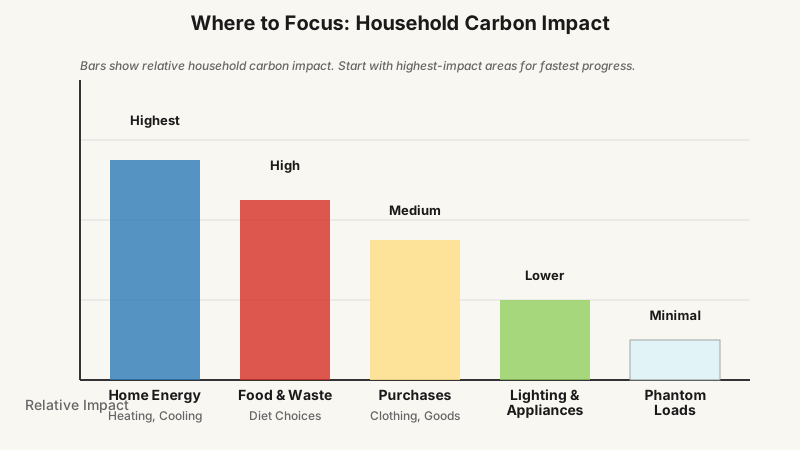
Where to Start: A Practical Hierarchy
If you’re feeling overwhelmed by the range of options, here’s a simple prioritization:
- Reduce food waste and shift a few meals toward plants — high impact, immediate, saves money
- Adjust home heating/cooling settings — measurable energy savings with little discomfort
- Switch to cold washing and LED bulbs — minimal effort, ongoing payoff
- Replace single-use items with reusables — low upfront cost, cumulative benefit
- Audit transport habits — biggest potential gains if you currently drive frequently
None of these require a dramatic lifestyle overhaul. They work incrementally, and they tend to reinforce each other — once you start noticing one type of waste, you spot others.
Final Thoughts
Being more eco friendly isn’t an identity you adopt all at once; it’s a direction you move in over time. The version that works is the one you actually stick with. Start with two or three of the changes above that fit your current situation, build them into habit, and add more as they become second nature. The cumulative effect of millions of households doing this matters — and your household is one of them.