Best Beginner-Friendly Baking Recipes to Start With

If you’ve ever stood in front of a mixer wondering whether you’ve already ruined everything, this guide is for you. Baking has a reputation for being unforgiving, but that’s only partly true. The right recipes — ones with short ingredient lists, forgiving textures, and clear checkpoints — make the difference between a frustrating afternoon and a pan of something genuinely delicious.
Below is a curated collection of truly beginner-friendly bakes, organized by type, with practical tips woven in so you understand why each step matters, not just what to do.
What Makes a Recipe Actually Beginner-Friendly?
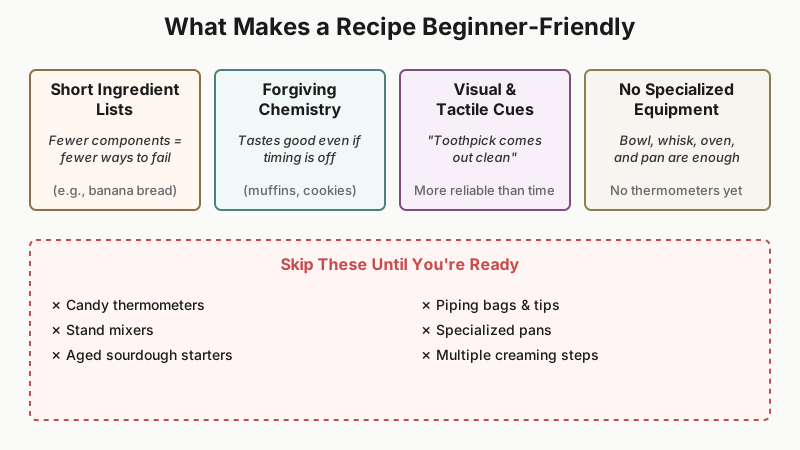
Not every recipe labeled “easy” earns the title. A truly beginner-friendly baking recipe shares a few traits:
- Short ingredient lists — fewer components mean fewer ways things can go wrong.
- Forgiving chemistry — recipes that still taste good even if you’re a minute late pulling them out, or if your butter was slightly warm.
- Visual or tactile cues — instructions like “bake until a toothpick comes out clean” or “the top should spring back when pressed” are more reliable than time alone.
- No specialized equipment — a mixing bowl, a whisk, a standard oven, and a baking pan are enough.
Keep these in mind as you work through the recipes below. If something calls for a candy thermometer, a stand mixer, or aged sourdough starter in the first paragraph, it’s probably not your first project.

Understanding your leavening agents also helps, and Baking Soda vs Baking Powder: Key Differences Explained clears up a common source of confusion for new bakers.
Breads and Muffins: The Best Starting Points
Banana Bread
Banana bread is arguably the single best first bake for a new baker. Here’s why: overripe bananas — the ones turning black in your fruit bowl — are the main ingredient, so there’s zero waste guilt. The batter is mixed by hand in one bowl. And the result is dense enough that slight overbaking just means a crisper crust, not a collapsed disaster.
Basic formula:
- 3 very ripe bananas, mashed
- 1/3 cup melted butter
- 3/4 cup sugar
- 1 egg, beaten
- 1 teaspoon vanilla extract
- 1 teaspoon baking soda
- Pinch of salt
- 1 1/2 cups all-purpose flour
Mash bananas, stir in melted butter, then add sugar, egg, and vanilla. Sprinkle in the baking soda and salt, then fold in flour until just combined — stop mixing the moment you don’t see dry flour. Pour into a greased 9x5-inch loaf pan and bake at 350°F (175°C) for 55–65 minutes.
Why it works for beginners: The batter is almost impossible to overmix into a tough loaf because of its high moisture and fat content. It also signals doneness clearly — a toothpick inserted in the center comes out clean, and the top turns a deep golden brown.
Blueberry Muffins
Muffins follow a simple principle: dry ingredients in one bowl, wet in another, combine until just mixed. That’s the entire technique. Overmixing develops gluten and creates tunnel-shaped holes inside the muffin — which is why every muffin recipe says “do not overmix.” Stop at a few streaks of flour and you’re fine.
Key tips:
- Toss blueberries in a tablespoon of flour before folding them in. This prevents them from sinking.
- Fill muffin cups about 3/4 full for a proper dome top.
- Let them cool in the pan for 5 minutes before removing — they firm up as they cool.
A standard batch of 12 muffins bakes at 375°F (190°C) for 18–22 minutes.
Cookies: Low-Stakes, High Reward
Classic Chocolate Chip Cookies
The most-baked cookie in home kitchens worldwide needs no elaborate introduction — but a few details separate good cookies from great ones, even at the beginner level.
Brown butter or melted butter? For beginners, melted butter (cooled to room temperature) is easier to work with than creaming softened butter. It also produces chewier cookies with slightly crinkled tops, which many people prefer over the cakey texture that over-creamed butter creates.
Chill the dough. This single step is the difference between cookies that spread into thin discs and ones with thick, chewy centers. Even 30 minutes in the fridge helps. An hour is better. Overnight is best.
Bake one test cookie first. Before committing the whole tray, bake a single cookie and adjust. Too flat? Chill the dough longer or add a tablespoon more flour. Spreading correctly? Bake the rest.

Shortbread Cookies
Three ingredients: butter, sugar, flour. Shortbread is one of the few bakes where simplicity is the point, not a shortcut. The ratio is typically 1:2:3 — one part sugar, two parts butter, three parts flour by weight.
Because there’s no egg and no leavening, shortbread is extremely forgiving. It doesn’t rise, so there’s no guessing whether it “worked.” Press the dough into a pan, score it into rectangles, poke fork tines across the top (this prevents puffing), and bake at 325°F (160°C) for 20–25 minutes until just pale golden at the edges.
The texture should be sandy and crumbly — if it’s hard and crunchy, it overbaked slightly, but it still tastes great.
Cakes: Simple but Satisfying
One-Bowl Chocolate Cake
Layer cakes intimidate beginners for good reason — multiple components, timing, and the anxiety of frosting. Start instead with a simple one-bowl chocolate cake that goes straight from mixing bowl to single round or square pan.
The key ingredient most home bakers overlook: hot coffee or hot water poured into the batter at the end. Hot liquid blooms the cocoa powder, intensifying the chocolate flavor without adding any coffee taste. This is a real technique used in professional bakeries, not a gimmick.
Bake at 350°F (175°C) for 30–35 minutes. Check with a toothpick. Frost simply with a store-bought ganache or a basic buttercream (powdered sugar + butter + a splash of milk) once the cake is completely cool. Never frost a warm cake — the frosting melts and slides.
Pound Cake
The name comes from the original formula: one pound each of butter, sugar, eggs, and flour. Modern versions scale down and often add a splash of vanilla or a tablespoon of sour cream for moisture, but the principle is the same — equal weights of core ingredients.
Pound cake is excellent for beginners because:
- It bakes in a single loaf or bundt pan.
- The dense crumb hides uneven baking more gracefully than a light sponge.
- It slices cleanly, even on the first day.
- It keeps well for 3–4 days at room temperature, meaning you can make it ahead.
Bars and Brownies: The Most Forgiving Category
Fudgy Brownies
If cookies and cakes feel like too much pressure, brownies are your reset button. The fudgy kind — as opposed to cakey — rely on melted chocolate or cocoa powder, lots of butter, and minimal flour. There’s almost no structure to maintain, which means almost no failure mode.
Fudgy vs. cakey: More fat and less flour = fudgy. More flour and a bit of baking powder = cakey. For beginners, fudgy is easier because underbaking by a few minutes just means more gooey center, which most people consider a win.
The toothpick test for brownies works differently: pull them out when the toothpick comes out with moist crumbs, not clean. A clean toothpick means overbaked brownies.
Let the pan cool completely before cutting — at least 45 minutes. Brownies that look underdone when warm often set perfectly once cooled.
Lemon Bars
Lemon bars have two components — a shortbread base and a lemon curd topping — but both are simple. The base is the same three-ingredient shortbread you already know. The curd is eggs, sugar, lemon juice, and a little flour, whisked together and poured over the pre-baked crust.
Bake the crust first (about 20 minutes at 325°F/160°C), pour on the curd, then return to the oven for another 20–25 minutes until the filling is just set. The center may still wobble slightly when you pull it out — that’s correct. It firms as it cools.
Dust with powdered sugar just before serving (not hours ahead, or it absorbs into the curd).

Essential Tips for Every Beginner Baker
Read the recipe completely before starting. The number of people who discover mid-recipe that the dough needs to chill overnight is staggering. Read through once, then gather ingredients and equipment.
Measure flour correctly. Scoop flour into the measuring cup with a spoon and level off with a straight edge — don’t pack it. Better still, use a kitchen scale. Packed flour can add 20–30% more than the recipe intends, which dries out cookies, muffins, and cakes.
Understand your oven. Home ovens frequently run 25°F hotter or cooler than the dial says. An oven thermometer (usually under $15) is the cheapest and most effective upgrade any baker can make. It eliminates the most common cause of overbaked or underbaked results.
Room temperature matters. When a recipe says “room temperature butter” or “room temperature eggs,” it means it. Cold butter won’t cream properly; cold eggs can cause batter to curdle. Take these out of the fridge 30–60 minutes before you start.
Baking powder vs. baking soda aren’t interchangeable. Baking soda needs an acid in the recipe (buttermilk, lemon juice, brown sugar) to activate. Baking powder contains its own acid. Using the wrong one, or substituting one for the other at the same quantity, produces flat or bitter results.
Getting your measurements right is crucial for consistent results, so check out How to Properly Measure Flour for Baking: Spoon In, Level Off before you start mixing.
How to Build Confidence Progressively
Start with banana bread or brownies — one-bowl, no special equipment, hard to ruin. Bake it twice. The second time, you’ll feel the batter consistency instinctively and understand the visual cues.
Move to cookies next. The test-one-first approach removes the stress of the whole batch going wrong. Then try muffins. By the time you attempt a simple one-layer cake, you’ll already understand oven behavior, proper texture, and the difference between “just combined” and “overmixed.”
Baking is ultimately pattern recognition. Each recipe teaches you something transferable — how a properly creamed butter looks, what a batter ready for the oven smells like, how cooling time changes texture. That knowledge stacks.
You don’t need a perfect first attempt. You need a second one.